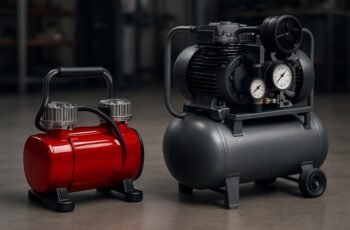
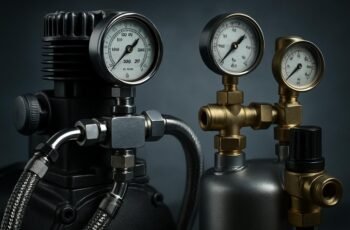
You may not know that the real difference between mini and portable compressors hinges less on size than on sustained output and duty cycle. We’ll compare how each handles real workloads, trade-offs in tank capacity, and how noise and portability affect longer sessions. If you want to pick the right tool for your projects, we’ll need to align on your use case, then test against practical metrics before committing. Let’s start by mapping your needs.
Key Takeaways
- Mini compressors prioritize compact size, low noise, and quick bursts, suited for light, frequent tasks with limited space.
- Portable compressors offer higher flow, larger tanks, and sustained output for longer, more demanding workloads.
- Choose based on CFM, PSI, and duty cycle to match expected workloads and task duration.
- Consider noise, vibration, cooling, and usability factors for comfort and ease of use.
- Use a quick-buy framework: assess rated CFM at load, duty cycle, tank vs. carry weight, and maintenance accessibility.
Mini vs Portable Compressors: Which Is Right for You?
Prospective buyers often wonder whether a mini air compressor or a portable model best fits their needs; the answer hinges on use-case, power source, and duty cycle. We compare form factors, performance envelopes, and reliability implications with a data-driven lens. A mini air unit typically prioritizes compact mass, lower noise, and frequent short bursts, suiting quick tasks and tight spaces. By contrast, a portable compressor emphasizes higher flow rates, larger tanks, and extended duty cycles for continuous inflation or tool operation. We assess portage, electrical requirements, and heat management to predict runtime and maintenance needs. Our guidance centers on matching target workloads to the device’s pressure range, stabilization behavior, and efficiency across cycles. Ultimately, selection rests on whether precision, portability, or sustained output most aligns with your workflow.
How Your Projects Should Drive Your Choice
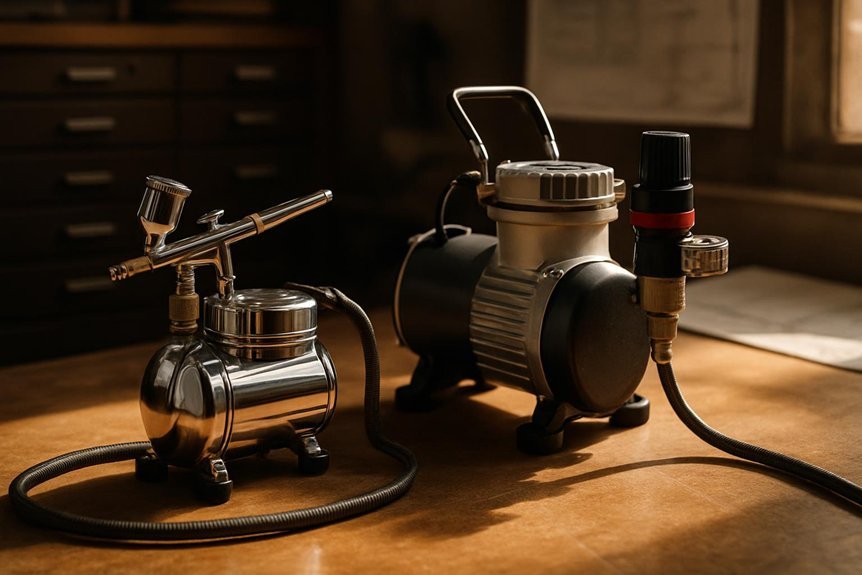
Your projects dictate the choice because different workloads stress different aspects of a compressor. We approach each task by mapping requirements to equipment behavior, avoiding assumptions about general capability. For light, intermittent tasks, a compact unit minimizes footprint and energy draw, reducing setup time and torque fluctuations. When task duration extends or multiple tools run concurrently, we assess runtime stability, cooling, and recharge cadence, since these factors govern sustained performance. We weigh constraints like space, noise, and power availability against output needs, recognizing that mini space isn’t merely physical; it influences duty efficiency and heat dissipation paths. We acknowledge portable limits: mobility, wiring, and refueling cycles affect workflow continuity. By aligning project profiles with unit characteristics, we select a compressor that preserves accuracy, reduces latency, and maintains consistent pressure delivery.
The Key Metrics: CFM, PSI, and Duty Cycle Explained
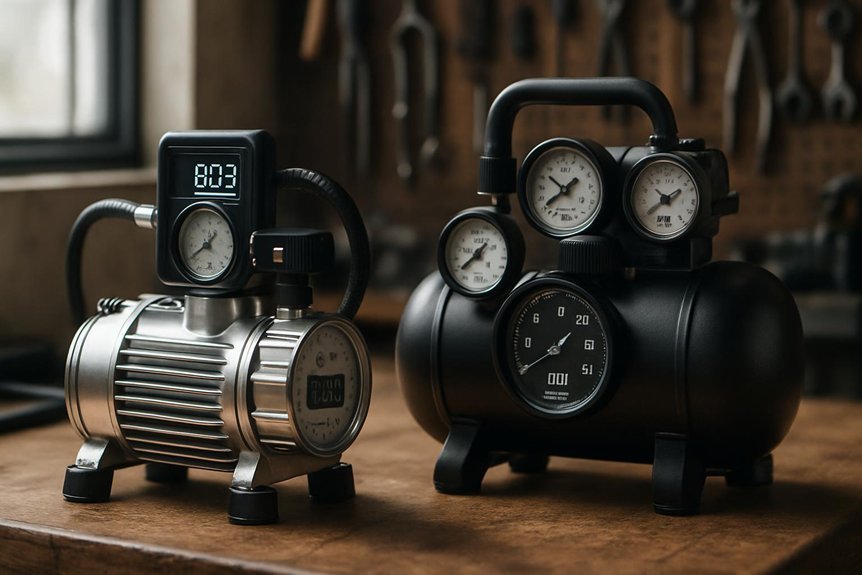
CFM, PSI, and duty cycle are the core metrics that translate a compressor’s specs into real-world performance. We evaluate CFM as the volume of air delivered per minute at a specified pressure, informing tool speed and material removal rates for both mini compressor and portable compressor options. PSI defines usable pressure to power attachments and seals, revealing compatibility with fasteners, tire inflators, or spray guns. Duty cycle indicates the fraction of operational time within a cycle, dictating runtime between rests to prevent overheating. Together, these metrics expose efficiency, endurance, and suitability for tasks. We compare units by matching CFM and PSI envelopes to expected workloads, then assess thermal limits to forecast steady performance under continuous use. This precise lens guides reliable, informed decisions.
Noise and Usability: Real-World Comfort Tips
Noise and usability often shape real-world outcomes more than raw specs. We compare two platforms by how noise levels and handling affect user comfort. Our focus is on practical, measurable impacts: audible footprint, vibration, and ease of operation. We frame observations around noise comparison and portability comfort to guide informed choices.
Noise and usability shape outcomes; we weigh audible footprint, vibration, and ease of operation for practical comparisons.
- Noise profiles: core frequencies, decibel ranges, and duty cycle implications.
- Isolation and mounting: dampers, surfaces, and adaptor use to minimize vibration transfer.
- Operating ergonomics: reach, button layout, containment of exhaust flow for user comfort.
- Maintenance cues: filter cleanliness, hose wear, and cooldown patterns affecting long-term quietness.
Together, these factors refine value beyond peak pressure, enabling steadier workflow and reduced fatigue.
Price, Value, and Total Ownership You’ll Pay
What does total cost of ownership look like when you factor price, durability, and ongoing expenses into the equation? мы We analyze purchase price, expected lifespan, maintenance costs, energy use, and potential downtime, translating these into a single, comparable ownership metric. We compare entry-level mini compressors against portable models by evaluating price comparison across initial cost, consumables, and repair likelihood. Durability drives maintenance horizon, determining replacement cycles and downtime exposure. Energy efficiency affects operating costs during runtime, while reliability shapes long-term value. Our approach emphasizes transparent budgeting: upfront expenditure, ongoing servicing, and potential resale value. By quantifying these factors, we deliver a precise, actionable view of ownership, helping readers choose the option that minimizes total cost while meeting performance needs.
Safe Setup and Maintenance for Longevity
How can we assure a mini or portable air compressor operates safely over the long term? We approach safe setup and ongoing maintenance with precise checks and disciplined routines that preserve miniature efficiency and a firm maintenance grip.
- Verify voltage, wiring, and plug integrity before each use to prevent electrical faults.
- Inspect hoses and fittings for wear, leaks, and proper tightness to maintain consistent pressure.
- Schedule periodic oil checks (where applicable) and follow manufacturer intervals for filter changes.
- Store in a clean, dry area away from dust, moisture, and extreme temperatures to minimize corrosion and performance drift.
Quick Buy Framework: Pick Today and Get Moving
We apply a quick buy framework to cut through ambiguity and lock in a decision today, focusing on Quick Buy Criteria to evaluate price, performance, and warranty. We’ll adopt a Move Today Mindset to minimize downtime and maximize immediate value, outlining clear thresholds for when to proceed or pause. We invite you to contemplate these criteria with us as we translate features into measurable gains for your workflow.
Quick Buy Criteria
Quick Buy Criteria: Picking the right compact air solution hinges on matching your expected use, portability needs, and maintenance tolerance with a few core specs.
We assess how a miniature design translates to real-world performance, especially under a portability focus, while guarding against overpromising efficiency. Our framework centers on objective metrics that drive reliability and quick deployment.
- Rated CFM at load and duty cycle
- Tank size vs. carry weight and footprint
- Noise level and vibration control
- Maintenance accessibility and part availability
This criteria set lets us compare models without bias, aligning specs with practical scenarios. We favor clear, testable claims over marketing language. Our approach stays rigorous, helping you select a unit that travels light yet delivers consistent output when needed.
Move Today Mindset
So, what does “Move Today Mindset” really mean in the Quick Buy Framework: Pick Today and Get Moving? We embrace a disciplined urgency that converts intent into action, isolating the decision point now, not later. This mindset evaluates both mini future implications and portable challenges, ensuring we strike a balance between compact capability and scalable growth. We measure risk, cost, and impact with clear criteria, then commit to a first actionable step that maintains momentum. The goal is rapid validation: test assumptions, learn, and adjust. This approach minimizes lag, reduces analysis paralysis, and aligns purchase timing with real-world needs.
| Criterion | Benefit |
|---|---|
| mini future | foresight integration |
| portable challenges | resilience planning |
| Time-to-Decision | speed optimization |
| Cost Alignment | budget discipline |
| Validation Loop | continuous improvement |
Frequently Asked Questions
How Long Does a Mini Compressor Last on a Single Fill?
We can’t guarantee a single fill lasts a fixed time, but a mini compressor typically delivers 15–30 minutes at moderate pressure, while a portable compressor relies on its power source for longer runs; power source governs overall runtime.
Can I Run Both Types From a Single Power Source?
Yes, we can run both from a single power source, but power needs and current draw differ. A mini motor demands compact, steady load, while portable power requires scalable supply and protection to prevent voltage drops.
Are Mini Compressors Buffer-Capable for Spray Applications?
Yes, mini compressors can provide short buffer for spray applications, but they’re limited. We analyze peak draw, power sources, and indoor noise to determine suitability; mini compressors excel in light tasks, yet struggle with continuous, high-pressure spray.
Do Warranties Differ Between Mini and Portable Models?
We can confirm that warranties differ by model and brand, with coverage often varying between mini and portable options. Our analysis shows warranty coverage depends on model variety, terms, and components, not merely compressor size.
Which Noise Level Is Suitable for Indoor Use?
For indoor use, a noise level around 60 dB is generally suitable. We evaluate the mini air versus portable compressor by their acoustic profiles, selecting the quieter option, ensuring steady operation and minimal disturbance for indoor tasks.
Conclusion
We’ve walked the line between mini and portable, weighing capacity against space, and noise against endurance. In short, choose based on your workflow tempo: tiny bursts in tight spots call for a whisper-quiet mini, while longer sessions with steadier demand justify a higher-flow portable. If you’re wavering, test a quick scenario against your target PSI, CFM, and duty cycle. A pragmatic, well-timed pivot now saves both time and tension down the road.