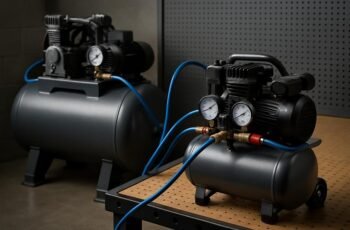
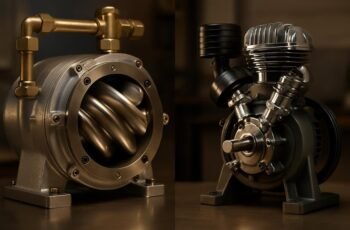
We compare high-pressure and standard compressors to map performance, costs, and maintenance to your application. We’ll break down PSI, CFM, duty cycles, and total cost of ownership so you can weigh reliability against upfront and operating expenses. The choice affects workflow continuity, component wear, and filtration needs. We’ll present clear criteria and practical implications, then guide you toward the most fitting option, with practical tests to validate assumptions. Let’s start by framing the decision against your core constraints.
Key Takeaways
- High-pressure compressors deliver higher PSI with tighter tolerances, enabling rapid pressure ramping for demanding tools, but require sturdier components and tighter maintenance.
- Standard compressors prioritize lower pressure ranges and longer duty cycles, offering simpler maintenance and better energy efficiency for continuous, moderate use.
- Use-case focus should map tool ratings to PSI and ensure sufficient CFM at peak demand to avoid undersupply or wasted energy.
- Total cost of ownership includes higher upfront costs and energy usage for high-pressure units versus lower initial cost and simpler upkeep for standard units.
- Performance metrics to compare: pressure, CFM at target pressure, duty cycle, noise, and mean time between failures (MTBF).
What Exactly Is a High-Pressure Compressor vs a Standard One
High-pressure and standard compressors are both meant to move air and deliver power, but they differ in pressure capability, design intent, and typical applications. We characterize high-pressure units by higher discharge pressures, tighter tolerances, and reinforced hardware to sustain cycling loads. Standard models prioritize lower pressure ranges, greater volumetric efficiency, and longer duty cycles at moderate pressures. Our analysis hinges on construction details: cylinder bore, valve sets, and seal arrangements. In operation, high-pressure systems emphasize rapid pressure ramping and stable delivery under constrained volumes, while standard systems optimize continuous flow and energy efficiency at moderate pressures. When considering use cases, we assess factors like high altitude use and oil free bearings, which influence lubrication strategy, bearing life, and maintenance intervals. These distinctions guide selection and performance expectations.
Decide Fast: PSI, CFM, and Cost for Your Needs
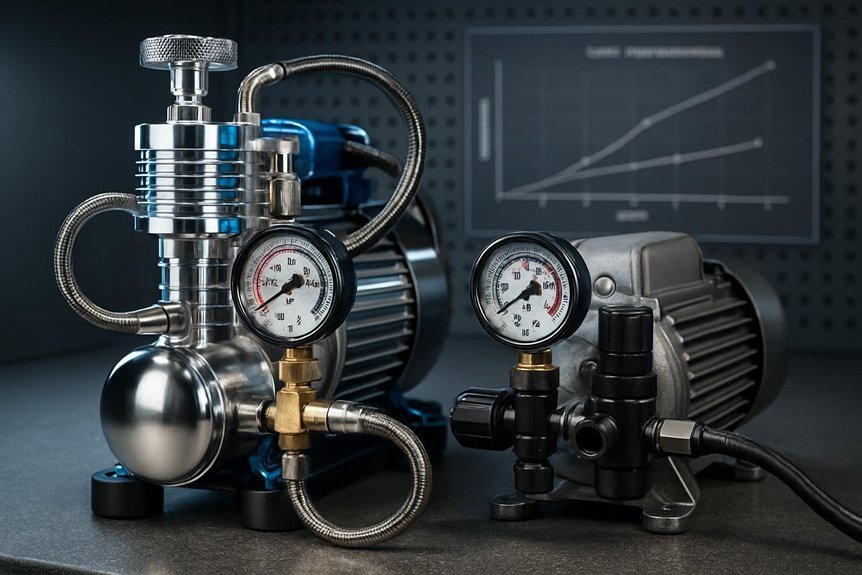
How do you decide quickly on the right PSI, CFM, and cost for your needs? We’ll map requirements to specifications, then validate with constraint checks. We prioritize operational windows, duty cycle, and tool load to minimize unnecessary slack, avoiding irrelevant topic chatter or unrelated concept distractions. Our method is precise: match allowable pressure to tool ratings, ensure CFM meets peak draw, and assess total cost of ownership over time. We don’t guess; we quantify.
We map and validate requirements to PSI, CFM, and total cost, ensuring peak draw fits, duty cycles align, and ownership costs stay minimized.
- PSI alignment with tool range to prevent undersupply or overwork
- CFM sufficiency for peak usage without wasting energy
- Total cost of ownership, including maintenance and energy
Pros and Cons of High-Pressure Units
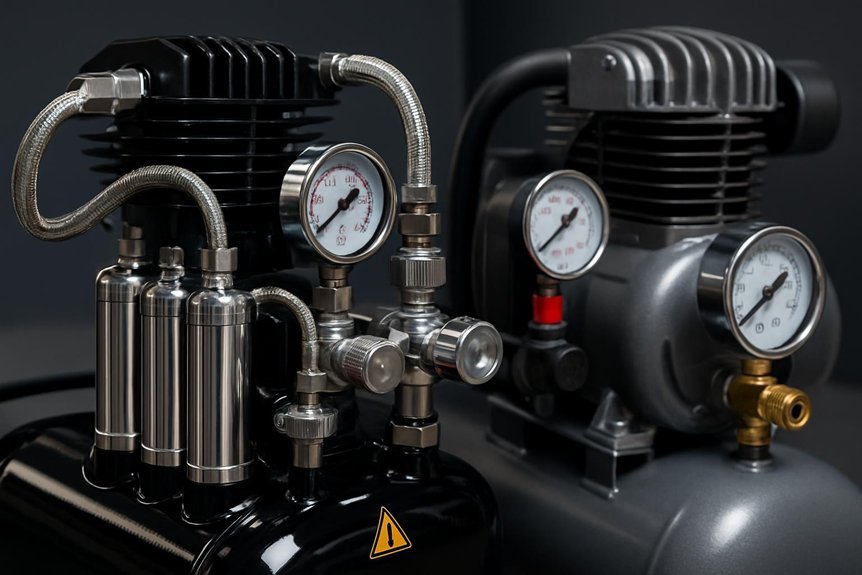
Weighing the benefits and drawbacks of high-pressure units reveals clear tradeoffs: they deliver higher tool flow per horsepower, enabling shorter cycles and reduced compressor size for certain applications, but they demand tighter pressure control, sturdier components, and stricter safety practices. We assess efficiency by considering system losses, leakage risks, and the need for robust filtration and moisture management. Pros include rapid response to transient loads and improved air quality through dedicated filtration stages, while cons cover increased energy peaks, higher component costs, and more intricate maintenance. Operational reliability hinges on precise relief sizing and proper sequencing. Two word ideas emerge: backup planning. In our view, suitability depends on duty cycle, tooling compatibility, and safety culture; high-pressure units excel where sustained performance and compact footprints justify the added design and service overheads.
Pros and Cons of Standard Compressors
Standard compressors balance steady output with straightforward maintenance and predictable costs. We weigh their reliability against limitations like smaller peak performance and less adaptability for variable demands. In practice, their simpler controls reduce fault potential, but may constrain handling of high-duty cycles or rapid pressure changes. We focus on practical trade-offs, including noise considerations and how energy branding can shape user perception. Our assessment anchors on consistent delivery, easy serviceability, and well-known component lifecycles.
- Predictable maintenance cadence that minimizes downtime
- Moderate noise profile with room for targeted noise reduction
- Clear branding opportunities through energy efficiency messaging
Total Cost of Ownership: Upfront, Running, and Maintenance
We compare upfront investments, showing how high-pressure and standard systems differ in capital costs and installation needs. We then assess running costs, focusing on energy efficiency, maintenance intervals, and downtime impact on total cost of ownership. Finally, we examine maintenance drives and downtime implications to quantify long-term financial risk and reliability.
Upfront Investment Comparison
What does the total upfront investment look like when comparing high-pressure air compressors to standard compressors, including the long-term running and maintenance costs? We quantify initial purchase price, installation, and ancillary components, then contrast required frame, electrical upgrades, and safety compliance. The high-pressure option often incurs higher upfront and commissioning costs, while standard systems benefit from lower entry barriers and proven integration. We assess total cost parity by evaluating expected depreciation, warranty scope, and part availability. Two word discussion ideas: noise considerations, color variants.
- Higher capital, longer payback when peak pressures are mandatory
- Standard units offer lower initial prices and simpler upgrades
- Maintenance and calibration timing shifts influence whole-life economics
Running Cost Efficiency
How do running costs shape the total cost of ownership when comparing high-pressure and standard compressors? We quantify energy consumption, maintenance intervals, and replacement parts to compare total lifecycle costs. High-pressure units typically demand more power for the same output, elevating electricity bills and thermal management needs; this increases running costs versus standard models. We assess serviceability, filter changes, and consumable lifespans to forecast maintenance spend, noting that higher pressures can intensify component wear and refill gas or oil requirements. We also weigh acquired efficiency gains against ongoing expenses. Two word discussion ideas: noise levels, portability concerns. In our analysis, tighter tolerances and better regulation can offset some energy penalties, but overall running costs often tip toward standard units for routine, sustained use, while high-pressure systems justify expenditure in niche, high-demand applications.
Maintenance And Downtime
From the prior discussion on running cost efficiency, maintenance and downtime become pivotal in the total cost of ownership for both high-pressure and standard compressors. We analyze downtime drivers, preventive schedules, and component lifecycles to quantify risk, maintenance windows, and spare-part strategies. Predictive monitoring reduces unexpected failures, while standardized service intervals minimize variance across configurations. We distinguish high pressure from standard compressor needs, aligning lubrication, filtration, and thermal management to operating pressure points. Downtime impact is amplified by availability of trained technicians and access to genuine parts. Our approach emphasizes reliability, scheduled turnarounds, and data-driven maintenance planning to optimize uptime and total cost of ownership.
- Reduced unplanned downtime through proactive monitoring
- Streamlined part procurement and service windows
- Consistent performance across high pressure and standard configurations
Practical Use Cases: When to Pick Each Type
When should you choose a high‑pressure air compressor over a standard model? We’ll answer with concrete, scenario‑driven guidance. For applications demanding high volume efficiency at elevated pressures, such as specialized machining, calibration, or pneumatic tooling requiring dense air pulses, a high‑pressure unit minimizes throughput losses and reduces downstream compression work. In contrast, routine shop tasks, paint spraying, or general pneumatic actuation at moderate pressures benefit from standard compressors due to lower initial cost, simpler maintenance, and steadier duty cycles. Noise considerations matter: high‑pressure systems often run hotter and noisier, so enclosure, intake filtration, and vibration isolation are prudent. Weigh energy use, maintenance intervals, and duty cycle against the required pressure to determine the ideal choice.
How to Evaluate Models: Key Specs to Compare
We compare models using a focused set of specs and evaluation metrics to ensure apples-to-apples assessment. Key specs to compare include pressure rating, flow rate, power consumption, efficiency, noise, size, and duty cycle, alongside cost and warranty considerations. Our goal is to use objective metrics to rank performance and reliability across high-pressure and standard compressors.
Key Specs to Compare
What key specs should you compare when evaluating high-pressure air compressors versus standard models, and why do they matter? We focus on measurements that drive performance, reliability, and total cost in a standard comparison. Critical items include pressure rating, CFM at target pressure, duty cycle, tank size, and power requirements. These factors determine whether a unit sustains continuous operation, meets peak demands, or incurs downtime for cooling. We also compare efficiency, noise levels, and maintenance intervals to gauge lifecycle cost and usability. Our goal is a rigorous standard comparison that highlights practical tradeoffs without overpromising.
- Pressure rating and CFM at target pressure
- Duty cycle, tank size, and power draw
- Efficiency, noise, and maintenance intervals
Model Evaluation Metrics
How should we assess model performance when comparing high-pressure versus standard air compressors? We evaluate metrics that reflect real-world operation and comparative fairness. Key specs include volumetric efficiency, pressure ratio stability, and response time to load changes, all measured under controlled test cycles. We quantify energy use via specific energy consumption (kWh per unit of output) to illuminate high efficiency differences. Durability and maintenance impact are tracked through mean time between failures and service intervals, ensuring long-term reliability. Noise reduction is quantified by sound power level and spectrum analysis during steady and transient states. We also weigh total cost of ownership, considering procurement, operation, and downtime. Together these metrics yield a rigorous, apples-to-apples comparison of performance between high-pressure and standard models.
Troubleshooting and Longevity Tips for Your Compressor
When diagnosing compressor issues, a systematic approach speeds up pinpointing root causes and extends service life. We profile components, monitor pressures, and validate electrical signaling to catch wear before failure. Prioritize high altitude performance considerations and noise mitigation strategies to maintain efficiency and compliance. Regular inspection of valves, filters, and cooling paths reduces heat buildup and extends longevity. We document transient events and correlate with load cycles to optimize duty profiles. Keep a disciplined maintenance cadence and calibrate our expectations against manufacturer tolerances to avoid overworking units.
Implement a methodical diagnosis routine: profile, monitor, validate; optimize for altitude, noise, and longevity.
- Systematic checks reduce downtime and surprise shocks
- Clear records improve diagnostic accuracy and future longevity
- Proactive tuning boosts high altitude performance and minimizes noise footprints
Frequently Asked Questions
How Does High-Pressure Efficiency Compare to Standard in Long Runs?
High efficiency improves slightly at high pressure, but long term gains depend on system design and maintenance. We see reduced energy per unit output in optimized high-pressure setups, yet durability and cooling limits influence performance over extended use.
Are There Safety Concerns Unique to High-Pressure Units?
Safety concerns with high-pressure units include stronger leak risks, cylinder bursts, and membrane failures. We handle them with rigorous safeguards, inspections, and controls. High pressure demands strict lockouts, proper ventilation, and calibrated relief valves—we take this seriously, truly.
Can Standard Compressors Be Adapted for Higher PSI?
Yes, standard compressors can be adapted, but only for higher psi with caution. We prioritize safety, verify components, and ensure high-volume, low-pressure performance isn’t compromised by heat, valves, or wear. This analysis guides recommended, controlled modifications.
Which Maintenance Tasks Differ Between Types?
Weighing options, the maintenance tasks do differ: high-pressure units demand stricter pressure safety checks, tighter seal and valve inspections, and more frequent torque/fastener verification than standard units, ensuring reliability under elevated pressure.
What Warranty Differences Exist Between the Two?
We offer a clear answer: warranty differences typically reflect scope and duration, with high-pressure models often carrying stricter limitations; we emphasize warranty scope and consumer protections, ensuring coverage for defects, performance, and reliability despite variations between models.
Conclusion
We’ve seen that choosing between high-pressure and standard compressors hinges on PSI, CFM, duty cycle, and total cost of ownership, not just initial price. One striking stat: high-pressure units can deliver peak pressures 2–8 times higher than standard models, but often incur 2–4× higher maintenance spend. If your tasks demand rapid pressure ramping and tight tolerances, high-pressure units pay off in performance; for steady, economical flow, standard compressors win on lifecycle cost. Evaluate specs, match use, and budget accordingly.