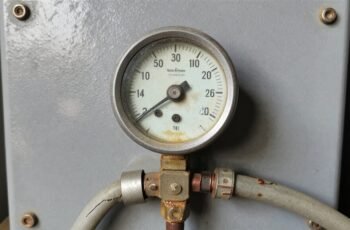
Did you know that selecting the wrong hose size can reduce your compressor’s efficiency by up to 30%, leading to increased energy costs and equipment wear? Proper hose sizing is a critical factor in maintaining ideal airflow and pressure stability, yet many overlook this detail. Understanding the technical aspects behind hose diameter, length, and material can greatly impact your system’s performance and safety. Let’s explore the key considerations to guarantee you choose the right hose for your specific needs.
Key Takeaways
- Measure the hose’s inner diameter accurately using a caliper or micrometer for proper sizing.
- Match hose size to airflow (CFM) and pressure (PSI) requirements for optimal system performance.
- Use industry charts or Darcy-Weisbach equations to select the appropriate hose diameter based on application needs.
- Consider hose length and material, as longer or less flexible hoses increase airflow resistance.
- Ensure fittings and connectors are compatible with hose size to prevent leaks and maintain system integrity.
Why Choosing the Correct Hose Size Matters for Your Air Compressor
Choosing the right hose size is critical because it directly affects the efficiency and performance of your air compressor system. An undersized hose causes increased pressure drop, reducing airflow and compromising tool operation. Conversely, an oversized hose may lead to unnecessary weight and cost without improving performance. Proper sizing ensures minimal pressure loss, maintaining ideal airflow and consistent pressure at the tool’s inlet. It also reduces strain on the compressor motor, preventing overheating and prolonging equipment life. Precise hose sizing balances airflow capacity with pressure requirements, which is essential for achieving maximum efficiency. Failing to select the correct size results in energy waste, decreased productivity, and potential damage to components, emphasizing the importance of technical accuracy in hose selection for reliable system operation.
Understanding Air Flow and Pressure Requirements
Have you ever considered how air flow and pressure requirements directly influence hose selection for your compressor system? These parameters determine the ideal hose diameter and material to guarantee efficiency and safety. Air flow, measured in CFM (cubic feet per minute), indicates the volume of air moving through the hose, while pressure, measured in PSI, reflects the force exerted. Insufficient hose diameter can cause pressure drops, reducing tool performance and increasing compressor load. Conversely, an oversized hose may lead to unnecessary costs and handling difficulties. Understanding the balance between flow rate and pressure drop is critical; it guides us in selecting a hose that maintains consistent output without overburdening the system. Precise assessment of these factors ensures reliable operation and longevity of both the hose and connected tools.
How to Measure and Determine Your Ideal Hose Diameter
To determine the ideal hose diameter, we first need to accurately measure the inner diameter of our existing hoses or fittings. This measurement guarantees compatibility and minimizes pressure loss, which directly affects airflow efficiency. By analyzing flow requirements, we can select a hose diameter that balances pressure retention with ease of handling.
Measuring Inner Diameter Correctly
Accurately measuring the inner diameter of your air compressor hose is essential for ensuring ideal performance and compatibility. To do this precisely, use a caliper or a micrometer designed for internal measurements. Insert the tool gently into the hose opening, ensuring it contacts the inner walls without compressing the material. Record the measurement at multiple points around the circumference to account for any irregularities or variations. Take the smallest measurement to determine the true inner diameter, as this will impact airflow and pressure consistency. Avoid using tape measures or approximations, which are prone to inaccuracies. Consistency in measurement technique is critical for selecting the right hose diameter, ensuring best airflow, reducing pressure drops, and preventing damage caused by mismatched sizes.
Selecting Appropriate Hose Diameter
Selecting the appropriate hose diameter is a critical step that relies on precise measurements and understanding of airflow dynamics. To determine the ideal size, we must analyze the required air volume and pressure drop across the system. First, consider the flow rate needed for your tools, typically measured in CFM (cubic feet per minute). Then, evaluate the maximum allowable pressure loss; larger diameters reduce resistance, maintaining pressure at the tool end. Using the measured flow rate, we can reference industry charts or apply Darcy-Weisbach equations to estimate the optimal inner diameter, ensuring minimal pressure drop without excessive hose weight. Proper selection balances airflow efficiency with practical considerations like flexibility and length, ultimately maximizing performance and system longevity.
Common Hose Sizes and Their Typical Uses
Different hose sizes serve specific functions in air compressor systems, with common diameters optimized for various tasks. Typically, 1/4-inch hoses are standard for general-purpose applications, offering a balance between airflow capacity and maneuverability, suitable for powering nail guns or spray guns. For higher-demand tasks requiring increased airflow, 3/8-inch hoses are preferred, providing greater volume and pressure stability. Smaller hoses, such as 1/8-inch, are used for precision tools or low-volume applications, where minimal airflow loss is critical. Conversely, larger diameters like 1/2-inch are employed in industrial settings, supporting high-volume, continuous operation. Selecting the appropriate size depends on the specific airflow requirements, pressure ratings, and the nature of the task, ensuring efficiency and safety in system performance.
The Impact of Hose Length and Size on Performance
Hose length and size directly influence the efficiency and performance of an air compressor system. Longer hoses increase the resistance to airflow, causing a pressure drop that reduces overall power delivery. This pressure loss becomes more significant as hose length increases, impacting tool performance and operational speed. Conversely, larger diameter hoses decrease airflow resistance, maintaining higher pressure levels and improving efficiency. However, unnecessarily large hoses can add weight and reduce maneuverability. Ideal performance hinges on balancing hose length and diameter to minimize pressure drops while ensuring practicality. Precise calculations of pressure loss based on length and size are essential for system design. Properly matching hose dimensions to the system’s airflow requirements ensures maximum efficiency, reduces energy consumption, and prolongs equipment lifespan.
Selecting the Right Material and Flexibility for Your Tasks
Choosing the appropriate hose material and flexibility is essential for ensuring durability and reliable wear resistance under demanding conditions. We must consider how the hose’s maneuverability affects workflow efficiency, especially in tight spaces. Additionally, compatibility with air pressure levels determines whether the hose maintains integrity without failure or leaks.
Durability and Wear Resistance
Selecting the appropriate materials for an air compressor hose is essential for guaranteeing durability and wear resistance, especially when the hose must withstand frequent movement and harsh conditions. We analyze material properties such as tensile strength, abrasion resistance, and chemical stability to determine longevity. Reinforced hoses with braided nylon or synthetic fibers provide enhanced structural integrity, resisting kinks and punctures under stress. Rubber compounds, particularly reinforced EPDM or polyurethane, offer superior resistance to ozone, oils, and weathering, extending operational lifespan. Proper material selection minimizes degradation from repetitive flexing and environmental exposure, reducing replacement frequency and downtime. Ultimately, choosing resilient materials tailored to specific working environments ensures the hose maintains performance, safety, and reliability over its service life.
Flexibility for Maneuvering
The ability of an air compressor hose to maneuver easily during operation depends heavily on its material composition and inherent flexibility. Different materials offer varying degrees of bendability, which impacts ease of handling in confined or complex workspaces. Rubber hoses, for example, provide high flexibility but can be heavier, potentially limiting prolonged maneuverability. In contrast, thermoplastic or polyurethane hoses tend to be lighter and more pliable, facilitating easier navigation around obstacles. The flexibility of a hose influences not only ease of use but also safety, as overly rigid hoses increase strain and risk of damage or disconnection. Selecting the right material involves balancing flexibility with durability, ensuring the hose can withstand operational stresses while maintaining the agility necessary for efficient task execution.
Compatibility With Air Pressure
How well a hose can withstand and perform under various air pressures is crucial for ensuring safety and efficiency in operation. Selecting the right material involves understanding the hose’s maximum working pressure, which must exceed your system’s operating pressure to prevent failure. Reinforced hoses with braided or spiral linings are often better suited for higher pressures, providing structural integrity and resistance to deformation. Flexibility also impacts performance; overly stiff hoses may crack or disconnect under pressure fluctuations, while highly flexible hoses can absorb sudden pressure surges more effectively. Compatibility depends on matching hose material and construction to your specific pressure requirements, ensuring durability without compromising safety. Consequently, evaluating pressure ratings and material properties is essential for ideal hose selection tailored to your tasks.
Connecting and Compatibility Tips for Different Hose Sizes
Ensuring proper connection between hose components requires careful attention to size compatibility, as mismatched fittings can lead to leaks, pressure drops, or equipment damage. To optimize performance, verify that fittings match the hose diameter precisely, including the inner and outer diameters. Using adapters or reducers can help connect hoses of different sizes, but they must be rated for the appropriate pressure and flow rates. When selecting fittings, consider the material compatibility with your compressed air system to prevent corrosion or deterioration. Secure connections with appropriate clamps or couplings to prevent leaks under operational pressure. Regular inspection for wear or damage is essential, as compromised fittings can cause safety hazards and system inefficiencies. Proper matching and secure connections are critical for maintaining system integrity and performance.
Troubleshooting Performance Issues Related to Hose Sizing
When hose sizing is incorrect, it often manifests through measurable performance issues such as reduced airflow, increased pressure drops, or inconsistent tool operation. These symptoms indicate that the hose’s internal diameter and length are disrupting ideal air transfer. A hose that’s too narrow or excessively long causes significant pressure loss, reducing the compressor’s efficiency and tool performance. Conversely, an overly large hose may not necessarily improve flow but can introduce unnecessary flexibility and handling issues. Troubleshooting begins with verifying the hose’s specifications against the system’s required airflow and pressure parameters. Using manometers and flow meters helps identify pressure drops and airflow reductions. By systematically analyzing these variables, we can isolate whether the hose size mismatch is the root cause, enabling precise corrective measures.
Tips for Maintaining and Upgrading Your Air Compressor Hose
Regular maintenance and thoughtful upgrades of your air compressor hose are essential to sustain the most effective system performance and prevent downtime. Regular inspections should focus on detecting wear, cracks, or leaks, which can compromise pressure stability and efficiency. Clean hoses periodically to prevent debris buildup that can cause blockages or reduce airflow. Upgrading involves selecting hoses with appropriate diameter, material, and pressure ratings that match operational demands. Use high-quality fittings and guarantee connections are secure to prevent leaks. Consider replacing hoses with reinforced or low-friction variants for improved durability and reduced pressure loss. Implementing these practices optimizes airflow, minimizes energy consumption, and extends hose lifespan, ultimately maintaining system reliability and productivity while reducing costly failures and unscheduled maintenance.
Frequently Asked Questions
How Often Should I Replace My Air Compressor Hose?
We suggest examining your air compressor hose monthly and replacing it every 1-2 years or immediately if you notice cracks, leaks, or significant wear. Regular checks guarantee peak safety, performance, and prevent potential equipment damage.
Can I Use a Larger Hose for Higher Airflow?
Yes, using a larger hose can increase airflow, but it may reduce pressure and efficiency if the compressor isn’t rated for the bigger size. We recommend matching hose diameter to your compressor’s specifications for peak performance.
Are There Safety Concerns With Using the Wrong Hose Size?
Using the wrong hose size is like putting a square peg in a round hole; it risks leaks, pressure drops, or hose failure. We carefully select the right size to guarantee safety, ideal performance, and prevent potential equipment damage.
How Do Temperature Changes Affect Hose Performance?
Temperature fluctuations directly impact hose performance by causing material expansion or contraction, which can lead to leaks, reduced pressure, or hose failure. We analyze material properties and select appropriate hoses to maintain safety and efficiency under varying temperature conditions.
What Are Signs My Hose Size Is Incorrect?
If your hose is incorrect in size, we notice reduced airflow, increased pressure drops, overheating, or frequent leaks. These signs indicate improper diameter, causing inefficiencies and potential damage, so monitoring performance helps identify the need for proper sizing adjustments.
Conclusion
Choosing the right hose size is like fine-tuning an instrument—precision guarantees harmony in performance. When we match hose diameter and material to your system’s needs, we optimize airflow, minimize pressure drops, and extend equipment lifespan. Think of it as crafting a pathway that guides compressed air smoothly, preventing bottlenecks and inefficiencies. Proper sizing and maintenance transform your compressor setup into a well-orchestrated machine—powerful, reliable, and ready to perform at its peak.