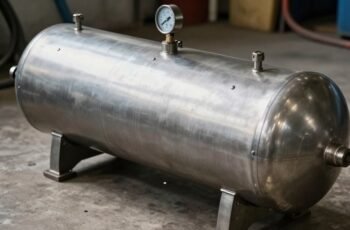
Understanding the range of air compressor tank sizes is essential for selecting the right equipment for specific tasks. The size of a tank directly influences how efficiently it can deliver compressed air and support ongoing operations. As we explore the typical capacities and their applications, you’ll see how proper sizing can impact performance and longevity. This decision involves considering various factors, and making the right choice can markedly affect your workflow—so, let’s examine what each size offers.
Key Takeaways
- Tank sizes range from 6 to over 80 gallons, suited for different tasks from DIY to industrial use.
- Larger tanks store more air, reduce compressor cycling, and provide stable pressure during continuous operation.
- Small tanks are portable and ideal for intermittent tasks but cycle rapidly, increasing wear.
- Medium tanks balance capacity and portability, suitable for most general applications.
- Proper tank size depends on airflow needs, project demands, and space or mobility considerations.
What Are Common Air Compressor Tank Sizes and Their Uses?
Air compressor tanks come in a range of sizes tailored to specific applications, from small portable units to large stationary models. Common sizes include 6 to 20 gallons for light-duty tasks such as tire inflation, carpentry, and small workshops. These tanks are compact, lightweight, and designed for mobility, making them ideal for DIY projects and intermittent use. Medium-sized tanks, typically 30 to 80 gallons, cater to more demanding applications like automotive repair, manufacturing, and construction, offering increased air capacity for continuous operation. Large tanks, exceeding 80 gallons, are primarily stationary, used in industrial settings where high-volume air supply is necessary for heavy machinery and extended operations. Precise sizing aligns with application demands, balancing portability with sustained airflow requirements.
How Does Tank Size Impact Air Supply and Performance?
The size of a compressor tank directly influences the volume of compressed air available and the overall performance of the system. Larger tanks store more compressed air, which can reduce the frequency of compressor cycling, leading to more stable pressure and improved efficiency. Conversely, smaller tanks may cause rapid cycling, increasing wear on the motor and reducing lifespan.
Larger compressor tanks ensure stable pressure and improved efficiency by reducing cycling and wear.
Key impacts include:
- Air Supply Consistency: Larger tanks maintain steady pressure during continuous operation.
- System Efficiency: Reduced compressor start-stop cycles minimize energy consumption.
- Performance Stability: Adequate tank size prevents pressure drops during peak demand.
Choosing the appropriate tank size guarantees ideal air delivery, minimizes operational strain, and enhances long-term system reliability.
Choosing the Right Tank Size for Different Projects and Industries
Selecting the appropriate tank size depends on the specific requirements of your project or industry, as different applications demand varying levels of air volume and pressure stability. For high-demand industrial operations, larger tanks (60-120 gallons) guarantee consistent air delivery, reduce compressor cycling, and accommodate peak pressure needs. In contrast, smaller tanks (20-30 gallons) suit light-duty tasks or portable setups, where space and mobility are priorities. Continuous manufacturing processes require substantial storage to maintain steady airflow and prevent pressure drops. Conversely, intermittent use applications can utilize smaller tanks without compromising performance. It’s crucial to analyze airflow requirements, duty cycle, and operational duration to determine the best-fit tank size. Proper sizing enhances efficiency, minimizes wear, and ensures reliable operation across diverse project scopes and industry standards.
Pros and Cons of Small, Medium, and Large Compressor Tanks
Choosing the appropriate compressor tank size involves weighing the advantages and limitations associated with small, medium, and large tanks. Small tanks offer rapid air recovery, making them suitable for intermittent use; however, they provide limited air storage, resulting in frequent compressor cycling. Medium tanks balance storage capacity and operational efficiency, reducing cycling frequency while maintaining portability. Large tanks deliver extensive air reserves, minimizing compressor startup frequency and supporting continuous operation, but they increase weight, footprint, and cost.
- Small tanks: quick recovery, high cycling, limited capacity
- Medium tanks: balanced capacity, moderate cycling, portable
- Large tanks: extensive storage, minimal cycling, increased size
Tips for Selecting the Best Air Compressor Tank Size for Your Needs
Evaluating your specific air requirements is key to determining the ideal compressor tank size. We recommend analyzing the maximum airflow demand of your tools and applications, noting their CFM (cubic feet per minute) requirements. Consider the duty cycle and whether continuous operation is necessary, as larger tanks provide a buffer for fluctuating demand. Precise calculation of peak and average air consumption helps avoid undersizing or oversizing. Additionally, assess your space constraints and portability needs, since larger tanks are bulkier and heavier. Selecting a tank that matches your operational profile ensures efficient compressor performance, minimizes pressure drops, and reduces equipment wear. Ultimately, balancing airflow demands with practical limitations will guide you toward the most suitable tank size for your specific use case.
Frequently Asked Questions
How Do I Determine the Optimal Pressure Rating for My Air Compressor Tank?
We determine the ideal pressure rating by considering your tools’ maximum operating pressure, adding a safety margin (usually 20-25%), and ensuring the tank’s maximum pressure rating exceeds this combined value for safe, efficient operation.
What Maintenance Procedures Are Essential for Different Tank Sizes?
Did you know tanks over 60 gallons need monthly drain and inspection? We check for corrosion, drain moisture, and verify pressure relief valve function regularly, ensuring safety and efficiency across all tank sizes through consistent, precise maintenance routines.
Can Tank Size Affect the Energy Efficiency of My Compressor System?
Yes, tank size impacts energy efficiency; larger tanks reduce compressor cycling frequency, conserving energy, while smaller tanks may cause more frequent starts, increasing energy consumption. Properly matching tank size to application optimizes overall system efficiency.
Are There Specific Safety Considerations for Large Industrial Air Tanks?
Yes, large industrial air tanks require regular inspection for corrosion, pressure relief valve functionality, and structural integrity to prevent ruptures. We guarantee compliance with safety standards and perform maintenance to mitigate risks associated with high-pressure storage.
How Does Ambient Temperature Influence Tank Size Selection?
Ambient temperature influences tank size selection by affecting air temperature, pressure stability, and condensation levels; higher temperatures may require larger tanks to maintain consistent pressure, while lower temperatures demand careful consideration of condensation risk and thermal expansion.
Conclusion
In summary, choosing the right air compressor tank size depends on understanding your specific airflow needs and project scope. While larger tanks offer efficiency, they may seem impractical for small tasks—yet, with modern portable options, that’s less of an obstacle. By carefully evaluating your application’s demands and space constraints, you can optimize performance and prolong your compressor’s lifespan. We believe a thoughtful choice today ensures reliable, cost-effective operation tomorrow.