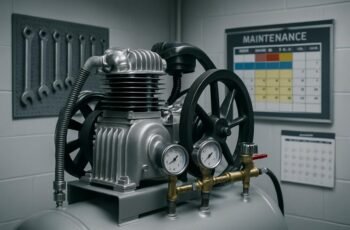
Using an air compressor safely is like walking a tightrope—balance and awareness are essential. We must understand the potential hazards and follow strict protocols to prevent accidents. Every step, from pre-operation checks to regular maintenance, plays a critical role in ensuring safety. Skipping these precautions can lead to serious injuries or equipment damage. To protect yourself and those around you, it’s important to master the proper procedures—so let’s explore how to do this with confidence and precision.
Key Takeaways
- Always inspect safety features, hoses, and connections before operating the compressor.
- Wear appropriate PPE, including safety goggles, ear protection, and gloves.
- Ensure the workspace is clean, dry, well-ventilated, and free of flammable materials.
- Turn off and unplug the compressor before connecting or disconnecting hoses or performing maintenance.
- Regularly check for leaks, worn parts, and proper functioning of safety devices during use.
How to Prepare Your Air Compressor for Safe Use
Before operating an air compressor, it’s essential to thoroughly prepare it to guarantee safety. We start by inspecting the unit for any damage or leaks, ensuring all hoses and connections are secure. Check the oil level if your model requires lubrication, topping it off if necessary, and verify that the pressure relief valve is functioning correctly. Clear the area of clutter and potential hazards to prevent accidents. Make sure the power switch is in the off position before plugging it in. Confirm that safety guards and covers are in place and intact. By taking these precautions, we minimize risks and ensure the compressor operates smoothly. Proper preparation is vital for safe, efficient use and to protect ourselves from potential hazards.
Understanding the Safety Features of Your Air Compressor
Have you ever considered how the safety features on your air compressor protect you during operation? Recognizing these features is crucial for safe use. Your compressor likely includes a pressure relief valve that automatically releases excess pressure, preventing dangerous over-pressurization. An automatic shut-off switch stops the machine when it reaches preset pressure levels, reducing risk. A safety guard covers moving parts to prevent accidental contact. Additionally, a thermal overload protector shuts the compressor down if it overheats. Familiarizing yourself with these features ensures you can respond correctly if needed. Always verify that these safety mechanisms are functioning properly before each use. Neglecting these safeguards increases the risk of accidents, so understanding and maintaining them is essential for safe operation.
Wearing Proper Personal Protective Equipment (PPE) When Operating an Air Compressor
Wearing proper personal protective equipment (PPE) is essential for guaranteeing safety when operating an air compressor. PPE protects you from potential hazards such as flying debris, loud noise, and accidental contact with pressurized air. Always wear safety goggles or a face shield to shield your eyes and face from flying particles. Use hearing protection, like earplugs or earmuffs, to prevent hearing damage from high noise levels. Gloves are recommended to protect your hands from sharp objects and hot surfaces, but guarantee they don’t interfere with operation or get caught in moving parts. Additionally, wear long sleeves and sturdy clothing to minimize skin exposure. Prioritizing PPE isn’t optional; it’s a critical step to safeguard yourself from injury during compressor use.
Setting Up Your Workspace for Maximum Safety
Setting up your workspace correctly is essential to maintaining a safe environment when operating an air compressor. A well-organized and hazard-free area minimizes accidents and equipment damage. Make certain the space is clean, dry, and well-ventilated to prevent fire hazards and maintain air quality. Keep flammable materials away from the compressor and its power source. Use sturdy, non-slip surfaces to stabilize the equipment and prevent tipping. Adequate lighting is vital for safe operation and inspection. Finally, establish clear pathways to avoid tripping hazards and guarantee quick access to emergency shut-offs. By following these precautions, you reduce the risk of injury and ensure a safer working environment when using your air compressor.
Correctly Connecting and Operating Air Hoses and Attachments
To guarantee safety, we must connect air hoses and attachments correctly, following proper techniques to prevent leaks or disconnections. It’s essential to select compatible attachments that match your compressor’s pressure ratings and intended use. Always operate the equipment with caution, adhering to safe procedures to avoid accidents or damage.
Proper Hose Connection Techniques
Have you ever connected an air hose incorrectly and faced unexpected hazards? Proper hose connection techniques are vital to guarantee safety and efficiency. Always check that the air compressor is turned off before connecting or disconnecting hoses to prevent accidental startup. Make certain fittings are compatible and securely tightened to prevent leaks or disconnections under pressure. Use quick-connect fittings where possible for a secure, tight fit, and inspect hoses regularly for wear or damage. Avoid twisting or kinking hoses, which can damage the material and cause leaks. Always wear protective gear and keep work areas clear of obstructions. Properly securing hoses minimizes the risk of sudden disconnections or injuries during operation. Follow these practices diligently to maintain a safe working environment.
Selecting Compatible Attachments
Choosing the right attachments for your air compressor is essential to guarantee safe and effective operation. Always verify that attachments are compatible with your compressor’s pressure and airflow ratings. Using incompatible tools can cause malfunctions, leaks, or even damage to the equipment. Before connecting, inspect attachments for cracks, wear, or damage, and make sure they are clean and free of debris. Securely attach hoses and accessories, making sure fittings are tight to prevent leaks. Never force incompatible attachments onto your compressor, as this can compromise safety. Additionally, confirm that the connectors match the compressor’s fittings to avoid accidental disconnections during use. Proper selection and secure connection of attachments protect you from potential hazards and ensure the compressor performs at its best.
Safe Operating Procedures
How can we guarantee safe operation when connecting and using air hoses and attachments? First, always verify compatibility between the hose, attachment, and compressor. Before connecting, turn off the compressor and release any built-up pressure. Ascertain fittings are secure and free of damage to prevent leaks or disconnections. Use quick-connect fittings that lock securely in place. Never force connections or attachments that don’t fit properly. When operating, keep hoses clear of sharp edges and moving parts to avoid damage. Regularly inspect hoses for wear or cracks and replace if necessary. Always wear appropriate PPE, such as goggles and gloves, to protect against potential hazards. Following these precautions ensures safe, reliable operation and minimizes risk of accidents or equipment failure.
Managing Air Pressure and Avoiding Over-Pressurization Risks
Since over-pressurization can lead to equipment failure or safety hazards, it’s vital to carefully monitor and control air pressure during operation. We must always set the compressor’s pressure regulator to match the manufacturer’s recommended levels for the specific task. Regularly check the pressure gauge to make sure it stays within safe limits, and never exceed the maximum PSI rating of the equipment. Over-pressurizing can cause hoses, fittings, or the compressor itself to rupture, risking injury and damage. Use a pressure relief valve as a safeguard, verifying it functions properly. Consistent pressure management not only protects your equipment but also maintains a safe working environment. Vigilance and adherence to pressure guidelines are essential for safe and efficient compressor use.
Recognizing and Preventing Common Air Compressor Hazards
Understanding common air compressor hazards is essential to maintaining a safe working environment. Recognizing these risks helps us prevent accidents and injuries. We must be vigilant about potential dangers, including:
- High-pressure leaks, which can cause sudden releases of compressed air, leading to injuries.
- Overheating components, risking burns or equipment failure.
- Electrical hazards, such as exposed wiring or faulty connections, increasing shock risk.
- Improper pressure regulation, which can cause equipment to burst or malfunction.
Performing Regular Maintenance to Ensure Safe Operation
Regular maintenance is vital for safe air compressor operation, and we must stay vigilant. We need to check for leaks consistently, replace worn parts promptly, and keep air intake filters clean. These steps help prevent accidents and guarantee the equipment functions reliably.
Check for Leaks Regularly
Have you ever considered how small leaks in your air compressor can lead to major safety hazards? Regularly checking for leaks is essential to maintain safe operation and prevent accidents. Leaks can cause the compressor to work harder, increasing the risk of overheating or failure. To ensure safety, we recommend:
- Inspect all hoses and fittings for cracks or damage
- Use a soapy solution to identify leaks visually
- Listen for hissing sounds indicating escaping air
- Tighten connections or replace damaged components immediately
Ignoring leaks can compromise system pressure, reduce efficiency, and present safety risks. Routine inspections are a simple yet critical step in maintaining a safe working environment. Always address leaks promptly to prevent costly repairs and ensure your compressor operates safely and effectively.
Replace Worn Parts Promptly
To keep your air compressor operating safely, it’s essential to replace worn parts promptly before they fail. Worn components, such as belts, valves, or seals, can compromise the compressor’s performance and create safety hazards. Regular inspection helps identify parts that show signs of wear—cracks, leaks, or deformation—and allows for timely replacement. Delaying repairs can lead to sudden breakdowns, increased energy consumption, or even dangerous malfunctions. Always follow the manufacturer’s maintenance schedule and use recommended replacement parts. Maintaining a proactive approach ensures the compressor runs efficiently and safely, reducing the risk of accidents or costly repairs. Prioritizing prompt replacement of worn parts is a fundamental step in safe compressor operation.
Clean Air Intake Filters
How often do we check and clean the air intake filters on our compressor? Regular maintenance is vital to guarantee safe operation and peak performance. Dirty filters restrict airflow, cause overheating, and can damage the compressor. We must inspect filters daily if used heavily, and clean or replace them promptly when they become clogged.
To maintain safety and efficiency, remember to:
- Turn off and unplug the compressor before servicing filters
- Use compressed air or a brush to remove dust and debris
- Replace filters if they are damaged or excessively dirty
- Keep filters dry and stored in a clean, dry environment
Neglecting this simple step can lead to serious equipment issues. Consistent, cautious maintenance of air intake filters is key to safe, reliable compressor operation.
Troubleshooting Safety Issues During Air Compressor Use
Since safety issues can arise unexpectedly during air compressor operation, it’s vital that we remain vigilant and prepared to address them promptly. Identifying potential hazards early helps prevent accidents and injuries. Common signs of trouble include unusual noises, vibrations, leaks, or pressure fluctuations. If we notice any of these issues, we must shut down the compressor immediately and inspect it thoroughly. Never bypass safety devices or ignore warning signs, as doing so risks serious injury or equipment damage. Regular maintenance and checks are essential for early detection. Always follow manufacturer guidelines for troubleshooting and repairs. Staying alert and acting swiftly ensures a safe working environment, protecting both personnel and equipment from preventable hazards.
Frequently Asked Questions
How Often Should I Inspect My Air Compressor for Safety?
We recommend inspecting your air compressor weekly for safety. Regular checks help identify leaks, worn parts, or damage early, preventing accidents. Stay vigilant and maintain a consistent inspection routine to guarantee safe, reliable operation every time you use it.
Can I Use an Air Compressor in Wet or Damp Conditions?
Using an air compressor in wet conditions is risky, like trying to sail in a storm—dangerous and unsafe. We strongly advise against it, as moisture can cause electrical failures, short circuits, and potential injuries. Always prioritize safety.
What Are the Signs of a Malfunctioning Safety Valve?
We check for signs of a malfunctioning safety valve when it releases air unexpectedly, shows corrosion or damage, fails to release pressure at the set limit, or makes unusual noises. Regular inspections help prevent dangerous failures.
Is It Safe to Leave an Air Compressor Running Unattended?
Leaving an air compressor unattended isn’t safe, as it can lead to overheating, pressure buildup, or malfunctions. We always advise monitoring it closely, turning it off when not in use, and ensuring safety features are functioning properly.
How Do I Safely Dispose of Damaged or Old Compressor Parts?
We recommend recycling or properly disposing of damaged compressor parts through authorized disposal facilities, never burning or dumping them. Always follow local regulations to prevent environmental harm and guarantee safety, because careless disposal could release chaos on our planet.
Conclusion
By following these safety guidelines, we can guarantee our air compressor usage remains secure and efficient. Staying vigilant, performing regular checks, and respecting safety features help prevent accidents. Remember, a cautious approach not only protects us but also prolongs the lifespan of our equipment. Safety isn’t just a step—it’s a continuous commitment. Let’s prioritize careful operation every time, so we can work confidently, responsibly, and with peace of mind.