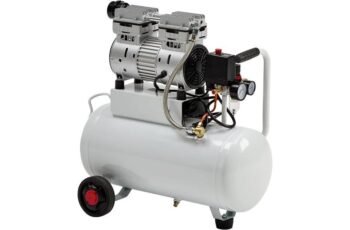
We find the Rolair FC2002’s 2 HP motor delivers up to 4.1 CFM at 135 psi, supporting tire inflation and compatible pneumatic tools. Its 3-gallon cast-iron tank keeps the direct-drive unit compact, but limits stored air and can’t sustain high airflow demands without recovery pauses. It runs on 115 V, draws 14.3 A, and produces 79 dB, so we’d check circuit capacity and noise tolerance before buying. We’ll also cover its features, trade-offs, and best-fit tasks below.
Key Takeaways
- The Rolair FC2002’s 2 HP motor runs on standard 115 V power and draws 14.3 A.
- It delivers up to 4.1 CFM at 135 psi, supporting compatible pneumatic tools and tire inflation.
- Its 3-gallon cast-iron tank keeps the direct-drive compressor compact but limits stored air.
- The 62-pound unit measures 15 by 17 inches and operates at a noticeable 79 dB.
- It suits intermittent tasks, but sustained high-airflow use may exceed output and require recovery pauses.
2 HP Power and Performance
With a 2 HP motor drawing 14.3 A from a 115 V outlet, the Rolair FC2002 delivers up to 4.1 CFM at a maximum pressure of 135 psi. This output supports pneumatic tools, tire inflation, and other compressed-air tasks, though actual performance depends on tool demand.
The 3-gallon tank provides a compact reserve, so we can expect the motor to cycle as air is consumed. For consistent operation, match your tool’s airflow requirements to the compressor’s rated capacity.
Motor efficiency depends on the electrical supply and workload; pressure stability likewise varies with demand and refill cycles, not maximum pressure alone.
Detailed features
The FC2002 combines a 3-gallon cast-iron tank with a portable, direct-drive design and a 79 dB noise rating. Its 2 HP electric motor runs on standard 115 V AC and draws 14.3 A, while the pump delivers up to 4.1 CFM at a maximum pressure of 135 psi.
Cast iron durability supports the tank’s construction, and the portable design helps us move the 62-pound unit between work areas. The compressor measures 15 inches wide by 17 inches high. It includes an intake filter/silencer, motor, and power cord, and can supply pneumatic tools, inflate tires, support spray painting, or operate air-powered machinery.
Pros and Cons
We’ll weigh the FC2002’s 4.1 CFM output, 135 psi maximum pressure, and 79 dB noise level against its 3-gallon tank and 62-pound weight.
These specifications highlight its strengths for portable pneumatic work and its limits during sustained, high-demand use. Let’s assess the practical pros and cons for your intended tasks.
Pros
Although the Rolair FC2002 has a compact 3-gallon tank, its 2 HP motor delivers up to 4.1 CFM at 135 psi, giving us useful capacity for pneumatic tools, tire inflation, and spray painting. Its cast-iron construction supports Cast iron durability, while the portable format offers portable convenience for moving between work areas.
| Advantage | Practical benefit |
|---|---|
| 2 HP motor | Powers compatible pneumatic tools |
| 4.1 CFM at 135 psi | Supports varied air tasks |
| 3-gallon tank | Keeps the unit compact |
At 115 volts, it runs from a standard outlet. The included intake filter/silencer and power cord simplify setup, and its 79 dB rating supports comparatively quieter operation.
Cons
Despite its 2 HP motor, the Rolair FC2002’s 3-gallon tank limits stored air, so tools with high or continuous airflow demands may outpace its 4.1 CFM output. We may need to pause for recovery during sustained use, making the tank capacity a constraint for demanding applications.
Its 79 dB noise level also isn’t especially quiet, so hearing protection may be appropriate nearby. Although the compressor is described as portable, its 62-pound weight creates limited portability; we’ll find frequent lifting or transport less convenient than with lighter units. The 115 V, 14.3 A motor may also require a suitable circuit to prevent overload.
Concluding thoughts
Overall, the Rolair FC2002 is a compact, portable compressor for jobs that need up to 4.1 CFM at 135 psi. Its 2 HP motor and 3-gallon cast-iron tank suit tire inflation and pneumatic tools, while the 62-pound weight limits easy lifting.
At 79 dB, it’s quieter than many compressors, though not silent. We’d match its airflow and tank size to intermittent tasks rather than sustained, high-demand tool use.
For buyer suitability, consider your power access, portability needs, and required duty cycle. The available specifications don’t establish long term durability, so we’d assess warranty coverage and maintenance support before purchasing.
Frequently Asked Questions
What Maintenance Does the Rolair FC2002 Require?
We should follow Rolair’s manual: check the oil level before operation, change oil at specified intervals, and perform air filter cleaning regularly. We should also inspect hoses, fittings, and electrical connections, drain tank moisture, and keep cooling vents clear.
Does the FC2002 Need a Dedicated Electrical Circuit?
We recommend a dedicated Electrical circuit for the FC2002’s 115-volt, 14.3-amp motor, especially when other equipment shares the supply. Account for startup amperage, and verify your circuit’s capacity and breaker requirements with an electrician before use.
How Long Does the Compressor Take to Fill Its Tank?
We can’t specify the Tank Fill Time from the available specifications; Rolair doesn’t list it. Your actual time depends on starting pressure and conditions. For Pump Recovery, we’d need a measured fill test or manufacturer data.
Is the Rolair FC2002 Suitable for Indoor Use?
Yes, we can use the FC2002 indoors where its 79 dB indoor noise won’t disturb others. Provide adequate ventilation needs, keep it away from dust, and follow electrical safety guidance during operation.
What Warranty Does Rolair Provide for This Compressor?
We can’t confirm the FC2002’s warranty duration from the available product details. For Warranty coverage, check Rolair’s current policy or your purchase documentation; for the Claim process, contact Rolair or the authorized seller with proof of purchase.
Conclusion
We find the Rolair FC2002 a capable compact compressor for inflation, spray painting, and compatible pneumatic tools. Its 2 HP motor, 135 psi maximum pressure, and 4.1 CFM airflow offer useful performance, while the 3-gallon tank and 62-pound weight make portability a measured compromise. At 79 dB, it’s not a quiet neighbor, so we’d plan its location carefully. If your projects fit its airflow and power requirements, this cast-iron unit may be a dependable workshop partner.