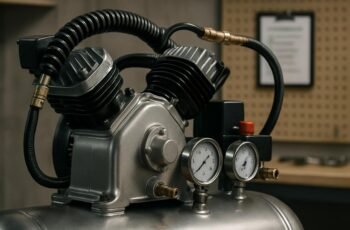
Many users overlook the subtle but critical distinctions between air compressor regulators and pressure switches, assuming they serve similar functions. In reality, each component plays a specific role in system performance and safety, yet confusion persists around when and how to properly utilize them. Understanding these differences can markedly impact your equipment’s efficiency and longevity, prompting a closer examination of their unique functions and applications to optimize your setup effectively.
Key Takeaways
- Regulators control downstream pressure for consistent tool performance, while pressure switches automatically turn the compressor on/off based on pressure thresholds.
- Regulators use diaphragms and springs to adjust and maintain specific pressure levels; pressure switches act as safety devices to prevent over-pressurization.
- Regulators provide continuous, fine pressure regulation; pressure switches handle system automation and safety by controlling compressor operation.
- Proper installation and calibration are essential for both components to ensure system stability and safety.
- Selecting the right component depends on application needs—precise pressure control versus automatic system safety management.
What Are Air Compressor Regulators and Pressure Switches?
Air compressor regulators and pressure switches are essential components that control and maintain the system’s pressure, but they serve distinct functions. Regulators modulate the output pressure delivered to tools and equipment, ensuring consistent performance. They achieve this by adjusting the flow of compressed air downstream, based on set parameters. Pressure switches, on the other hand, monitor the system’s internal pressure, controlling the compressor’s operation by automatically turning it on or off when preset thresholds are reached. While regulators focus on downstream pressure stability, switches act as safety and control devices to prevent over-pressurization or under-pressurization. Both components are critical for system efficiency, safety, and reliability, yet their roles are complementary rather than interchangeable, serving different points within the compressed air system.
How Does an Air Compressor Regulator Work to Maintain Pressure?
An air compressor regulator maintains consistent pressure by precisely adjusting airflow based on system demands. It relies on components like the needle valve and diaphragm to modulate pressure levels effectively. Understanding how these parts work together clarifies how the regulator guarantees stable operation.
How It Adjusts Pressure
Because maintaining consistent pressure is essential for ideal tool performance, the regulator actively adjusts airflow by modulating the valve position based on the system’s demand. It accomplishes this through a feedback loop that senses downstream pressure via a sensing element, typically a diaphragm or piston. When pressure deviates from the set point, the regulator’s internal mechanism responds by changing the valve’s opening—either increasing or decreasing airflow from the compressor. This dynamic adjustment guarantees pressure remains within a narrow, predefined range, preventing fluctuations that could impair tool operation. The process involves a rapid, continuous cycle of sensing, reacting, and modulating, which maintains system stability. This precise regulation minimizes pressure variability, optimizing performance and protecting connected tools from both under- and over-pressurization.
Components of the Regulator
The core components of an air compressor regulator work together to monitor and adjust pressure effectively. Key elements include the diaphragm, which senses pressure variations; the spring, which applies a counterforce to maintain set pressure; and the valve, which opens or closes to regulate airflow. When pressure drops below the desired level, the diaphragm moves, compressing the spring and opening the valve to allow more air in. Conversely, if pressure exceeds the set point, the diaphragm shifts, relieving spring tension and closing the valve to prevent over-pressurization. These components operate in a feedback loop, ensuring consistent pressure delivery. Precision in each element’s design and interaction is critical for maintaining stable, reliable operation of the compressor system.
What Is the Role of a Pressure Switch in Air Compressor Safety?
The pressure switch plays a critical role in maintaining safe operating conditions by monitoring system pressure levels. It automatically shuts down the compressor when pressure exceeds safe limits, preventing potential damage. Understanding its function is essential for ensuring both equipment longevity and user safety.
Ensures Safe Pressure Levels
A pressure switch plays a critical role in maintaining safe pressure levels within an air compressor system by automatically controlling the activation and deactivation of the compressor based on preset pressure thresholds. It functions as a safeguard, preventing pressure from exceeding maximum limits or dropping below minimum operational levels. The switch continuously monitors system pressure through a sensing element, triggering compressor shut-off when the upper threshold is reached, and restarting it when pressure drops to the lower threshold. This automation ensures consistent pressure regulation without manual intervention. By maintaining precise control, the pressure switch minimizes the risk of over-pressurization, which could lead to system failure or safety hazards, thereby guaranteeing the compressor operates within secure, ideal pressure ranges.
Prevents Equipment Damage
Because excessive pressure can cause severe damage to compressor components, a pressure switch plays a crucial role in safeguarding the equipment. It monitors pressure levels and automatically shuts the compressor when thresholds are exceeded, preventing mechanical stress and failure. This regulation minimizes wear and tear, reducing costly repairs and downtime. To understand its function better, consider the following:
| Pressure Threshold | Effect on Equipment | Safety Mechanism |
|---|---|---|
| Too High | Component stress | Switch triggers shutdown |
| Ideal Range | Efficiency maintained | Continuous operation |
| Too Low | Insufficient output | Switch prevents under-pressure operation |
This precise control ensures operational safety and longevity, emphasizing the pressure switch’s essential protective role.
Key Differences Between Regulators and Pressure Switches Explained
While both regulators and pressure switches are essential components in compressed air systems, they serve fundamentally different functions that impact system performance and control. Regulators primarily control the downstream air pressure by adjusting flow resistance, ensuring a consistent output regardless of supply fluctuations. They operate continuously, modulating pressure in real-time. Pressure switches, however, act as on/off controllers triggered by preset pressure thresholds. They activate or deactivate compressors or valves to maintain system balance but do not regulate pressure directly. Regulators provide fine-tuned pressure control for tools and processes, whereas pressure switches serve as safety and control devices to prevent over-pressurization or under-pressurization. Understanding these distinctions helps optimize system design and operation for safety, efficiency, and reliability.
When Should You Use a Regulator Versus a Pressure Switch?
Choosing between a regulator and a pressure switch depends on the specific control needs of your compressed air system. Regulators are ideal when precise pressure control is required for downstream equipment, maintaining a consistent output regardless of variations in input pressure. Pressure switches, conversely, are suitable for system automation, activating or deactivating compressors based on preset pressure thresholds.
| Use Case | Control Focus |
|---|---|
| Regulator | Maintains stable, precise downstream pressure |
| Pressure Switch | Manages compressor operation based on pressure thresholds |
Use a regulator when fine-tuning output pressure is critical, such as for sensitive tools. Opt for a pressure switch when controlling compressor cycling is the priority, ensuring the system turns on or off at specific pressure points for efficiency.
Common Applications for Regulators and Pressure Switches in Air Systems
Are you aware of how regulators and pressure switches are typically applied within air system setups? These components serve specific roles across various applications. First, regulators are vital for maintaining consistent downstream pressure, essential in manufacturing processes requiring precise air quality. Second, pressure switches are integral for automating system operations, such as activating compressors when pressure drops below set thresholds or shutting them down at maximum pressure limits. Third, in pneumatic tools, regulators ensure stable pressure for peak performance, preventing damage and guaranteeing safety. Understanding these applications highlights their significance in system efficiency and safety. Proper deployment allows for enhanced performance, reduced wear, and reliable operation, emphasizing the need for accurate component selection based on specific application demands.
Installing and Setting Up an Air Compressor Regulator Correctly
Have you considered the importance of proper installation for ideal regulator performance? Accurate setup ensures consistent air pressure regulation, maximizing system efficiency. First, verify compatibility between the regulator and your compressor’s specifications, including maximum inlet pressure and flow rate. Mount the regulator on a stable, accessible point, ensuring proper orientation for airflow direction indicated by the manufacturer. Secure fittings tightly to prevent leaks, using thread sealant if necessary. Adjust the regulator’s pressure setting by turning the control knob, gradually increasing pressure while monitoring with a calibrated gauge. Avoid over-pressurizing, which can damage components. Once perfect pressure is achieved, lock the adjustment if possible. Proper installation and precise setup minimize fluctuations, reduce wear, and extend the regulator’s lifespan, ensuring reliable system performance.
Troubleshooting Common Issues With Pressure Switches and Regulators
When pressure switches and regulators malfunction, diagnosing the root cause requires a systematic approach. First, verify the power supply and wiring connections to guarantee proper electrical flow. Second, check for blockages or leaks in the lines that may cause pressure fluctuations. Third, inspect the components for wear, corrosion, or damage that could impair performance. Specifically:
- Confirm the pressure switch’s set points and reset pressures align with system requirements.
- Test the regulator’s ability to maintain consistent output pressure under varying load conditions.
- Examine internal mechanisms for dirt or debris that might impede movement or calibration.
Addressing these issues systematically helps isolate the malfunction, enabling precise repairs and preventing further damage to the system.
How to Choose the Right Component for Your Air Compressor Needs
Selecting the appropriate pressure switch or regulator for your air compressor hinges on understanding your specific operational requirements and system parameters. Key considerations include maximum operating pressure, flow rate, and the nature of connected tools or processes. For systems requiring precise pressure control, a regulator with fine adjustment capabilities and consistent output is essential. Conversely, if your setup demands automatic shutdowns or safety cut-offs, a reliable pressure switch with accurate threshold sensing is critical. Material compatibility, response time, and durability under operating conditions also influence choice. Analyzing these factors guarantees that the component maintains system stability, prevents damage, and optimizes performance. Ultimately, aligning device specifications with your application’s technical demands guarantees reliable, efficient compressor operation.
Tips for Maintaining and Extending the Lifespan of Your Pressure Control Devices
Proper maintenance and timely care considerably influence the longevity and reliability of your pressure control devices. Regular inspection ensures components are functioning within specified parameters, preventing premature failure. To extend lifespan effectively, we recommend:
- Routine Cleaning: Remove dust, debris, and moisture buildup to prevent corrosion and mechanical wear.
- Periodic Calibration: Verify and adjust settings to maintain accurate pressure regulation, reducing stress on the device.
- Timely Replacement of Worn Parts: Replace seals, gaskets, or diaphragms at signs of wear to prevent leaks and maintain consistent operation.
Implementing these strategies minimizes operational disruptions and enhances device durability, guaranteeing peak performance over time. Consistent, precise maintenance is essential for safeguarding your investment and ensuring the stability of your compressed air system.
Frequently Asked Questions
Can a Pressure Switch Replace an Air Compressor Regulator?
A pressure switch can’t replace an air compressor regulator because it mainly controls system on/off functions, whereas the regulator precisely adjusts output pressure. Both serve different roles, so using one in place of the other isn’t technically feasible.
How Often Should I Calibrate or Test My Pressure Switch?
We recommend calibrating or testing your pressure switch annually, much like tuning a precision instrument, to guarantee accurate performance; neglecting this can lead to system inefficiencies, pressure fluctuations, and potential equipment failure, compromising safety and productivity.
Are Regulators Necessary for All Types of Air Compressors?
Regulators aren’t necessary for all air compressors, but they are essential when precise pressure control is needed. We recommend using regulators in applications demanding consistent output; otherwise, standard models without regulation may suffice for basic tasks.
What Are Common Signs Indicating a Faulty Pressure Switch?
We observe a faulty pressure switch when the compressor won’t turn on or off correctly, experiences inconsistent pressure regulation, or there’s frequent cycling. These signs indicate the switch’s internal components may be failing or misaligned, requiring inspection.
Can Regulators and Pressure Switches Be Used Together?
Yes, regulators and pressure switches can work together like a well-coordinated team, with the switch controlling system pressure and the regulator fine-tuning output. This combination guarantees ideal compressor performance and system safety.
Conclusion
In essence, understanding the distinct roles of regulators and pressure switches is crucial for enhancing your air system’s performance. Think of them as the conductor and safety guard of an orchestral symphony—each indispensable, yet serving different purposes. Proper selection, installation, and maintenance guarantee your compressor operates smoothly, safely, and efficiently. Mastering this balance transforms a chaotic ensemble into a harmonious system, where precision and safety work hand in hand, securing long-term reliability and ideal output.