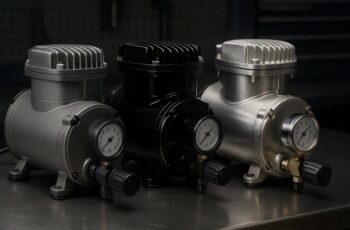
Installing an air compressor regulator is a critical task that requires careful attention to detail and adherence to safety protocols. Proper installation guarantees peak performance and prevents potential hazards, but it also involves precise steps that must be followed systematically. Understanding the correct procedure can make all the difference in maintaining the longevity and safety of your equipment. Let’s explore the essential steps and precautions necessary for a safe, effective installation process.
Key Takeaways
- Turn off power and release system pressure before starting installation.
- Identify inlet and outlet ports on the regulator and ensure correct connection.
- Use Teflon tape on threaded fittings to prevent leaks during assembly.
- Gradually pressurize the system and check for leaks after installation.
- Verify the regulator’s pressure settings and calibrate if necessary for optimal performance.
How Does an Air Compressor Regulator Work?
An air compressor regulator functions by precisely controlling the pressure of compressed air leaving the tank, guaranteeing consistent performance for connected tools. It achieves this through a combination of internal components, including a pressure-sensing element and a control mechanism. The regulator’s sensing element detects the pressure downstream and adjusts a valve to maintain the set level. When the pressure exceeds the desired setting, the valve reduces airflow; if the pressure drops, it allows more air through. This continuous feedback loop stabilizes output pressure regardless of fluctuations in the tank’s stored air or demand from tools. The result is a stable, reliable pressure that prevents damage, maintains tool efficiency, and assures safety during operation.
Choosing the Right Regulator for Your Air Compressor
Selecting the appropriate regulator for your air compressor involves understanding the specific requirements of your tools and operating environment. Accurate selection guarantees peak performance, safety, and efficiency. Key factors include maximum operating pressure, flow rate, and compatibility with your compressor’s specifications. Consider whether your tools require precise pressure control or broader regulation. To aid decision-making, review the table below, which highlights critical regulator features:
| Feature | Importance | Typical Application |
|---|---|---|
| Pressure Range | Ensures compatibility with tools | Precision tasks, heavy-duty |
| Flow Capacity | Maintains consistent output | Continuous operation |
| Adjustment Precision | Fine-tune pressure levels | Fine detail work |
| Material Durability | Withstands environmental factors | Harsh industrial settings |
| Connection Type | Fits your compressor fittings | Universal or specialized |
Preparing Your Air Compressor for Regulator Installation
Before installing the regulator, we must verify the compressor’s maximum pressure to guarantee compatibility. Next, we turn off the power supply to prevent accidental activation during the process. Properly preparing the system minimizes risks and ensures a safe, effective installation.
Check Compressor Pressure
How do we guarantee the compressor is ready for regulator installation? We verify the compressor’s pressure settings to ensure safe and accurate operation. First, we connect a calibrated pressure gauge to the compressor’s outlet. Then, we run the compressor for a few minutes to stabilize pressure. Next, we record the maximum pressure reading, confirming it aligns with the compressor’s rated capacity. Finally, we compare this value to the regulator’s recommended input range. If the pressure exceeds or falls below this range, adjustments are necessary before proceeding. This process confirms the compressor operates within ideal parameters, preventing damage or inefficiency during regulator installation. Proper pressure assessment ensures the system’s safety, reliability, and performance during subsequent steps.
Turn Off Power
Why is it essential to turn off the power before installing a regulator on your air compressor? Turning off the power ensures that the system’s internal pressure is fully released, preventing sudden air release or injury during installation. It also avoids electrical hazards, such as short circuits or sparks, which could damage components or cause accidents. Additionally, powering down the compressor prevents motor startup, reducing the risk of moving parts causing injury or misalignment during the process. We recommend unplugging the unit from the power source and releasing residual pressure from the tank through the drain valve. This step guarantees that the compressor is completely de-energized and safe for maintenance, allowing for precise, secure regulator installation without the threat of unexpected air or electrical hazards.
Step-by-Step Guide to Installing an Air Compressor Regulator
To guarantee a safe and effective installation, we start by gathering the necessary tools and reviewing safety measures. Next, we follow the detailed steps of the installation procedure, paying close attention to each connection and setting. This systematic approach ensures proper regulator function and system integrity.
Tools and Safety Measures
Before beginning the installation process, we must gather the appropriate tools and adhere to essential safety measures to guarantee a smooth and secure setup. Proper tools assure precision and efficiency, while safety measures protect against potential hazards.
Key tools include:
- Adjustable wrench – for tightening fittings securely.
- Pipe wrench – to grip and manipulate larger components.
- Teflon tape – to ensure airtight seals on threaded connections.
- Safety glasses and gloves – to protect eyes and skin from debris and pressurized air.
Safety measures involve depressurizing the system before work, wearing personal protective equipment, working in a well-ventilated area, and double-checking all connections after assembly. Following these steps minimizes risks and promotes a safe, accurate installation process.
Installation Procedure Steps
Installing an air compressor regulator involves a systematic sequence of steps to guarantee proper functionality and safety. First, we verify the compressor is powered off and depressurized to prevent accidents. Next, we identify the correct inlet and outlet ports on the regulator, typically marked or specified by the manufacturer. We then attach the regulator to the compressor’s outlet fitting, using appropriate fittings and thread sealant to prevent leaks. Tighten connections securely with a wrench, avoiding over-tightening that could damage components. After installation, we verify the assembly is secure and free of debris. Finally, we gradually turn on the compressor, adjusting the regulator to the desired pressure and checking for leaks or irregularities in operation. This process ensures a safe, effective regulator installation.
Common Mistakes to Avoid During Installation
Incorrectly installing the air regulator can lead to performance issues, safety hazards, and equipment damage. To prevent this, avoid these common mistakes:
- Incorrect orientation: Mounting the regulator upside down or improperly aligned can impair pressure regulation and cause leaks.
- Inadequate sealing: Failing to use proper thread sealant or Teflon tape can result in air leaks and pressure instability.
- Over-tightening fittings: Excessive tightening may damage threads or the regulator body, reducing lifespan and risking failure.
- Neglecting pressure direction: Installing the regulator against the designated flow direction prevents proper pressure regulation and can damage internal components.
Attention to correct installation orientation, sealing, torque, and flow direction guarantees ideal regulator performance and safety.
How to Adjust and Calibrate Your Air Compressor Regulator
To guarantee your air compressor operates at ideal performance, proper adjustment and calibration of the regulator are essential. Begin by ensuring the system is depressurized before making any adjustments. Use a calibrated pressure gauge to verify the current output pressure. To increase pressure, turn the regulator’s adjustment knob clockwise; to decrease, turn it counterclockwise. After initial adjustment, run the compressor and observe the gauge, ensuring it stabilizes at the desired setpoint. For calibration, compare the regulator’s output with a certified gauge; if discrepancies exist, fine-tune the adjustment knob until both gauges match precisely. Consistent calibration minimizes pressure fluctuations and maintains peak tool performance. Regularly verify and recalibrate the regulator to sustain accurate pressure control and ensure safety during operation.
Troubleshooting Tips for Regulator Issues
We need to identify common regulator problems such as inconsistent pressure readings, leaks, or blockages. Recognizing pressure fluctuations helps pinpoint whether issues originate from the regulator or downstream components. Addressing leaks and blockages efficiently prevents pressure drops and maintains peak system performance.
Common Regulator Problems
Have you ever experienced inconsistent air pressure or fluctuating tool performance? Common regulator problems often stem from specific mechanical or calibration issues. First, pressure leaks can occur if seals or diaphragms are damaged, causing pressure loss. Second, incorrect pressure settings may result from improper calibration, leading to inconsistent output. Third, clogged or dirty filters restrict airflow, reducing regulator efficiency. Fourth, faulty or worn internal components such as springs or valves can impair regulation accuracy. Addressing these issues involves inspecting seals for damage, verifying calibration settings, cleaning or replacing filters, and examining internal parts for wear. Proper diagnosis guarantees effective regulator function, preventing pressure fluctuations and safeguarding tool performance.
Recognizing Pressure Fluctuations
Pressure fluctuations are a clear indication that your regulator may be experiencing issues, and recognizing these signs promptly can prevent equipment damage. Typically, these fluctuations manifest as inconsistent output pressure, with readings that regularly rise and fall beyond acceptable tolerances. Such instability often results from internal component wear, debris interference, or improper adjustments. We should monitor pressure gauges closely during operation; irregular spikes or dips signal potential regulator malfunction. Additionally, listen for unusual hissing sounds, which might indicate internal leaks or valve issues. Consistent pressure variability, especially under steady load conditions, suggests the regulator is unable to maintain a stable output. Recognizing these signs early allows for targeted troubleshooting, helping us identify whether the issue stems from calibration errors, internal damage, or external influences affecting pressure consistency.
Fixing Leaks and Blockages
Leaks and blockages are common causes of pressure instability in air compressors, and addressing them promptly can restore proper regulator function. To fix leaks, we recommend inspecting all connections and fittings for visible damage or loose fittings, tightening or replacing components as needed. For blockages, disassemble the regulator and check for debris or dirt obstructing airflow. Regular cleaning prevents buildup that compromises pressure stability. Additionally, verify that the pressure relief valve is functioning correctly and not stuck open. Lastly, replace damaged or worn seals and diaphragms to prevent ongoing leaks. Proper inspection, cleaning, tightening, and replacement of faulty parts are essential steps. Consistent maintenance guarantees ideal regulator performance and maintains consistent air pressure output.
Maintaining Your Air Compressor Regulator for Longevity
Regular maintenance is essential to guarantee your air compressor regulator functions reliably over time. Proper upkeep minimizes wear, prevents malfunctions, and extends its service life. Regular inspection involves checking for leaks, corrosion, and dirt buildup. Calibration ensures consistent pressure output, critical for precise applications. Lubrication, if applicable, reduces friction and prevents component failure. Additionally, replacing filters and cleaning vents maintains airflow efficiency. To visualize, consider this maintenance chart:
| Task | Frequency |
|---|---|
| Inspect for leaks | Weekly |
| Clean external surfaces | Monthly |
| Calibrate pressure | Quarterly |
| Replace filters | Every 6 months |
| Check for corrosion | Annually |
Consistent adherence to these procedures preserves regulator accuracy, operational safety, and system performance.
When to Replace Your Air Compressor Regulator
Over time, signs of wear or persistent issues can indicate that your air compressor regulator needs replacement. These signs include inconsistent pressure output, increased system noise, frequent pressure fluctuations, and visible damage or corrosion.
Wear, noise, and pressure fluctuations signal it’s time to replace your air compressor regulator for optimal performance.
- Inconsistent pressure delivery that affects tool performance.
- Fluctuating or unstable pressure readings during operation.
- Excessive noise or vibration indicating internal component failure.
- Visible corrosion, cracks, or damage on the regulator body.
When these issues persist despite adjustments, replacement becomes necessary to maintain system efficiency and safety. A faulty regulator can cause pressure imbalances, reduce tool lifespan, or lead to system failure. Regular inspection and prompt replacement guarantee effective compressor operation and prevent costly downtime.
Safety Tips for Handling Air Compressor Components
Handling air compressor components safely is essential to prevent injuries and guarantee proper system operation. We must always depressurize the system before maintenance to avoid sudden releases of compressed air. When disconnecting hoses or fittings, wear appropriate gloves and eye protection to prevent injuries from stored energy or debris. Use proper tools designed for specific components to avoid damage and assure secure connections. Be cautious of hot surfaces on components after operation; allow time for cooling before handling. Always follow manufacturer instructions and safety data sheets. Regularly inspect components for wear, corrosion, or damage. Proper labeling of pressure settings and components helps prevent accidental adjustments. Adhering to these safety practices minimizes risks and maintains the integrity of the air compressor system.
Frequently Asked Questions
Can I Install a Regulator on Any Type of Air Compressor?
Yes, we can install a regulator on most air compressors, but it’s crucial to verify compatibility with the compressor’s pressure capacity and connection type. Proper fitting and pressure ratings ensure safe, efficient regulation, preventing damage or operational issues.
What Tools Are Needed for Regulator Installation?
We need a wrench, pipe thread sealant, and possibly a screwdriver to install the regulator properly. We also recommend having a pressure gauge and adjustable pliers for secure fittings and precise adjustments during installation.
How Long Does a Typical Regulator Installation Take?
We typically spend about 30 to 60 minutes installing a regulator, like assembling a precise puzzle. We follow detailed steps, ensuring accuracy and safety, to complete the installation efficiently and reliably, minimizing downtime.
Is Professional Installation Necessary for All Regulators?
Professional installation isn’t always necessary for all regulators; it depends on the system’s complexity and your technical expertise. For critical or complex setups, we recommend expert assistance to guarantee proper functioning, safety, and compliance with manufacturer specifications.
Are There Specific Safety Precautions During Regulator Installation?
We prioritize safety during regulator installation by turning off power, relieving system pressure, wearing protective gear, and guaranteeing proper tools. These precautions help prevent accidents, maintain system integrity, and ensure a smooth, safe setup process.
Conclusion
In summary, installing an air compressor regulator requires careful attention to detail and safety protocols, much like a seasoned blacksmith tempering steel. By following proper procedures, avoiding common pitfalls, and performing regular maintenance, we guarantee peak performance and longevity of our equipment. Remember, a well-installed regulator not only safeguards your system but also enhances efficiency—an essential step in any air compressor setup. Safety and precision remain the bedrock of successful installation endeavors.