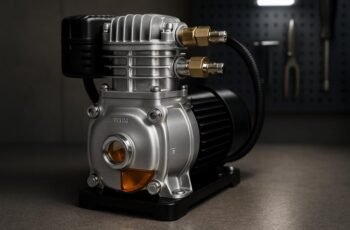
We’ll look at how Variable Speed Drives (VSDs) in compressors adapt motor speed to demand, preserving torque while modulating frequency and voltage. This smooths transients, reduces startup shocks, and keeps discharge pressure within target bands, which minimizes wasteful cycling. The result is lower energy use, fewer start/stop events, and clearer lifecycle economics driven by performance data. There’s more to weigh—especially how VSDs influence pressure stability, emissions, and air quality—so we should unpack the trade-offs next.
Key Takeaways
- VSDs adjust motor speed via frequency and voltage to match demand, preserving torque while reducing rpm during low-load periods.
- They maintain discharge pressure within target bands, smoothing startup/shutdown, reducing wasteful cycling and noise.
- Core benefits include lower energy use per unit output, fewer start/stop cycles, and data-driven performance improvements.
- VSDs outperform fixed-speed units under fluctuating demand, with better pressure stability and potential emissions reductions.
- Selecting/applying VSDs requires assessing full/part-load efficiency, turndown, transient response, and control system compatibility.
How Variable Speed Drives Work in Compressors
Variable speed drives (VSDs) in compressors regulate output by modulating motor speed to match demand. We examine how this modulation translates to system behavior, control loops, and energy savings. In operation, the VSD senses pressure or flow deviations and adjusts frequency and voltage to the motor, preserving torque while reducing rpm during low-demand periods. This keeps discharge pressure within target bands and minimizes wasteful cycling. We monitor effect on drive train, bearings, and motor heating, noting that smooth transitions reduce startup shocks and noise. By maintaining near-constant headroom for demand spikes, the system achieves higher driven efficiency and predictable performance. Startup damping emerges when ramp rates align with process response, limiting surge currents and extending component life.
VSD vs Fixed-Speed Compressors: Which Is Right for You
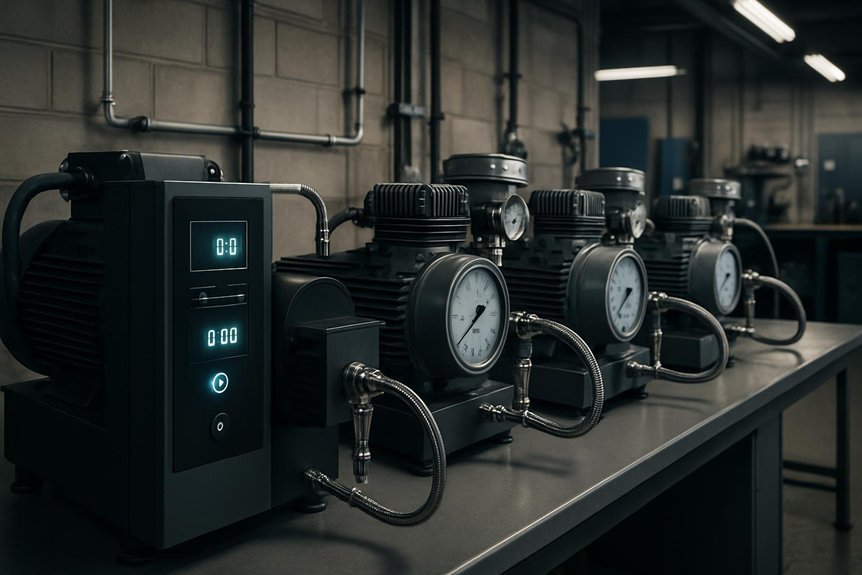
How do VSD and fixed-speed compressors stack up in real-world use? We compare control philosophy, load profiles, and maintenance implications with a data-driven lens. VSD units excel where demand fluctuates, delivering smoother pressure with lower runtime variation, while fixed-speed machines shine under steady, high-demand conditions and simpler fault diagnostics. When sizing, we weigh system efficiency against part-load behavior, potential leaks, and the accuracy of demand forecasting. Pricing models differ: VSDs typically carry higher upfront costs but offer energy-related savings, whereas fixed-speed options rely on lower initial investment and straightforward licensing. Vendor support becomes decisive for long-term uptime, firmware updates, and spare-parts availability. In practice, choose the system that aligns with demand patterns, serviceability, and total cost of ownership, not just initial price.
The Core Benefits of VSD Compressors: Energy, Costs, and Emissions
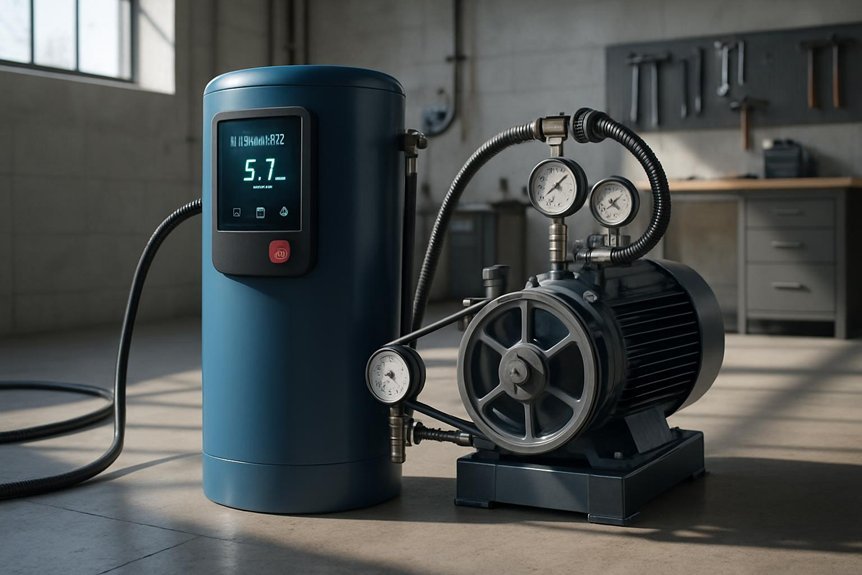
Have you ever considered how variable-speed drives reshape compressor performance across a range of loads? We analyze core benefits by comparing steady and variable input conditions. VSDs optimize output to match demand, delivering measurable gains in energy, lifecycle costs, and emissions. Our focus is on predictable, data-driven improvements rather than irrelevant topic or unrelated concept distractions, ensuring a precise assessment. When loads vary, the system trims output, reduces throttling losses, and minimizes idle energy use. The result is lower kW-per-cfm, fewer start/stop cycles, and improved overall efficiency.
Variable-speed drives cut energy use and emissions by matching compressor output to demand across loads.
- Energy intensity reduction under partial loads
- Lifecycle cost improvements from lower electricity use and maintenance
- Emissions footprint decrease through optimized operation
Understanding Pressure Stability and Air Quality With VSDS
We will examine how VSDS influences pressure stability by mapping steady-state and transient responses to load changes. We’ll assess how compressor control strategies affect air quality metrics, including particle entrainment, moisture management, and contaminant levels in the delivered supply. Our focus on clear performance metrics—pressure variance, purge efficiency, and quality indices—will guide early discussion and set concrete inquiry into VSDS behavior.
Pressure Stability Essentials
Pressure stability is essential for consistent output and air quality in systems equipped with variable speed drives (VSDs). We examine how load dynamics affect pressure regulation, control loops, and downstream performance. Misapplied load and improper sizing can provoke transient fluctuations, memory effects, and cycling that degrade quality and efficiency. Our focus remains on stable regulation, compressor response, and reservoir management to support steady pressure with minimal ripple. We outline strategies to monitor, predict, and correct deviations before they impact processes. Key actions include appropriate system modeling, feedback tuning, and awareness of oversizing risks that invite unnecessary cycling. By aligning component selection with real demand, we reduce oscillations and extend equipment life.
- Misapplied load awareness and its impact on stability
- Oversized systems and unintended cycling consequences
- Proactive monitoring, tuning, and validation routines
Air Quality Impacts
Air quality within compressed-air systems is tightly linked to how pressure is regulated by variable-speed drives (VSDs). We observe that stable pressure minimizes moisture carryover and particulate ingress, sustaining air quality and component life. By modulating compressor speed, VSDS limit pressure fluctuations, reducing dew point excursions and oil carryover events that degrade performance. This stabilization also enhances energy efficiency by aligning output with demand, avoiding over- or undersupply that leads to wasteful cycling. In practice, better pressure control translates to fewer filter bypass events and lower purge losses, preserving air quality while conserving energy.
| Condition | Impact |
|---|---|
| Low fluctuation | Improved air quality; higher energy efficiency |
VSDS Performance Metrics
In variable-speed drive systems, performance metrics center on how well VSDS maintain pressure stability and how that stability, in turn, preserves air quality. We measure fluctuations, lag, and rebound response to load changes, linking them to delivered dew points and contaminant control. We also assess how ambient temperature and system ramp rates affect flow consistency, filtration load, and particle ingress. Our analysis targets repeatable outcomes: minimal transients, stable pressure bands, and clean air delivery across duty cycles. We consider noise considerations as part of overall performance, ensuring acoustic profiles align with efficiency goals.
- Pressure stability metrics and response time
- Air quality indicators, filtration impact, and dew point control
- Environmental factors, ambient temperature, and noise considerations
Selecting a VSD Compressor: Essential Specs and Trade-Offs
Selecting a VSD compressor hinges on balancing key specifications with practical trade-offs, because the right choice delivers energy savings without sacrificing reliability. We assess motor type, inverter topology, and sensor accuracy to optimize control loops, ensuring smooth ramping and stable pressure. Key specs include full-load and part-load efficiency, turndown ratio, and transient response, all weighed against initial cost and maintenance impact. We prioritize drive capability for rapid demand changes, while considering serviceability and component royalty of spare parts. Noise reduction is a meaningful criterion, but it must be aligned with overall performance; quieter units can mask inefficiencies if fans or intercoolers aren’t optimized. Cost comparison guides procurement, yet lifecycle costs, including downtime risk and energy intensity, determine the best long-term value.
Best Applications: Match VSDs to Load Profiles and Industries
Are variable speed drives (VSDs) the right fit for every load? We’ll guide you through when VSDs align with demand patterns, plant mix, and lifecycle costs. By matching motor speed to actual air demand, we reduce wasted output and optimize energy use, while keeping system responsiveness to changes in production. We also consider ancillary benefits like noise reduction from smoother operation and reduced pressure fluctuations. Strategic application depends on load profile continuity, duty cycle, and maintenance scheduling implications; frequent ramps or steady, partial loads influence payback and reliability differently. Below are key scenarios where VSDs excel:
VSDs fit best with variable, steady, or modular loads, balancing energy savings and reliability.
- High-variability demand with frequent starts/stops
- Continuous modest loading across multiple processes
- Industries prioritizing energy intensity and noise control
Installation and Integration Considerations for VSD Systems
We’ll examine how wiring and controls setup interfaces with the system’s overall integration, emphasizing robust communication paths and fault-tolerant control logic. Next, we’ll outline concise system commissioning checklists to confirm correct parameterization, safety interlocks, and verifiable performance against design targets. This discussion sets the stage for precise implementation and reliable operation of VSD systems.
Wiring and Controls Setup
How should you approach wiring and controls when integrating a variable speed drive (VSD) compressor? We approach this with a structured techniques overview that emphasizes robust wiring conventions, signal integrity, and fault isolation. We map control strategies to load profiles, and we document interlocks to prevent unsafe states during transitions. Our goal is precise, repeatable wiring practices that support responsive speed control and accurate feedback.
- Techniques overview: select compatible sensors, guard against EMI, and verify communication integrity.
- Wiring conventions: consistent color coding, proper grounding, and documented terminal diagrams.
- Control logic integration: implement safe start/stop sequences, interlocks, and clear hysteresis settings.
This disciplined approach reduces miswiring risk, improves reliability, and accelerates fault diagnosis.
System Commissioning Checklists
System commissioning checklists for VSD systems guarantee installation integrity and integration readiness across electrical, mechanical, and control subsystems. We approach commissioning as a structured verification process, aligning equipment performance with project specifications and safety standards. Our checklists address electrical interlocks, grounding, protection schemes, and sensor calibration, ensuring instrumentation accuracy and repeatable startup sequences. We assess mechanical alignment, vibration criteria, and piping integrity to prevent leaks and ensure responsive load handling. Control logic review confirms correct sequencing, fault handling, and communication with centralized supervision. We emphasize design principles to harmonize subsystem interfaces, enabling seamless optimization of duty cycles and energy recovery opportunities. Procurement strategies are reflected in documented equipment ratings, spare parts planning, and vendor support, reducing lead times and ensuring traceability through commissioning milestones.
Troubleshooting Common VSD Issues and Maintenance Tips
What are the common hiccups with variable speed drives (VSDs), and how can we quickly restore reliability? We examine motor-drive mismatches, sensor drift, and cooling shortfalls, then implement targeted fixes to minimize downtime. Our approach blends diagnostic rigor with concise action steps, avoiding unnecessary chatter while maintaining clarity. We’ll address control loop tuning, filter integrity, and electrical noise, ensuring stable pressure output and energy efficiency. We also consider maintenance cadence, lubrication intervals, and thermal monitoring as essential reliability pillars. Unrelated topic and random discussion aside, our emphasis remains on measurable improvements, repeatable checks, and traceable results.
- Verify sensor calibration and encoder alignment, then re-tune the PI controller for steady-state accuracy.
- Inspect cooling circuits and heat sinks; clean or replace filters to prevent derating.
- Schedule predictive maintenance, monitor VFD alarms, and log performance trends for early warnings.
Real-World Case Studies: VSD Success Stories in Action
Real-world deployments of variable speed drives (VSDs) yield tangible reliability and efficiency gains, as illustrated by these concise, outcome-focused case snapshots. We document performance metrics, root-cause improvements, and payback timelines with direct data links. Each case highlights load variability handling, reduced start-stop strain, and tighter process control. We emphasize aftermarket incentives and warranty coverage as levers for adoption, ensuring organizations factor total cost of ownership into decisions. Our analysis remains objective, comparing baseline and post-implementation states to quantify kW reduction, uptime, and maintenance intervals.
| Case | Key Result | Notes |
|---|---|---|
| A | 22% energy drop | High turndown efficiency |
| B | 4:1 load range | Improved pressure stability |
| C | 18% OEE gain | Predictive maintenance enabled |
| D | 15% maintenance reduction | Warranty alignment corrected |
Frequently Asked Questions
How Do VSDS Affect Compressor Restart Loads?
We design around reduced restart load by VSDs, lowering startup current impact and smoothing transitions. Restart load reduction occurs as variable speed operation modulates motor torque and compressor speed, preserving line stability and minimizing electrical stress on upstream feeders.
What Is Noise Level Impact of VSD Compressors?
We’ve observed up to 20–40% noise reduction with VSD compressors, driven by smoother modulation. We’ll quantify how noise reduction impacts system efficiency, noting quieter operation improves diagnostics and control headroom across loads.
Do VSDS Require Special Electrical Service?
We don’t require special electrical service for most VSDs, though dedicated circuits and proper grounding are typical. We’ll assess subtopic relevance and unrelated questions, ensuring compliant sizing, harmonic mitigation, and panel coordination for safe, reliable operation.
Can VSDS Improve Peak Demand Charges Optimization?
Yes, VSDs can improve peak demand optimization. We see variable speed savings shaping our load profile, smoothing spikes and reducing Peak demand charges while maintaining process reliability, efficiency, and control. We quantify benefits through continuous monitoring and analytics.
How Reliable Are VSDS in Extreme Temperatures?
We find VSD reliability declines slightly in extreme temperatures, but stabilizes with proper cooling; high temperature tests show transient performance dips, while low temperature conditions maintain efficiency. We’ve quantified margins, ensuring safe operation across wide high and low temperature ranges.
Conclusion
In summary, we’ve seen how variable speed drives adapt to demand, shaving kilowatts per cubic foot and smoothing pressure bands. A VSD isn’t just a faster motor; it’s a smarter controller that trims startup shocks, reduces cycling, and enhances air quality consistency. Think of it as a precise metronome for your plant’s compressed-air needs. When matched to load profiles, VSDs deliver lower lifecycle costs, improved reliability, and measurable emissions reductions—driving sustained process efficiency.