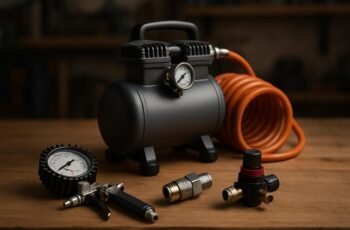
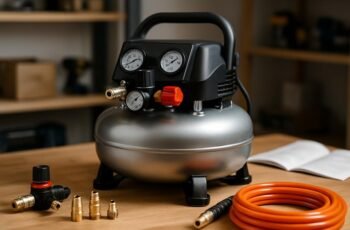
We’re looking at eco-friendly air compressors not just for immediate gains, but for long-term value across energy use, emissions, and maintenance. With inverter drives, better cooling, and durable, recyclable components, these options often lower lifecycle costs and support circular economy goals. Real-time telemetry and energy labeling help us verify performance across varied duty cycles. There’s more to weigh, though, and the choices impact both operations and sustainability outcomes—so we’ll explore what matters next.
Key Takeaways
- Inverter-driven, high-efficiency motors reduce energy use and heat, lowering operating costs and carbon footprint across the lifecycle.
- Oil-free designs minimize maintenance, contamination risk, and downtime, with clearer end-of-life recycling options.
- Real-time telemetry and energy labeling enable smarter replacements, retrofit opportunities, and ongoing performance tracking.
- Recovered heat and efficient cooling boost system-level efficiency, enabling space heating or process use and longer service life.
- Total Cost of Ownership (TCO) tracking across upfront, running, and maintenance costs promotes durable components and proactive maintenance.
Why Eco-Friendly Air Compressors Matter
Eco-friendly air compressors matter because they reduce energy use, lower operating costs, and lessen environmental impact across their lifecycle. We’re presenting this with a data-driven lens, tracing efficiency gains from better components, controls, and sealing. When we compare eco friendly air compressors across industries, the energy savings compound over time, cutting utility bills and demand charges. Lifecycle thinking shows emissions decline not only from fuel use but from manufacturing and end-of-life recycling pathways. Reliability and maintenance intervals also improve total cost of ownership, reinforcing their financial case. We emphasize transparent metrics: specific power, leak reduction, and downtime. By prioritizing these factors, we guide readers toward solutions that balance performance with sustainability, without sacrificing reliability or productivity.
How to Choose the Right Motor Technology
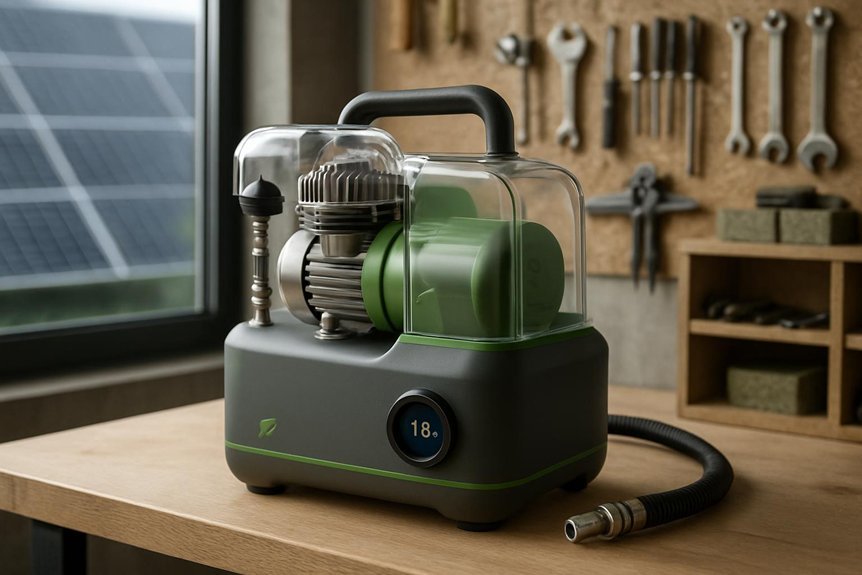
We’ll compare energy efficiency metrics, so you can quantify long-term operating costs and emissions. We’ll weigh motor type tradeoffs against reliability and lifecycle impacts, using data to guide our choice. We’ll also flag maintenance implications to guarantee sustained performance with minimal environmental footprint.
Energy Efficiency Metrics
Choosing the right motor technology hinges on clear energy-efficiency metrics that quantify both immediate performance and long-term impact. We’ll frame metrics around input power, output pressure, and system losses, then tie them to lifecycle implications. Our approach emphasizes energy efficiency during operation, maintenance needs, and end-of-life considerations. We compare motor technologies by efficiency curves, thermal behavior, and power density—key indicators of compactness and performance. By tracking cumulative energy use and downtime, we reveal true lifecycle costs, not just upfront price. We emphasize real-world operating envelopes, including ambient conditions and load variability, to avoid overstated claims. With transparent benchmarking, we help readers assess total cost of ownership and carbon footprint. This data-driven lens guides responsible choices that align with sustainable, scalable air-compression solutions.
Motor Type Tradeoffs
What motor type best balances efficiency, reliability, and total cost of ownership across varied load profiles? We evaluate options through lifecycle data, focusing on motor efficiency, startup dynamics, and overall system impact. Across a range of duty cycles, permanent magnet and high-efficiency induction designs deliver stronger energy performance than legacy brushed systems, reducing electricity use during both steady runs and transient ramps. Variable-speed drives paired with permanent magnet motors adapt to load, trimming waste heat and standby losses. Direct-drive layouts minimize belt losses, while robust induction motors offer proven reliability in harsher environments. We weigh maintenance needs, availability, and supplier ecosystems to avoid hidden costs. Optimal, the optimal choice aligns efficiency gains with predictable performance, favoring technologies that improve startup dynamics and total cost of ownership.
Maintenance Implications
Direct-drive layouts and robust motor designs influence maintenance profiles as much as initial efficiency. We compare motor technologies by their maintenance demands, not just power draw. Synchronous and premium-efficiency drives often reduce vibration, easing bearing wear and extending lubrication intervals when paired with proper cooling. Yet, some designs demand meticulous alignment and advanced diagnostics, impacting maintenance scheduling upfront. We prefer systems with simple lubrication regimes and accessible parts, which lower lifecycle costs and downtime. Data shows that bearings, seals, and belt interfaces drive most costs, so choosing motors with robust seals and proven bearings improves uptime. Regular inspections, documented lubrication intervals, and predictive monitoring align with sustainability goals, lowering energy waste and material throughput. Our recommendation: prioritize modular, serviceable motors with clear maintenance pathways.
Oil-Free vs Oil-Lubricated: Pros, Cons, and Use Cases
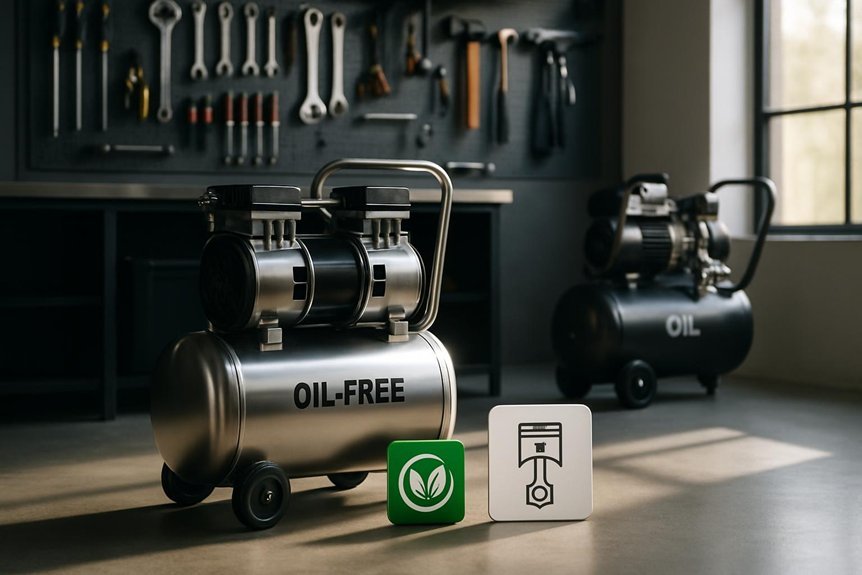
Oil-free and oil-lubricated compressors each have distinct trade-offs that matter for long-term sustainability and total cost of ownership. We compare performance across lifecycle stages, from manufacture to end-of-life. Oil-free units reduce maintenance, minimize contamination risk, and lower downstream housekeeping, but may trade peak efficiency and higher upfront costs. Oil-lubricated designs typically deliver greater reliability, simpler seals, and longer service intervals in demanding duty cycles, yet incur ongoing oil management, disposal, and potential emissions concerns. For use cases, hobby and light industrial tasks benefit from oil-free simplicity, while continuous, high-load operations favor oil-lubricated robustness. Our assessment emphasizes total lifecycle costs, energy impact, and recyclability. When selecting, weigh downtime risk, filtration needs, and alignment with sustainability goals, not just upfront price. oil free, oil lubricated.
How to Minimize Noise: Practical Strategies
Noise isn’t just a nuisance—it signals inefficiency and can cut into productivity and worker well-being. We minimize noise through data-driven choices that extend equipment life and lower energy waste. By selecting low-noise models, implementing proactive maintenance, and adopting sound dampening practices, we achieve sustained noise reduction across the lifecycle. Our approach balances performance, safety, and environmental impact, tracking decibels, energy use, and downtime to measure true value. Prioritizing modular components and proper isolation reduces vibrations and emissions, aligning with sustainability goals. Consistent monitoring confirms ongoing improvements, guiding future upgrades and replacements. Transparent reporting helps teams quantify benefits, from operator comfort to long-term cost savings. Together, we create calmer work environments without compromising efficiency or reliability.
- Prioritize low-noise models and maintenance
- Apply sound dampening and vibration isolation
- Track decibels, energy, and downtime for continuous gains
Size It Right: Matching CFM to Your Projects
Do you know how much CFM you truly need before selecting a compressor? We’ll start by analyzing typical demand across your projects, then size it to minimize waste and energy use. First, map peak and average CFM needs for each tool, then tally runtime hours to estimate annual consumption. We prioritize proportional sizing over oversized units that idle and burn energy. Consider duty cycle, storage, and pressure requirements to avoid over- or under-pressurization. A modular approach helps: size it for base loads and add capacity only when demand rises, reducing idle run time. This lifecycle-minded method improves efficiency, lowers emissions, and supports continuous uptime. In practice, match projects to a single, scalable system that sustains performance while protecting resources.
Green Features You Should Care About: Inverter Drives and Recovery
We see inverter drives as a key efficiency lever, trimming energy use by matching output to demand and smoothing starts. Efficient recovery practices capture waste heat and minimize leaks, extending component life and reducing overall lifecycle impact. Together, these features support data-driven, sustainability-focused decisions for lower operating costs and a greener footprint.
Inverter Drive Benefits
Inverter drives trim energy use and extend equipment life by adapting motor speed to demand, so you get precisely what you need when you need it. We quantify savings through real-time efficiency, reduced idle load, and longer component life, aligning with lifecycle thinking and lower total cost of ownership. By prioritizing inverter efficiency, we minimize wasted energy and heat, while addressing motor startup limits to protect drives and bearings during transitions. This approach supports lower emissions, quieter operation, and more predictable maintenance windows.
- Real-time efficiency gains that translate to lower energy bills and reduced carbon footprint
- Smoother starting profiles that extend motor life and uptime
- Faster return on investment through lifecycle cost reductions and reliability
Efficient Recovery Practices
Efficient recovery practices minimize waste and extend equipment life by reclaiming energy and heat wherever possible. We pair data-driven strategies with practical cooling and reuse, optimizing every stage of the lifecycle. Inverter-driven systems reduce waste heat, while recoveries capture it for space heating, water preheating, or process use. We track performance via energy labeling and real-time telemetry to verify gains, drive continuous improvement, and inform procurement decisions. Our approach emphasizes measurable outcomes: lower operating costs, reduced carbon intensity, and longer service intervals. We prioritize efficient cooling to prevent thermal stress and downtime, aligning with circular economy principles. Energy labeling guides smarter replacements and retrofit opportunities, ensuring we maximize efficiency across the system’s useful life.
| Parameter | Benefit | Metric |
|---|---|---|
| Inverter Drives | Reduced heat, precise control | COP, load factor |
| Heat Recovery | Utilizes waste heat | Heat recovered (kWh) |
| System Controls | Optimized operation | Uptime, delta T |
| Cooling Efficiency | Stabilizes temps | Outlet temp, fan power |
| Lifecycle Impact | Lower footprint | PPA, GHG; payback |
Total Cost of Ownership: Upfront, Running, and Maintenance
Why is total cost of ownership (TCO) vital when choosing an air compressor? We’re framing TCO across upfront installation, running, and maintenance to illuminate true sustainability, not just sticker price. By tracking energy use, part longevity, and service intervals, we prioritize a lifecycle mindset that minimizes waste and maximizes performance. Reliable warranty coverage reduces risk, while efficient designs cut ongoing costs and emissions. Data shows modest upfront investments yield lower lifetime bills when paired with durable components and proactive maintenance.
- Weighs long-term savings against initial price, guiding responsible upgrades
- Highlights resilience, reducing downtime and waste
- Demonstrates value of proactive service and warranty coverage for stable costs
How to Compare Top Eco-Friendly Models Today
We’ve seen how tracking upfront and lifetime costs shapes wiser choices, so now we compare top eco-friendly models head-to-head to identify sustainable winners. We assess efficiency curves, energy use, and total operating cost across duty cycles, not just sticker price. We prioritize low idle consumption, advanced motor designs, and variable-speed options that minimize energy waste during fluctuating workloads. Durability and machine maintenance requirements factor into lifecycle impact, reducing disposal and replacement rates. We evaluate material choices, refrigerant or oil-free systems, and noise signatures to gauge true sustainability. Data sources include independent tests, manufacturer specs, and field reports. By aligning performance with long-term reliability, we highlight which models deliver consistent eco friendly outcomes while protecting workers, budgets, and the environment.
Frequently Asked Questions
How Do Eco-Friendly Compressors Impact Indoor Air Quality?
Eco friendly compressors improve indoor air quality by reducing emissions and contaminants, while energy saving modes lower overall exposure. We track lifecycle impacts, warranties, and maintenance data to ensureer safer, cleaner environments for you and us, with responsible energy use.
Do Warranties Differ for Energy-Saving vs. Standard Models?
Yes, warranties can differ: energy-saving models often have longer warranty coverage due to advanced components, while standard models may hinge on basic terms. We evaluate model differentiation, lifecycle costs, and data-driven performance for sustainable, evidence-backed decisions.
What Maintenance Intervals Maximize Green Performance?
We’ve found that shorter maintenance intervals, backed by data, can boost green performance by up to 15%, and we recommend regular checks every 3–6 months to optimize efficiency, reduce waste, and extend lifecycle through proactive maintenance intervals.
Can Variable Speed Drives Improve Overall Energy Use?
Yes, variable speed drives boost energy efficiency by tailoring output to demand, reducing wasted energy. We quantify savings, lifecycle impacts, and noise reduction; we also prioritize recycling refrigerants and data-driven improvements for sustainable, continuous efficiency gains.
Are There Rebates or Incentives for Green Compressors?
We find that 60% of buyers recoup investments within two years. Yes, there are rebate programs and incentive eligibility for green compressors, and we track lifecycle impacts to maximize savings, emissions reductions, and long-term operational efficiency for you and us.
Conclusion
We understand this isn’t just about buying a tool—it’s about choosing a future. Eco-friendly air compressors slash energy use, extend lifespans, and cut waste heat like a superhero cape. When we pick inverter-driven, oil-free designs with smart telemetry, we’re not just saving dollars—we’re redesigning maintenance, uptime, and sustainability metrics for the entire lifecycle. If we measure impact in kilowatt-hours and recycled components, every project becomes a data-point toward a cleaner, cooler, more efficient world.