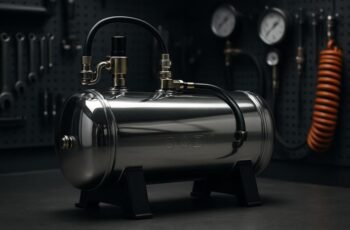
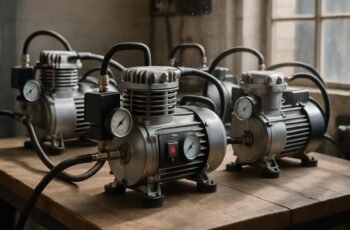
We’ll help you assess a home air compressor by sizing for your projects, weighing CFM, PSI, and tank capacity against usage patterns. We’ll compare oil-free versus oil-lubed options, plus portable designs and noise considerations. With benchmarks on maintenance, warranties, and retailer support, we can forecast total ownership costs. But the best fit may hinge on how your tasks align with cycle frequency and startup requirements—and that alignment is what we aim to clarify next.
Key Takeaways
- Assess your typical tasks (inflation, cleaning, and air tools) to determine if a home compressor adds value and reduces downtime.
- Match CFM, PSI, and tank size to tool demands and recovery needs for steady performance.
- Choose the type (oil-free, oil-lubed, rotary screw, or reciprocating) based on usage frequency, noise, and footprint.
- Prioritize quiet operation, portability, maintenance access, and reliable intake filtration for long-term use.
- Consider total cost of ownership, warranty details, and purchase from authorized retailers with support networks.
Do You Need a Home Air Compressor? Here’s What It Is and Who It Helps
A home air compressor is a compact, versatile device that stores and delivers compressed air for tools and maintenance tasks. We assess whether you need one by examining typical tasks, cost benefits, and reliability. If you routinely inflate tires, clean surfaces, or power air-driven tools, a compressor can reduce downtime and improve consistency. For hobbyist projects, it enables cordless productivity and cleaner finishes by minimizing manual effort. We evaluate output needs, duty cycle, and noise tolerance to determine practicality. A home air compressor supports a broad tool set, from blow guns to brad nailers, making it a strategic investment for DIY routines. If your tasks align with targeted, repeatable air use, a compressor adds measurable value without excessive footprint or maintenance. Consider how often you’ll rely on pneumatic versatility.
Match CFM, PSI, and Tank Size to Your Projects
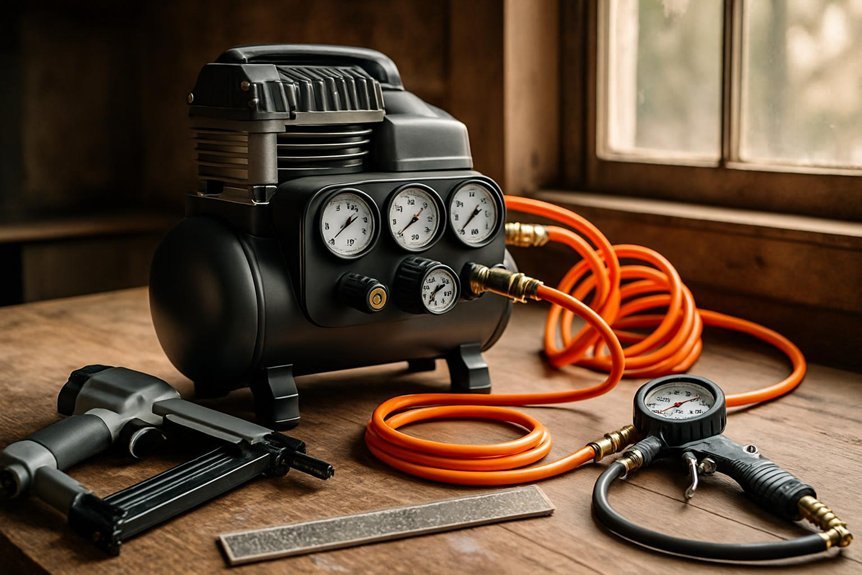
But how do you size a compressor for real-world work? We approach this by aligning CFM, PSI, and tank size with typical usage scenarios, then confirming that the setup can sustain peak demands without short cycling. Our goal is to ensure steady delivery for continuous or intermittent tasks while keeping efficiency in mind. We look at how matching CFM to tool demands minimizes pressure drops, how max psi supports higher-demand tools, and how tank size reduces run-time gaps between cycles. By mapping projects to these metrics, we prevent overkill and wasteful power use. This disciplined approach yields a predictable, responsive system that fits your responsibilities and budget.
Sizing a compressor by matching CFM, PSI, and tank size to real-world usage for efficiency and reliability.
- matching cfm to tool demands for smooth operation
- max psi required by tools and finishing tasks
- tank size to minimize starts/stops and recover time
- usage scenarios guiding real-world sizing decisions
Which Type Is Best for Home Use?
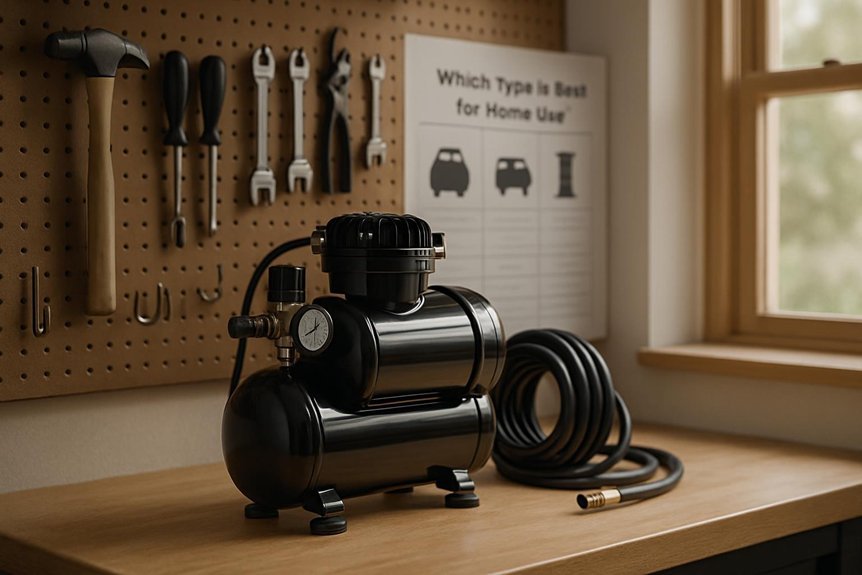
Choosing the right home-use compressor starts with how you plan to work. We evaluate type options by application, reliability, and footprint, then align to project needs. For general DIYs, oil-free models offer maintenance simplicity, while oil-lubricated units tend to run cooler under heavy use. Rotary screw units excel with continuous demand but are overkill for light tasks. For intermittent hobby use, a reputable reciprocating unit balances cost and performance. Consider drill compatibility to ensure that accessories and quick-connects fit your tools. Noise reduction is a practical factor; quieter models reduce disruption and improve workflow. Below is a quick comparison grid.
| Type | Pros | Cons |
|---|---|---|
| Reciprocating | Affordable, versatile | Pulse may affect finish works |
| Oiled Rotary | Durable, steady air | Higher cost, more maintenance |
| Oil-free Rotary | Low maintenance, cleaner | Higher noise potential |
| Stationary | Continuous duty, large tanks | Size, mobility limits |
Keep It Quiet, Portable, and Well-Maintained
We prioritize quiet operation, portability, and ongoing maintenance to keep a home compressor practical. Our approach blends design cues with real‑world use, focusing on predictable performance and minimal downtime. We assess noise profiles, vibration isolation, and thermal management to preserve long term maintenance routines and user comfort. With portable models, weight balance and handle ergonomics guide selection, while compact forms suit tight spaces. We emphasize accessible service points, standard parts, and clear labeling to reduce upkeep time. For continuous reliability, we monitor intake filtration, oiling needs, and belt life, aligning usage with manufacturer intervals. In short, a quiet, portable unit that’s easy to service minimizes disruption and supports steady project workflows.
Quiet, portable compressors with easy service points and clear labeling for reliable, low-downtime use.
- Low-noise design and vibration control
- Balanced portability with user-friendly carry points
- Clear service access and standard replacement parts
- Routine checks that support long term maintenance and reliability
Budget, Warranties, and Where to Buy With Confidence
Having prioritized quiet, portable, and maintainable units, we now turn to cost and assurance factors that shape practical purchase decisions. We evaluate budget considerations alongside long-term value, balancing upfront price against operating costs, maintenance, and expected lifespan. A lower sticker price may incur higher repair or replacement risk, so we quantify total cost of ownership over typical use cycles. Warranty details matter: confirm duration, what’s covered, and any exclusions tied to operation frequency or environmental conditions. We favor models with solid manufacturer support, transparent service networks, and documented reliability data. Where to buy with confidence hinges on reputable retailers, authorized distributors, and clear return policies. Align choice with expected duty, compatibility with existing tools, and available upgrade paths, ensuring predictable performance and risk containment.
Frequently Asked Questions
How Do I Choose the Right Air Compressor for Hobby Tasks?
We choose the right air compressor by matching duty cycle and CFM to hobby tasks, prioritizing Choosing efficiency and Noise considerations, then compare tank size, PSI range, and motor type, and assess portability and maintenance ease for practical use.
What Safety Gear Should I Use With a Compressor?
We’ll start with a stat: 90% of injuries occur without proper PPE. We wear safety gloves, eye protection, noise reduction earmuffs, and guarantee ventilation, then inspect hoses and guards before use for a safer compressor session.
How Often Should I Drain the Tank to Prevent Corrosion?
We drain the tank daily or after heavy use, following proper drain timing to minimize moisture buildup; this practice is essential for corrosion prevention, reducing rust risk and extending compressor life while maintaining safe, efficient operation.
Can I Run Multiple Tools From One Compressor Simultaneously?
We can run multiple tools from one compressor, but not reliably in true simultaneous operation; use a multi tool simultaneous setup with a properly sized tank and pressure regulator compatibility to maintain steady delivery and prevent drops.
What Maintenance Schedule Keeps a Compressor Reliable Long-Term?
We schedule regular checks: daily sight checks, weekly oil level and belt tension, monthly filter changes, and quarterly pressure tests. Long term maintenance underpins reliability planning, reducing failures—like a clockwork engine, precise timing keeps everything running smoothly for years.
Conclusion
We’ve covered how to pick the right compressor for home use, balancing CFM, PSI, and tank size with your projects, and weighing oil-free versus oil-lubed options. We know quiet, portable units reduce fatigue and fit tighter spaces, while reliable maintenance keeps downtime low. If you wonder about affordability, remember total cost of ownership matters more than sticker price—choose a model with solid warranties and accessible service. In short, matched specs plus support equals confident, ongoing performance.