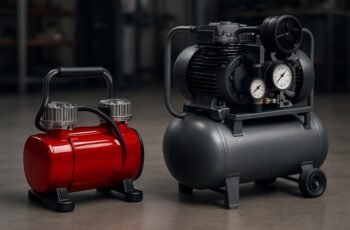
We weigh vertical versus horizontal air compressors by space, use, and maintenance demands, noting vertical units save floor area but need solid vibration control and stable orientation, while horizontal models spread weight for easier rolling and service access in wider bays. Capacity depends on CFM, tank size, and duty cycle, with regulation and system integration shaping performance. The choice isn’t just price or warranty; it hinges on how you balance space, duty, wiring, and upkeep as we navigate the next decision.
Key Takeaways
- Vertical units save floor space and fit tight workshops, but require stable orientation and strong vibration control.
- Horizontal compressors offer easier service access, cooling, and broader base stability for rolling setups.
- Check CFM, tank size, and duty cycle to match tool loads, bursts, and thermal management.
- Verify outlet pressure and operating CFM at PSI to avoid bottlenecks; evaluate electrical startup current.
- Consider maintenance access, hose routing, noise, and total cost of ownership including warranty and filtration quality.
Decide by Space and Use Case: Vertical vs Horizontal Compressors
Choosing between vertical and horizontal compressors hinges on available space and the intended use case. We assess footprint, mounting needs, and access for maintenance, then map to our operation. Vertical units save floor space, allow stackable tank setups, and often fit tight workshops or closets, but require stable orientation and robust vibration control. Horizontal designs spread weight along a base, easing rolling placement and service access in wider bays or shop floors. For high-usage environments, we weigh duty cycle against installability, noise, and vibration transfer. Consider space efficiency during layout, including hose routing and tool proximity. If oil-free options align with cleanliness goals, we evaluate filtration and startup behavior as part of lifecycle planning. Ultimately, our choice aligns space, use case, and preferred maintenance profile.
Capacity in Practice: CFM, Tank Size, and Duty Cycle by Design
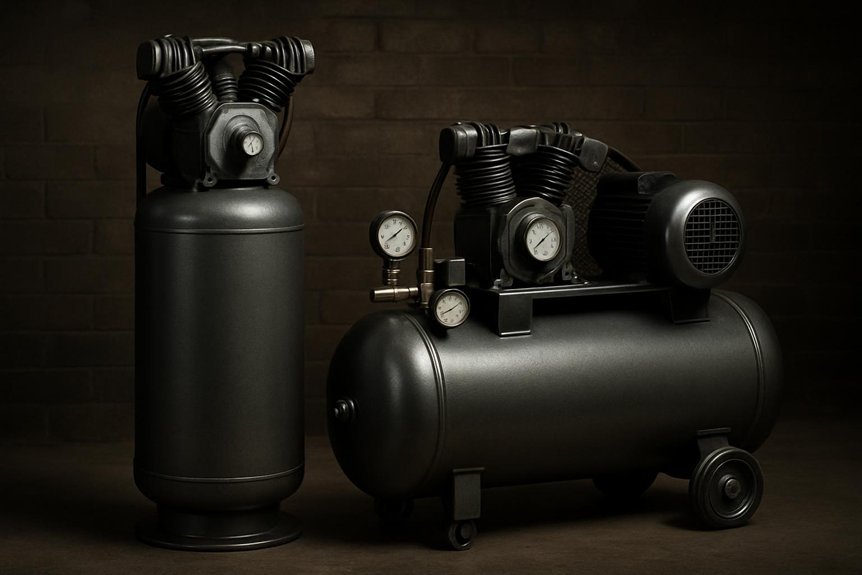
How do capacity metrics translate into real-world performance? We, as designers and users, translate CFM, tank size, and duty cycle into workflow reliability. CFM defines sustained delivery; tank size smooths bursts and reduces cycling; duty cycle determines runtime before cooling or rest. In practice, capacity planning pairs these metrics with application demand and pressure regulation goals to avoid skews between spec sheets and actual use. A compact, high-CFM unit may still stall if duty cycles are short or regulator losses erode pressure at tool ports. We optimize by matching intake and output needs to target pressure bands, minimizing loss through lines, fittings, and filters. This disciplined approach prevents overbuild or underhelp, ensuring consistent performance across tasks and time.
| Metric | Practical Impact | Design Considerations |
|---|---|---|
| CFM | Sustained flow | Matching tool load, minimizing pressure drop |
| Tank Size | Ripple control | Short-cycle avoidance, recovery rate |
| Duty Cycle | Run/Rest balance | Thermal management, continuous use limits |
| Pressure Regulation | Port stability | Regulator choice, leak reduction |
| System Integration | Overall performance | Piping, filtration, accessibility |
Maintenance Access and Portability: Easy Service, Easy Transport
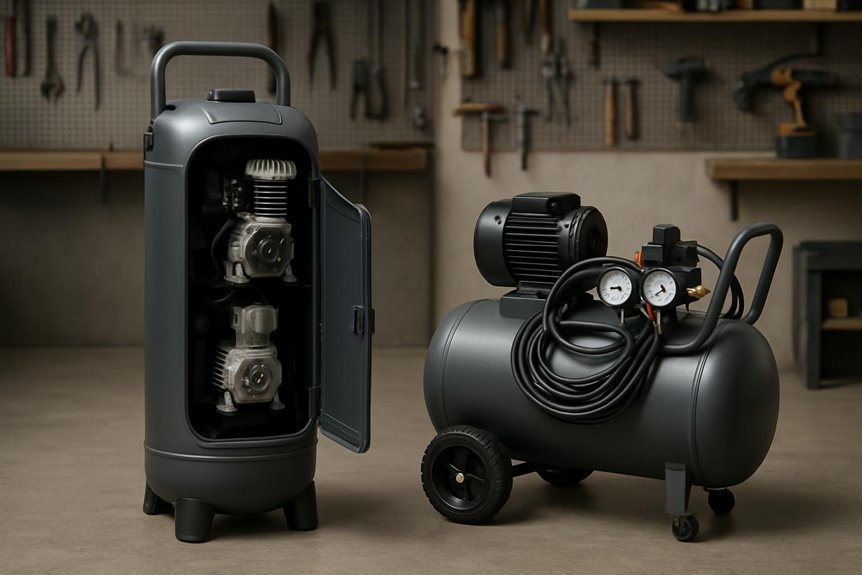
Maintenance access and portability tie directly to the capacity metrics we just outlined. We evaluate how design affects serviceability: accessible panels, quick-filter changes, and clear drain points matter for uptime. We compare vertical and horizontal form factors in terms of maintenance access, noting that a compact footprint can improve routine checks without compromising performance. Portability considerations include handle placement, weight distribution, and wheel quality, which influence moving between jobsites or shop zones. We also assess space planning and usage scenario: a tall unit may occupy vertical clearance but simplify line layout, while a wide, low-profile model may ease hook-ups in tight bays. In practice, balanced trade-offs improve maintenance access and portability without sacrificing core reliability.
Cost, Noise, and Longevity: What to Expect Long-Term
What long-term costs, noise levels, and expected lifespan should we anticipate when selecting between vertical and horizontal air compressors? We examine total ownership, not just sticker price. Our cost comparison accounts for purchase price, energy efficiency, maintenance intervals, and component reliability over time. Vertical compressors often save space but may have slightly different service accessibility; horizontal models can offer easier cooling and service layout, impacting uptime. Noise levels vary with motor size, enclosure, and mounting, yet urban or shared spaces magnify the importance of decibel performance. Longevity hinges on thermal management, load profiles, and filtration quality. In short, expected lifespan correlates with duty cycle and preventive care. We recommend evaluating long-term operating costs and noise exposure alongside upfront investment to decide ethically, efficiently, and precisely.
5-Step Quick-Decision Guide to Pick Yours
With five focused checks, choosing the right unit becomes straightforward. We guide you through a concise decision path that blends performance metrics with practical constraints. First, assess your space: vertical setup saves floor area, while horizontal footprint offers broader stability. Next, consider duty cycle and compressor type, ensuring the unit matches your run-time needs without overprovisioning. Third, verify outlet pressure and CFM at operating PSI to prevent bottlenecks in your tools. Fourth, examine electrical requirements and startup current to avoid panel stress or costly upgrades. Finally, factor maintenance access and serviceability, so routine checks don’t disrupt workflow. Weigh price against longevity and warranty, then align the choice with your space, load profile, and future expansion plans. This disciplined approach minimizes guesswork and maximizes reliability.
Frequently Asked Questions
How Do Vertical and Horizontal Units Fit in Tight Spaces?
We fit them in tight spaces by prioritizing Vertical capacity for tall utility and maximizing Horizontal portability for compact footprints, enabling easy access and placement. We balance weight distribution, vibration control, and service access in confined environments.
Which Orientation Handles Vibration Best in Rough Environments?
We’ll answer: vertical orientation provides better vibration damping and mount isolation in rough environments. We perceive that as we quantify load paths, we confirm that vibration damping and mount isolation are strongest with solid, tank-supported mounts.
Do Height Restrictions Affect Maintenance Access Significantly?
Height clearance does affect maintenance access significantly; limited space impedes tool positioning and routine servicing. We’ll prioritize clearances, design integration, and accessibility metrics to ensure efficient maintenance access and safer, faster service.
Are There Hidden Energy-Use Differences Between Orientations?
Do orientation still hide energy-use gaps? We think so, because energy efficiency hinges on motor alignment and airflow paths. We analyze orientation impacts, noting minor losses and maintenance realities that subtly affect overall energy efficiency.
How Do Wheels and Casters Impact Site Mobility Choice?
Wheels affect site mobility by offering a tradeoff between roll resistance and maneuverability; for durability, caster durability matters under load. We compare wheels, considering caster durability, to optimize ease of transport, stability, and load handling on varied surfaces.
Conclusion
We’ve walked through space, capacity, access, and longevity, pinning down how verticals save floor real estate while horizontals ease movement and service. The signals aren’t universal; space, duty cycle, and outlet needs steer the choice. But as you weigh CFM, tank size, and pressure, a final tension builds: which design will keep your workflow uninterrupted? Consider our 5-step guide, then act. The right pick awaits—just when you think you’ve decided, a new detail shifts the balance.