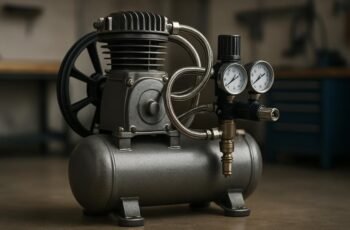
Consider a factory line that slows when a compressor runs dry of oil after a weekend shutdown. We’ll cover how oil degrades, the right viscosity and base, and a clear, step-by-step change procedure so your system stays reliable. We’ll also flag common mistakes, early-change signs, and post-change checks to prevent downtime. Stay with us as we outline practical maintenance steps that keep your compressors efficient and ready for the next shift.
Key Takeaways
- Regular oil changes remove degraded oil, sludge, and contaminants to protect lubrication and cooling in air compressors.
- Follow manufacturer-recommended oil type, grade, and viscosity; match with duty cycle and operating temperatures.
- Use the step-by-step procedure: shut down, drain sump, replace filter, refill to level, and purge air before testing.
- Check filters, seals, belts, and cooling paths; verify fittings and gaskets for leaks after reassembly.
- Document maintenance actions and monitor indicators (pressure, temp, oil level) to ensure reliable operation.
Why an Oil Change Matters for Your Air Compressor?
Oil degradation and sludge buildup directly impair performance, heat dissipation, and component life. We, as your guide, explain why an oil change matters for your air compressor. Contaminants and oxidized oil reduce lubrication efficiency, increasing wear and energy use. Regular oil changes remove varnish, rust inhibitors, and degraded additives, restoring film strength and cooling capacity. We recommend verifying oil quality and level at defined intervals, then replacing with the correct grade to maintain viscosity under load. Filter checks are essential to prevent particulate intrusion and to sustain clean flow paths. By adhering to a disciplined maintenance schedule, you minimize downtime, extend bearing life, and preserve compressor efficiency. Follow the established intervals for oil change frequency and filter checks to ensure reliable operation.
Oil Change Frequency by Compressor Type (Portable, Stationary, Industrial)
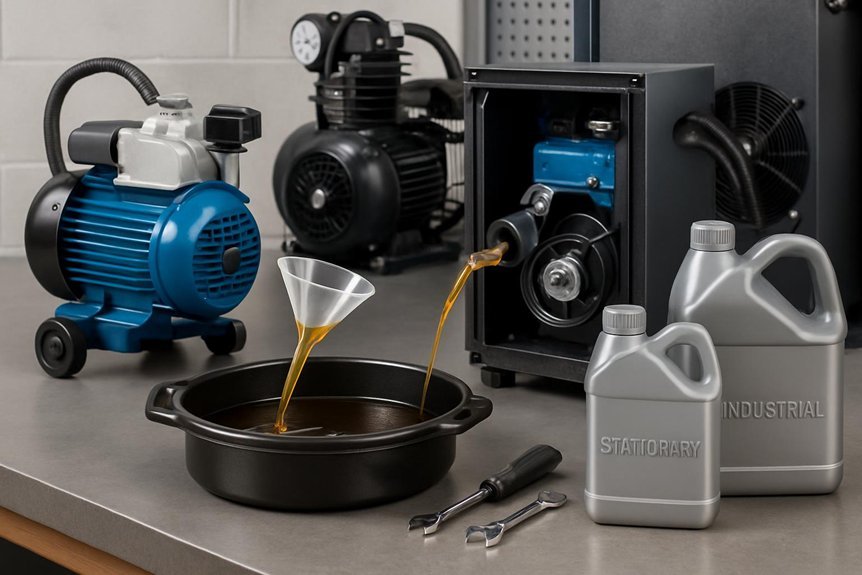
How often you change the oil depends on the compressor type and operating conditions. We summarize frequency guidance by category, then follow a disciplined maintenance cadence to maximize uptime.
| Compressor Type | Typical Oil Change Interval | Notes |
|---|---|---|
| Portable | Every 150–500 hours or every 6–12 months | Use portable maintenance checks; adjust for load. |
| Stationary | Every 1,000–2,000 hours or annually | Factor duty cycle and ambient temperature. |
| Industrial | Every 2,000–4,000 hours or 1–2 years | Prioritize scheduled lubrication for reliability. |
We tailor intervals to usage, environment, and oil quality. This approach supports portable maintenance and sustains industrial reliability across fleets.
Choosing the Right Oil for Your Air Compressor
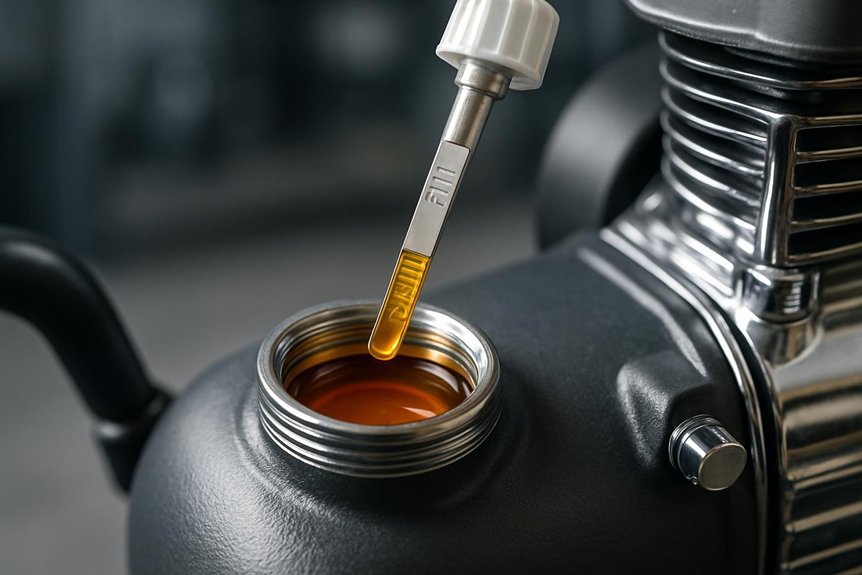
We’ll start by outlining the key oil choices: viscosity guidelines, mineral versus synthetic bases, and the role of additives. We’ll compare how viscosity matches operating temps, and we’ll note where mineral oils suffice versus where synthetic oils offer protection and longer life. We’ll also summarize additive benefits, such as rust inhibitors and detergents, to help you select the most appropriate oil for your compressor.
Oil Viscosity Guidelines
Selecting the right oil viscosity is essential for peak compressor performance. We define viscosity targets from the manufacturer chart and operating conditions, then verify compatibility with seals and bearings. Our approach emphasizes consistency, not guesswork, to avoid heat and wear penalties.
- Choose viscosity grade per load, duty cycle, and ambient temperature, checked against the tech sheet.
- Match viscosity to lubricant designation (ISO/VG) and permitted ranges to minimize foaming and carryover.
- Consider startup refrains: higher viscosity aids cold starts, lower viscosity aids hot operation, within spec.
- Record viscosity, batch, and operating notes for future cost considerations and technique overview.
This method streamlines maintenance, reduces downtime, and clarifies cost considerations while maintaining precise, repeatable results.
Mineral vs Synthetic
Is mineral oil or synthetic oil the better choice for your air compressor under specific loads and temperatures? We evaluate options and align with our operating envelope. Mineral oil offers straightforward, proven lubrication at moderate duty, with robust film strength and lower cost. Synthetic oil provides improved oxidation resistance, wider temperature tolerance, and extended change intervals, beneficial for high-load or extreme-temperature scenarios. We consider viscosity selection, compatibility, and service life for our hardware. If you run below 0°C or above 40°C, synthetic oil often maintains better flow and protection, reducing wear. For steady residential use, mineral oil can meet reliability requirements at a lower upfront cost. We document compatible grades, inspect seals, and schedule changes based on runtime, not just calendar.
Additive Benefits Overview
Additives can materially impact performance and longevity, so understanding their benefits helps us pick the right oil for your compressor. We assess additive packages to optimize film strength, corrosion resistance, and rust inhibitors, reducing downtime and extending service life. We select formulations that target piston wear, cylinder bore protection, and valve cleanliness, while matching viscosity to operating temperature ranges.
- Improve film strength to minimize irreversible wear under high-load cycles
- Prevent corrosion and rust, preserving internal components
- Reduce varnish and deposit formation for cleaner system interiors
- Align with disposal guidelines and environmental considerations for spent oil
We balance these benefits against cost and compatibility, ensuring the chosen oil delivers reliable performance without compromising safety or maintenance schedules.
Step-by-Step Oil Change Procedure for Your Model
How often you change the oil depends on your model and usage, but the procedure stays the same: drain the old oil, replace the filter, and refill with fresh oil to the recommended level. We guide you through a concise, repeatable sequence: shut down the unit, relieve pressure, and secure the drain plug. Collect used oil for proper oil storage handling, then open the sump plug to drain completely. Remove the filter, install a new one, and torque to spec. Refill with the manufacturer’s grade and quantity, then purge air by running the compressor briefly. Check for leaks, recheck level, and log the oil change for scheduling. Maintain consistent intervals to optimize performance and component life.
Common Mistakes and How to Avoid Them
We’ll start by highlighting common drainage missteps, ensuring we fully evacuate old oil to prevent contamination. Next, we’ll confirm oil type selection and compatible filters, seals, and gaskets to avoid leaks or misfueling. Finally, we’ll checklist filter and seal integrity to prevent recurring issues and downtime.
Proper Drainage Practices
Drainage mistakes are common and costly when changing compressor oil. We’re detailing proper drainage practices to minimize risk and mess, while maintaining compliance. We follow a disciplined sequence to ensure complete drainage and safe handling.
- Pre-check valves and drain plugs, verify seals, and depressurize system before opening.
- Drain gradually into approved containers, avoiding spills and splashes; keep work area clean.
- Label containers, track waste volumes, and store for proper disposal per regulations.
- Clean drainage ports and reflect on drainage etiquette to prevent contaminants entering lines.
We prioritize waste disposal compliance, minimizing environmental impact. Use compatible containers, seal tightly, and transport only to authorized facilities. After draining, purge residuals with a small, controlled flush if manufacturer-approved. Record the procedure for traceability.
Oil Type Selection
What oil type should you choose for your compressor, and why do wrong choices haunt performance? We approach oil selection with a disciplined method: confirm viscosity grade aligns with operating temperature, verify compatibility with seal materials, and match additive packages to your compressor model. Avoid synthetic-oil hype when your unit isn’t rated for it, and resist using multi-purpose automotive oils that lack air-compressor certifications. Maintain consistent lubrication cycles and mark everyone’s notes to prevent wrong substitutions. Track oil performance through contamination control practices—monitor color, sediment, and foaming, and replace contaminated batches promptly. Document the recommended oil type in maintenance logs and tiered schedules. Failures often stem from over- or under-lubrication, not just incorrect brand; standardize procedure, verify with the manual, and rehearse changes.
Filter and Seal Checks
Filters and seals are critical to keep air clean and compressor lubrication effective; skip regular checks and you’ll pay later in reduced efficiency and seal failures. We systematically verify integrity, orientation, and cleanliness to prevent contamination and leaks.
1) Inspect filter housings for cracks and discoloration, replacing worn elements promptly.
2) Check seal surfaces for hardening, nicks, or misalignment; reseat or replace as needed.
3) Confirm fittings are tight and free of oil traces, avoiding drip-based leaks that mask underlying issues.
4) Test system pressure after reassembly to confirm proper sealing; document off topic ideas and unrelated topics only as a note, not guidance, focusing on two word phrases for quick reference.
Signs You Need an Oil Change Sooner
If you notice changes in your compressor’s performance, it’s a clear sign you should check the oil sooner. We’ll outline practical indicators to act on now. Listen for increased motor strain, longer startup times, or uneven running noises, all signaling reduced lubrication. Look for darker, thicker oil or metallic particles on the dipstick, which reflect contamination or wear. Monitor oil level deviations after short shutdowns; repeated dips indicate consumption or leaks. Check operating temperature: unexpected heat rise means oil isn’t dissipating heat effectively. Note any foam or milky residue, suggesting coolant intrusion. In these cases, perform a quick oil sample evaluation and review usage patterns against techniques overview and market trends to decide urgency and replacement intervals. Timely checks prevent accelerated wear and improve reliability.
Maintenance Beyond Oil: Filters, Belts, and Cooling
Maintenance beyond oil means examining and replacing critical components that keep the system cool and running smoothly: filters, belts, and the cooling circuit. We’ll walk you through practical steps to maintain efficiency, reliability, and dust control. Proper maintenance prevents overheating, reduces wear, and protects seal compatibility across components.
- Inspect filters for clogging; replace if restricted air flow is evident.
- Check belts for cracks, glazing, or looseness; adjust tension or replace as needed.
- Clean the cooling circuit passages and verify fan operation for unobstructed airflow.
- Confirm seals remain intact and compatible with current fluids and temperatures; replace if signs of leakage appear.
Troubleshooting After an Oil Change: What to Check
After changing the oil, we’ll verify the system isn’t showing signs of drainage or pressure irregularities and confirm components return to proper function. We start with a quick leak check at all fittings and hoses, then observe the pressure gauge as it stabilizes to the expected range. Next, run the compressor briefly and listen for abnormal sounds, valve chatter, or air leaks from seals. Check oil level again after warm-up and ensure the sight glass reads within spec. Inspect gauges, safety valves, and relief devices for proper operation. Verify electrical connections and timer settings are accurate. If readings drift, stop and recheck connections. Note: irrelevant topic and unrelated concept may distract; stay focused on pressure, temperature, and flow diagnostics. Resolve anomalies before resuming normal duty.
Frequently Asked Questions
How Often Should the Compressor’s Oil Be Tested for Contamination?
We test oil for contamination every shift, performing oil testing and contamination checks to ensure optimal performance. We check levels and particles, maintaining records and alerting you if contaminants exceed allowable limits or trends show rising risk.
Can Synthetic Oil Harm Older Compressor Seals or Components?
Yes, synthetic oil can affect old seals; we recommend testing compatibility first and monitoring for leaks. If deterioration appears, revert to OEM oil or use compatible formulations designed for older seals and components. Regularly inspect seals after changes.
Does Oil Choice Affect Air Quality or Odor From the Tank?
Yes, oil choice can affect odor and air quality. We’ll evaluate oil compatibility and odor implications, then confirm compatibility with seals and components, ensuring safe operation as we monitor vapor and particulate output and maintain regulatory standards.
What Happens if Oil Discolors Rapidly After a Change?
Oil discoloration after a change can signal contaminants or degraded oil; rapid changes may indicate improper filtration or oil degradation. We recommend sample testing, filter replacement, and a fresh fill to prevent performance issues and moisture buildup.
Should I Pre-Fill or Prime the Oil Before First Startup?
We should prime the system, not just pre-fill, for startup lubrication. We believe priming ensures immediate film, reduces wear, and stabilizes pressure. Pre-fill can suffice later, but priming minimizes startup friction and protects components.
Conclusion
We’ve walked through keeping an air compressor reliable: regular oil changes, correct oil choice, and diligent post-change checks. Think of it like a racecar’s oil system—forget one lap, and performance drops fast. In a 75‑word span, a single anecdote: we changed the oil on a stubborn unit, and within hours it ran cooler and smoother, like a turbine finally breathing easy. So stick to the schedule, document diagnostics, and trust the data to keep systems efficient and long‑lasting.