We’ll frame an air compressor maintenance checklist around safe, reliable operation, and we’ll notice a coincidence: power trips and pressure spikes often line up with overlooked drains. We’ll walk through daily, weekly, and monthly tasks—leaks, gauges, lubrication, condensate management, and safety interlocks—then set a plan for logs and proactive fixes. Stay with us as we pin down a practical routine that could prevent surprising downtime, and uncover where your setup might be ready for a tighter tune.
Key Takeaways
- Daily checks: inspect for leaks, verify pressure targets, test safety interlocks, and confirm proper gauge readings.
- Weekly inspections: assess belts, hoses, fittings, and listen for abnormal noises during light operation.
- Monthly/maintenance actions: drain condensate completely, inspect filters/oil, and tune regulator to target pressure.
- Documentation: log dates, parts used, readings, and any anomalies with timestamps.
- Proactive planning: analyze metrics like temperature and vibration to schedule preventive interventions.
What an Air Compressor Needs to Run
To run reliably, an air compressor needs a few essentials: clean power, proper lubrication, and stable air storage. We’ll outline how these elements work together and what you must confirm before operation. Clean power means stable voltage, proper wiring, and a grounded outlet to prevent surges. We check electrical connections for corrosion and verify that the circuit can handle the load. Proper lubrication reduces wear, minimizes heat, and extends life; use the correct oil type and keep level within recommended range. Stable air storage ensures consistent pressure and readiness for use, so verify tank integrity and that the pressure switch engages at precise setpoints. Together, these basics form a foundation for reliable performance, delivering compact power when you need it and dependable air storage for steady operation.
Daily Checks: Leaks, Gauges, and Safety
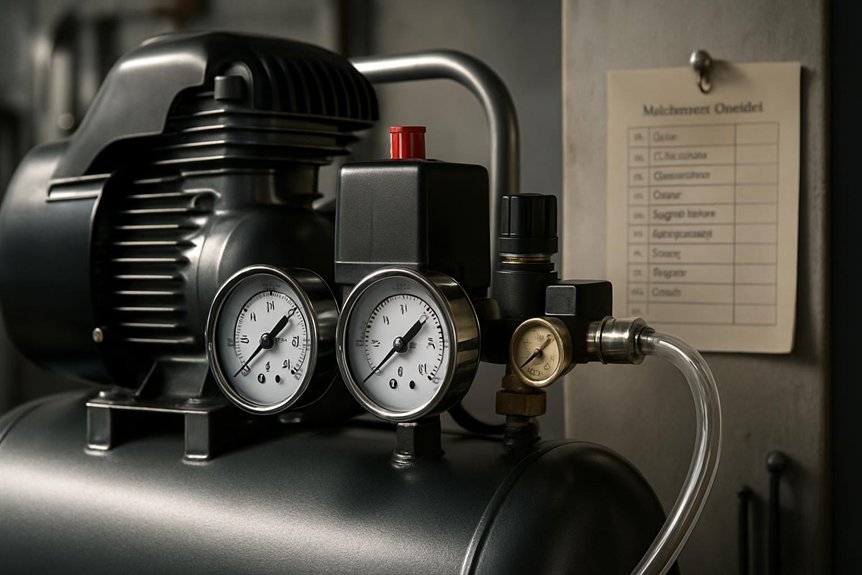
We start each workday by checking for leaks, reading gauges, and confirming safety. We approach daily checks with a calm routine: inspect lines for moisture or drips, verify fittings are tight, and listen for unusual hissing. Gauge accuracy matters, so we compare a primary gauge to a secondary when possible, noting any deviation. We confirm pressure targets match demand, and we test emergency stop mechanisms and interlocks. If leaks appear, we isolate the source and document findings for repair. Safety steps include PPE, venting procedures, and lockout-tagout readiness. Below is a concise visual guide to organize our checks.
| Step | Action | Result |
|---|---|---|
| Leak check | Inspect lines and fittings | No moisture or sound |
| Gauge check | Compare gauges | Consistent readings |
| Safety | Verify controls | Safe shutdown available |
Weekly Inspections: Belts, Hoses, and Fittings
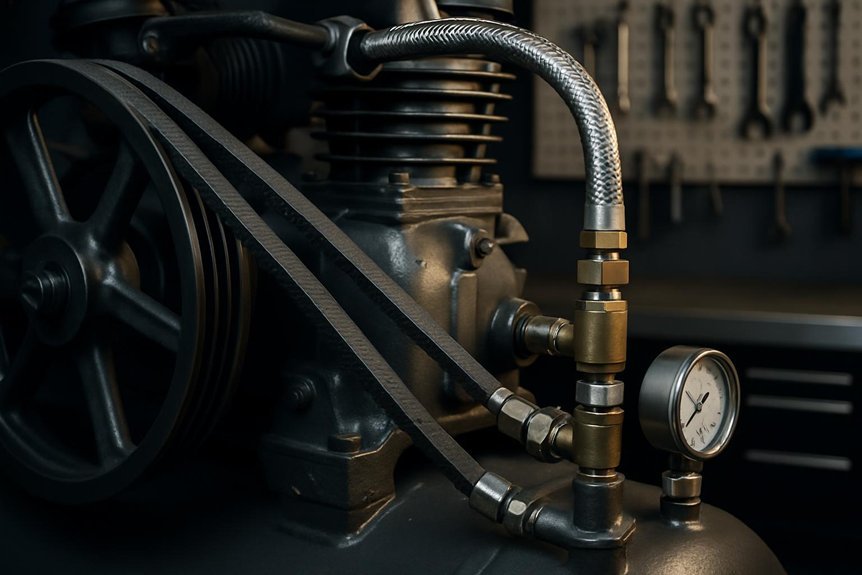
Weekly inspections focus on belts, hoses, and fittings to prevent unexpected downtime. We approach these checks with a systematic mindset, documenting findings as we go. Belts inspection begins with tension and wear: look for cracking, glazing, or fraying, and confirm alignment. If misaligned, adjust or replace components before issues escalate. Next, hoses condition gets evaluated for cracking, bulging, or leaks at fittings; replace any compromised segments and secure clamps firmly. Fittings receive a hands-on inspection for tightness and corrosion, ensuring connections remain leak-free. We test overall system response during light operation, noting abnormal noises or vibrations. Record dates, part types, and outcomes for future reference. This routine maintains reliability, supports safe operation, and minimizes unscheduled downtime for the week ahead.
Drain Moisture and Manage Condensate Properly
We’ll show you how to drain moisture properly and manage condensate efficiently, so your system stays dry and reliable. We’ll follow a methodical routine to remove water at the source, monitor condensate levels, and use the right controls. Our goal is clear, consistent practice that minimizes downtime and protects components.
Drain Moisture Properly
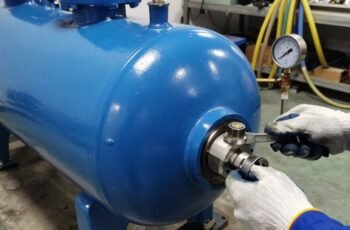
Drain moisture from the tank and lines to prevent corrosion and rust buildup. We approach this step with precision, ensuring every release is controlled and deliberate. First, shut down the compressor and depressurize the system following safe procedures. Next, locate the drain valve at the tank bottom and open it slowly, allowing condensate to drain completely before closing. If equipped, use a built-in automatic drain to handle routine releases; verify it’s functioning during a test. After draining, recap and re-pressurize, checking for leaks along hoses and fittings. Document the procedure for condensate management in maintenance logs and schedule periodic checks. We prioritize consistent drainage timing, avoiding partial releases, to maintain system efficiency and extend component life. Maintain clear, accurate records for ongoing reliability.
Manage Condensate Efficiently
We drain and manage condensate efficiently by combining precise moisture removal with systematic monitoring. We act as a team to implement condensate management that minimizes downtime and wear. First, we identify drip points and validate drain accuracy, then set automatic or scheduled manual flushes to prevent buildup. We calibrate condensate traps to respond to pressure changes without over-releasing air. Next, we log moisture trends, inspecting for unexpected spikes that indicate leaks or ineffective filtration. We prioritize moisture control by maintaining clean separators and desiccants as needed, and we verify that venting paths stay clear. Finally, we train operators to recognize signs of moisture intrusion and to execute prompt corrective actions. This disciplined approach preserves efficiency, reliability, and equipment life.
Filter and Oil Care for Clean Performance
How often should you check and replace elements like filters and oil? We approach filter and oil care with precise steps. First, we inspect filters for debris and pressure drop, then replace when dirty or flow is restricted. Carry out filter maintenance at intervals defined by your unit’s manual, adjusting for duty cycle and moisture exposure. For oil, check levels daily and change per manufacturer guidelines, using the correct grade and fresh oil. Keep oil cleanliness by avoiding contamination—use clean containers and tools. Record dates and part numbers to track service, and pre-filter air intake if you operate in dusty environments. Verify seals and gaskets during each service. Consistent attention minimizes wear and preserves consistent performance.
Tune the Regulator for Steady Air Quality
Tuned regulators guarantee steady pressure and clean airflow, so we finish the filter and oil checks by confirming the regulator’s setpoint matches your system needs. We approach tuning regulator adjustments with a clear method: verify outlet pressure, compare to the target range, and document deviations. If pressure is high, back off the regulator slightly and recheck; if low, incrementally raise the setting while watching for stability. We test under typical loads to ensure the response is consistent, avoiding overshoot or flutter. We listen for leaks and confirm gauges hold steady after changes. Record the final setting, establish a maintenance reminder, and train operators to monitor the regulator during use. This practice supports steady air quality across tools and cycles.
Monthly Safety Checks and Wear Assessment
We perform monthly safety checks and review wear metrics to spot signs of fatigue or misalignment early. We’ll check guards, belts, hoses, and fasteners, and track any changes in vibration, temperature, or noise. By logging these metrics, we can act promptly to prevent failures and keep operation safe and efficient.
Monthly Safety Checks
Monthly Safety Checks and Wear Assessment: We start each month by inspecting the compressor for obvious hazards, wear, and performance signs, so we can address small issues before they become failures. We prioritize air purity and noise reduction as part of our routine, confirming filters, valves, and seals are clean and intact. We document any deviations and plan corrective steps promptly.
- Inspect filters, condensate drains, and moisture traps for cleanliness and proper operation.
- Verify belt tension, couplings, and mounting hardware for secure, noise-free operation.
- Check gauges, regulators, and safety devices for accurate readings and functional interlocks.
Wear Assessment Metrics
Wear patterns aren’t optional after our monthly checks; they guide us to preempt failures. We establish wear assessment metrics to quantify condition changes over time. Our approach combines visual inspections, measurement comparisons, and functional tests to produce actionable data. We track wear metrics for critical components, noting material loss, surface scoring, alignment deviations, and seal degradation. Each metric aligns with our maintenance thresholds, triggers, and revision intervals, ensuring consistent decisions. We log readings, timestamp findings, and correlate them with operating hours and load. By focusing on component wear trends, we identify early signs of fatigue, vibration shifts, or temperature increases. This disciplined process lets us schedule proactive interventions, extend life, and minimize unscheduled downtime without sacrificing safety or performance.
Quick-Flag Troubleshooting: Fixes for Common Issues
Need quick, reliable fixes when an air compressor acts up? We’ll guide you with quick flag diagnostics and troubleshooting shortcuts, focusing on clarity and speed. We identify symptoms, isolate root causes, and apply targeted remedies, avoiding guesswork.
- Check gauges and electrical connections first. Loose plugs or tripped breakers trigger false alarms; tighten, reset, and verify stability.
- Inspect for air leaks and pressure drops. Listen for hisses, seal joints, and replace worn o-rings to restore efficiency.
- Verify system settings and safety switches. Reset cut-in/out pressures, confirm auto-drain operation, and test startup procedures before resuming tasks.
Adopt these steps as a routine, document findings, and maintain consistent checks to prevent recurring faults and downtime.
Frequently Asked Questions
How Often Should I Replace Air Compressor Filters for Best Performance?
We replace filters every 3 to 6 months for optimal performance. Replaceable filters should be inspected monthly, and we schedule filter replacement based on run time and manufacturer’s specs. We’ll track usage and document every replacement for consistency.
What Is the Safe Storage Procedure for a Charged Compressor?
We store a charged compressor safely, then confirm leak detection before any handling. We follow precise steps: disconnect power, vent pressure, store upright, and secure caps; we monitor for signs of danger and keep others away.
How Can I Identify Hidden Leaks Beyond Gauges and Hoses?
We identify hidden leaks using thermal imaging, then verify with traceable checks and pressure decay tests. We monitor patterns, compare baselines, and document findings clearly, ensuring quick detection for you and precise, actionable maintenance guidance, every step transparently.
Which Maintenance Tasks Require Shutting Down and Depressurizing First?
We must shut down and depressurize for tasks like replacing valves, servicing filters, and plumbing work. We’ll follow shut down procedures and depressurizing steps first, then lockout/tagout, verify zero pressure, and proceed safely, concisely, and methodically.
What Are Signs of Compressormisalignment Affecting Efficiency and Safety?
We notice misalignment indicators like unusual vibration, pulsing, and belt wear, which signal efficiency impact and potential safety risk. We address them by tightening mounts, aligning drive components, and inspecting couplings to restore steady operation and optimal efficiency.
Conclusion
We’ve walked through daily through monthly checks, and we understand what keeps a compressor reliable: clean power, sound wiring, proper lubrication, and timely condensate drainage. Stay methodical, log every inspection, and address trends before they become failures. Remember our warning: neglect today compounds tomorrow’s downtime. Like a master clock, your preventive routine ticks toward continuous pressure and performance. If you commit to these disciplined steps, your system will run smoother, safer, and longer than you expect.