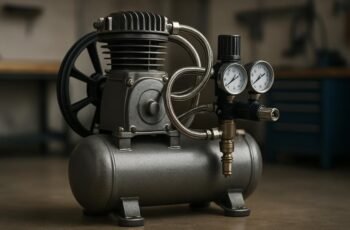
We could say it’s the single most important tool in a shop, because the right air compressor changes everything. We’ll walk you through how CFM, PSI, tank size, and duty cycle interact, why pumps, motors, and regulators matter, and what safety features protect your workday. If you want reliable air on demand without surprises, keep going—we’ll map out a simple framework to fit your needs.
Key Takeaways
- Understand CFM vs. PSI: CFM is sustained airflow while PSI is peak pressure; both affect tool performance and should be balanced.
- Tank size and duty cycle: Larger tanks smooth cycles; duty cycle governs pump run time to manage heat and wear.
- Pumps, motors, regulators: Piston pumps deliver bursts, rotary motors provide steady flow, regulators protect tools and optimize efficiency.
- Noise, vibration, and cooling: Use sound-rated components, proper mounting, vent maintenance, and adequate airflow to extend life.
- Safety and maintenance: Relieve overpressure with valves, use automated shutoffs, and follow regular filter, oil, and drain checks.
Why You Need an Air Compressor: Use Cases and Outcomes
Air compressors are versatile tools that reveal a wide range of tasks across home, workshop, and industrial settings. We’ll show you practical use cases and concrete outcomes, so you see why this equipment matters. In homes, they power nail guns, inflate tires, and operate paint sprayers, reducing manual effort and saving time. In workshops, they drive impact wingers, grinders, and sanders with consistent pressure, improving project quality and finish. In industrial environments, they support production lines, cleaning, and pneumatic tooling, boosting throughput and uptime. Across all contexts, efficiency gains come from reliable delivery and quick setup. To keep performance consistent, we follow simple maintenance routines: filter checks, oil levels, and drain valves. With proper care, you maximize reliability, safety, and value.
CFM vs. PSI: Which Performance Metric Matters for Your Tools
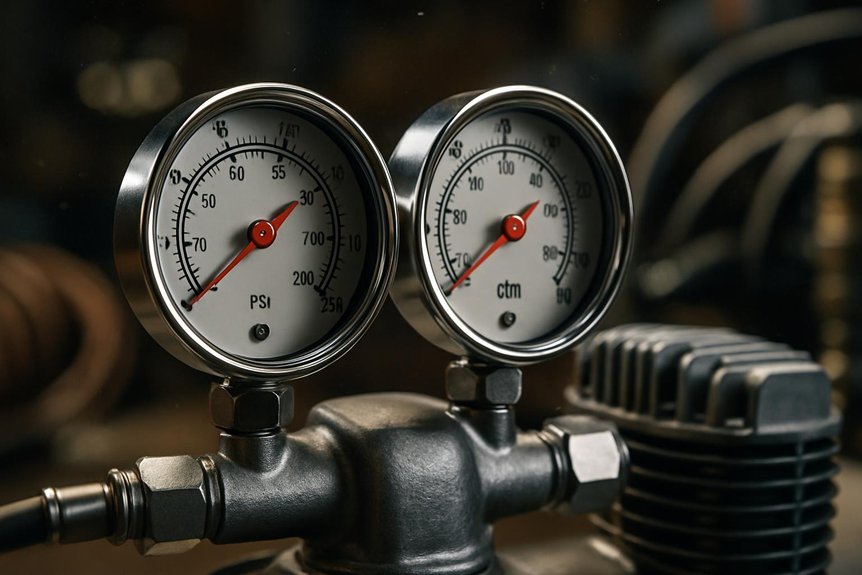
Now that you know how an air compressor powers a variety of tools, let’s zero in on two key performance metrics: CFM and PSI. We’ll clarify how each metric affects tool performance and why both matter in real tasks, balancing airflow and pressure for reliable operation. We consider how coaxial lubrication minimizes wear and how thermal expansion can impact pressure stability under load. In practice, CFM governs sustained air delivery, while PSI defines peak force for demand tools. Understanding the interaction helps you pick the right setup and avoid under- or over-sizing components.
CFM fuels steady airflow while PSI delivers peak power for demand tools.
- CFM vs. PSI: how to read tool requirements
- When higher CFM matters more than pressure
- How lubrication and heat influence performance
- Practical tips to optimize until you reach consistent output
Sizing the Tank and Choosing the Right Duty Cycle
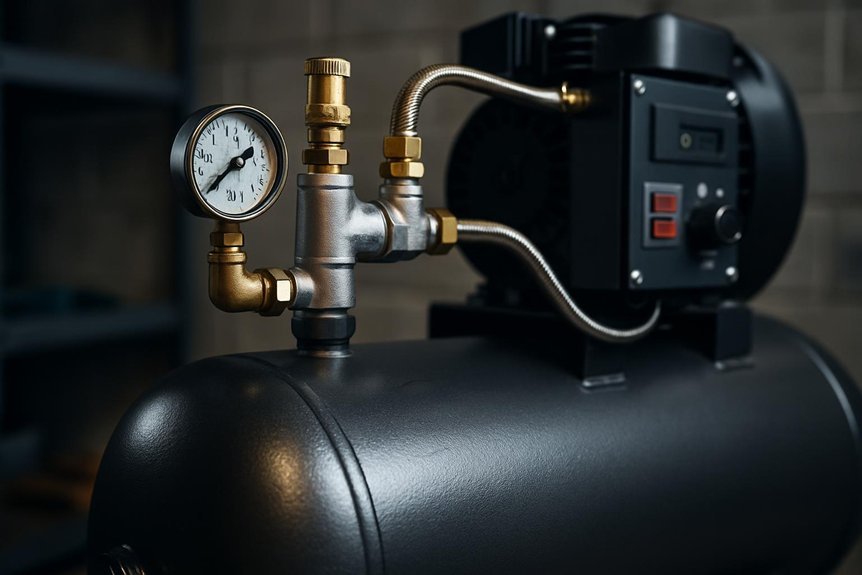
So, how do you size the tank and pick a duty cycle that keep your system steady without wasting space or energy? We start with two core ideas: air storage and System pressure targets. Tank sizing sets how much stored air is available between cycles, preventing short cycling and pressure drops. Duty cycle selection determines how long the pump runs within a given period, balancing heat, wear, and energy use. Match tank volume to your typical runtime between cycles, and set a cut-in/cut-out range that fits your tools’ demands. Consider peak CFM events and the compressor’s compressor head capacity. A larger tank smooths fluctuations, while a proper duty cycle minimizes restart frequency. Evaluate operating pressure ranges, then verify that air storage meets tool requirements without oversizing.
How Pumps, Motors, and Regulators Shape Airflow
What roles do pumps, motors, and regulators play in shaping airflow, and why do they matter for performance? We, together with you, explain how each component sets pressure, flow, and response time. A piston pump delivers high-volume bursts at low speed, while a rotary motor provides smooth, continuous rotation for steady airflow. Regulators tune downstream pressure, preventing waste and protecting tools. Together, they determine startup surge, runtime efficiency, and consistency under load.
- How piston pump behavior affects initial pressure and recovery
- Why a rotary motor choice supports steady delivery
- Regulator settings that balance performance and protection
- Interaction effects: startup, cycling, and duty considerations
Noise, Vibration, and Cooling: Practical Considerations for a Comfortable Shop
Balancing airflow performance with a comfortable workspace means paying attention to noise, vibration, and cooling as integral parts of setup. We address noise control first: choose sound-rated components, enclosure where practical, and place the unit away from high-traffic zones. Next, we minimize vibration dampening through solid mounting, level benches, and anti-vibration pads to reduce structure-borne sound. Cooling considerations matter too: provide adequate airflow around the radiator or compressor housing, avoid restricted vents, and maintain clean filters to prevent overheating. Regular maintenance keeps noise and heat at bay, while proper ducting directs airflow efficiently. We avoid overloading circuits, which can increase thermal stress. In practice, optimize mounting, enclosure, and ventilation to sustain steady performance and a quieter, cooler shop environment.
Safety Valves and Controls: Keeping Your System Safe and Reliable
Safety valves and controls are our first line of defense against overpressure, unsafe startup, and runaway operation. We design, monitor, and adjust these components to protect you and your equipment. A proper safety valve or relief valve prevents hazards by venting excess air when pressure spikes. Controls shutoffs, linked to pressure gauges, automate stops to avoid damage and downtime. Regular testing ensures accurate readings and reliable responses. Clear labeling and accessible manuals help you act quickly during alarm conditions. We prioritize predictable behavior, minimal downtime, and consistent performance.
- Safety valve and relief valve roles in protection
- How controls shutoffs and pressure gauges interact
- Routine testing and maintenance cadence
- Clear labeling and user-accessible documentation
Which Setup Fits Your Needs: A Simple Decision Framework
Choosing the right setup starts with a clear picture of your needs after we’ve pinned down safe, reliable controls. We’ll map options to real use, focusing on efficiency and predictability. First, define your typical tasks, duty cycle, and peak demands. Then translate those needs into a target compressor size, capacity, and storage—avoiding overkill. Our decision frame weighs energy use, noise, maintenance, and cost, guiding you toward a balanced choice. We emphasize setup budgeting to prevent scope creep and ensure total ownership is affordable. Space planning matters, so we assess location, ventilation, and hose routing early. Finally, compare configurations with a simple checklist: reliability, scalability, and compatibility with existing tools. With this framework, you’ll select a setup that aligns with both current and future requirements.
Frequently Asked Questions
What Maintenance Schedule Keeps Compressors Reliable Long-Term?
We follow a structured maintenance schedule: regular inspections, filter changes, oil checks, and vibration tests; we implement maintenance planning and reliability strategies, adapting routines to usage. This keeps compressors reliable long-term and minimizes unexpected downtime for you.
How Do Oil-Free vs. Oil-Lubed Differ in Performance?
Oil-free vs oil-lubed show different performance: oil-free runs cleaner with lower maintenance, but louder and less durable; oil-lubed delivers smoother operation and longer life, though needs oil changes and potential contamination checks. We’ll help you choose.
Can Portable Compressors Handle Continuous Use Tasks?
Yes, portable compressors can handle continuous-use tasks if they’re rated for a suitable duty cycle. We design for portable power and sustained runtimes, but always match duty cycle specs to your load and cooling needs.
What Are Common Signs of Compressor Inefficiency?
We notice airflow bottlenecks and leaking seals signal compressor inefficiency. We should inspect lines, valves, and couplings, replace worn seals, tighten fittings, and clean filters to restore performance and reduce energy waste. Regular checks prevent overlooked issues.
How Do Ambient Temperature and Altitude Affect Performance?
Ambient temperature and altitude effects profoundly impact performance: as temperature rises, efficiency drops; higher altitude reduces air density, lowering power. We’ve seen compressors lose up to 10% efficiency per 20°C rise. We’ll optimize accordingly, reader—stay aware.
Conclusion
We’ve covered how air compressors balance CFM and PSI, sized tanks, and chosen regulators to fit tools and tasks. By matching pumps, motors, and duty cycles to your workflow, you’ll get steady delivery, longer life, and fewer headaches. Keep noise, cooling, and safety in check with the right enclosure, mounts, and relief valves. In short, pick a setup that fits your needs today, and scale tomorrow—like upgrading from a trusty steamer to a full-tilt workshop powerhouse.