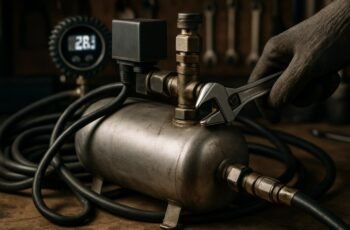
We see the workshop lights glare off a compressor tank like a still lake waiting for a ripple. We’ll walk you through the numbers that actually matter—CFM, PSI, tank size, duty cycle—so you can match performance to tasks from framing to finish work. We’ll weigh oil-free versus oil-lubed, noise and runtime, and total cost of ownership, but the real payoff comes when we connect specs to your specific projects—and that answer isn’t always obvious.
Key Takeaways
- Compare core specs (CFM, PSI, tank size, duty cycle) to match tool needs and expected workloads.
- Evaluate total cost of ownership, including maintenance, downtime, warranty terms, and service networks.
- Assess oil-free vs. oil-lubed tradeoffs for mess, maintenance, startup performance, and reliability.
- Consider noise, portability, runtime, and enclosure design to fit workspace and task cadence.
- Align air filtration, painting compatibility, and accessory ecosystems with environment controls and finish quality.
Start Here: How to Choose an Air Compressor for Your Projects
Choosing the right air compressor starts with understanding your projects’ needs. We begin by listing task types, required power, and runtime expectations, then match capacity to anticipated workloads. We estimate CFM at typical operating pressures and assess whether intermittent or continuous use governs selection. We consider tank size to balance recovery time and space, then evaluate portability against stability in your workspace. We discuss warranty to gauge long-term value and support, ensuring coverage aligns with expected usage and risk. We explore maintenance to establish a practical upkeep plan, including filter changes, belt checks, and moisture management. We compare electrical requirements, noise tolerance, and accessory compatibility to finalize a model that minimizes downtime. By framing decisions analytically, we avoid overbuying while meeting performance goals.
Key Specs Decoded: CFM, PSI, Tank Size, and Duty Cycle Explained
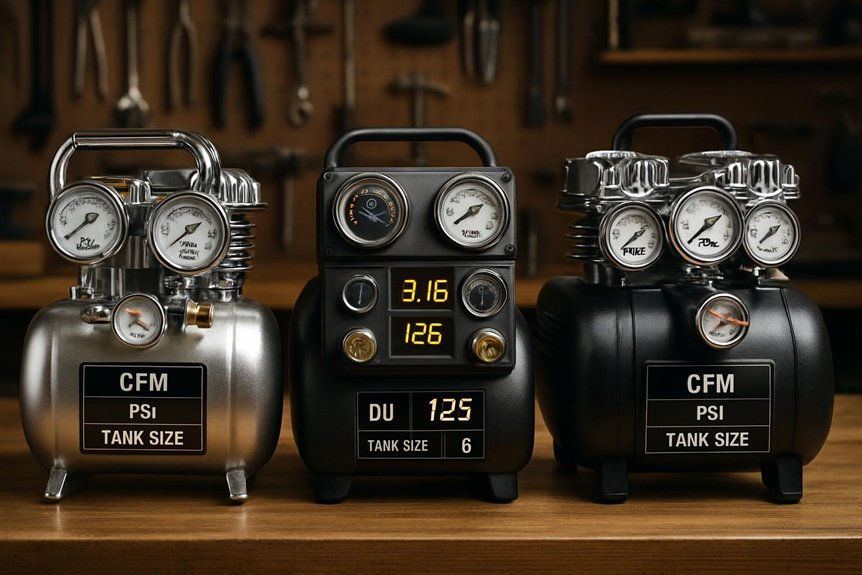
Understanding the core specs—CFM, PSI, tank size, and duty cycle—lets us predict real-world performance and avoid over- or under-buying. We break these down to map how a compressor behaves in practice. CFM measures usable airflow at a given pressure and dictates which tools or tasks you can run simultaneously. PSI indicates the pressure ceiling, affecting tool compatibility and startup load. Tank size determines peak air storage and recovery time; larger tanks reduce run-on cycling but add bulk and weight. Duty cycle reveals how long the unit can run consecutively before overheating or needing a cool-down. Together they shape airflow efficiency and reliability. We’ll apply practical checks and maintenance tips to keep performance steady and extend life.
Oil-Free vs. Oil-Lubed: Pros, Cons, and Real-Use Impact
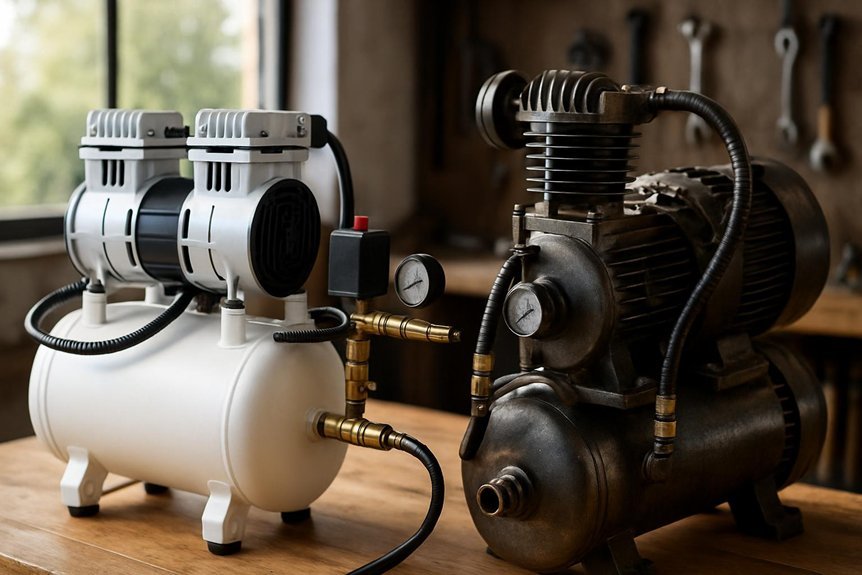
Oil-free and oil-lubed air compressors each have distinct impact on maintenance, performance, and long-term costs. We weigh air oil tradeoffs against reliability, downtime, and service intervals, so you don’t guess. Oil-free models reduce mess and ongoing oil changes, but may require more filter upkeep and colder startup considerations. Oil-lubed units tend to run longer between service, yet demand periodic oil changes, seals checks, and potential contamination risk. Maintenance considerations hinge on usage pattern, air quality needs, and tool demands. Below, a concise comparison highlights practical implications.
| Scenario | Pros | Cons |
|---|---|---|
| Home shop (light use) | Low maintenance, clean lines | Higher temp fluctuations |
| Workshop with finishing tools | Consistent pressure, longevity | Oil management required |
| Automotive/paint prep | Reliable seals, fewer filters | Oil disposal, costs |
| High-use factory | Durability, throughput | More complex maintenance |
| Budget build | Initial savings | Long-run oil cycles |
Noise, Portability, and Runtime: Matching Specs to Tasks
We’ll compare Noise Levels, weigh Portability options, and match Runtime Demands to task needs so you can pick the right compressor for the job. We’ll translate specs into real‑world impact, highlighting what each factor means for duration, mobility, and comfort. By aligning these points, we help you choose a unit that balances quiet operation, easy handling, and sufficient run time.
Noise Levels Compared
How loud is loud enough to matter, and does a lighter unit actually mean more noise? Weesize up our approach by focusing on noise levels as a practical factor in real work. We compare how different compressor types translate to audible output, and we weigh decibels against task requirements. Our idea is to map sound profiles to use cases, not just specs, so you can pick without second-guessing.
1) Consider duty cycle and intake design, which shape sustained noise more than peak figures
2) Distinguish reciprocating from rotary types, since noise patterns differ byMechanics and load
3) Match expected runtime with enclosure provisions and mounting, to minimize cadence noise
Keywords: noise comparison, compressor types.
Portability Considerations
In portable setups, noise, portability, and runtime aren’t isolated concerns—they’re interdependent factors that determine task feasibility and operator comfort. We evaluate units by how compact form factors translate into real-world handling, not just listing specs. A portable battery operated model often trades continuous runtime for weight and balance, so we weigh duty cycle against user fatigue and tool reach. Design choices matter: a compact handle grip enhances control on tight jobs, while integrated vibration dampening reduces operator strain during extended use. We prioritize ergonomic carry options, balanced weight distribution, and quick-replace batteries for minimal downtime. Noise containment isn’t cosmetic; it directly influences outdoor use and compliance with site rules. When comparing, we consider how portability aligns with planned tasks, maintenance access, and transport logistics.
Runtime Demands Mapping
Runtime demands aren’t one-size-fits-all; they hinge on noise tolerance, portability needs, and run-time requirements. In this section, we outline how to perform runtime mapping so each compressor aligns with tasks, locations, and schedules. We focus on practical assessment: noise bands, weight and form factor, and run-time duration per cycle. Our goal is utilization planning that minimizes downtime while meeting output goals. By mapping these factors, we avoid over- or under-spec’ing gear and improve selection accuracy.
1) Compare sound levels at typical operating loads to establish acceptable noise exposure.
2) Match weight and ergonomics to site constraints, transport, and setup time.
3) Align runtime duration with task cycles to ensure consistent air supply.
A Practical Decision Framework: Price, Reliability, and Warranty
Deciding between compressors isn’t just about upfront price; it hinges on a practical balance of cost, long-term reliability, and the warranty that protects your investment. We frame decisions around Idea 1: Price reliability and Idea 2: Warranty duration, so you see how upfront costs relate to durability and coverage. Our approach prioritizes data, not impulse, comparing total cost of ownership, failure rates, and service terms.
| Price | Reliability | Warranty |
|---|---|---|
| Immediate cost | Long-term performance | Coverage length |
| Budget impact | Downtime risk | Replacement policy |
| Feature-to-price | MTBF indicators | Payout conditions |
| Warranty cost | Repair vs. replace | Claim process |
| Total ownership | Update compatibility | Renewal options |
Real-World Use Cases: Framing, Tire Fills, and DIY Projects
Are you wondering which air compressor actually shines in real-world tasks like framing, tire fills, and DIY projects? We approach use cases with clarity, separating tool capability from hype, and focus on measurable outcomes such as framing accuracy and consistent tire fills. Our practical lens helps you compare units by performance rather than specs alone.
- Framing accuracy: We prioritize models that maintain steady pressure, minimize cycling, and deliver consistent nail drives across boards.
- Tire fills: We evaluate recovery time, minimal heat buildup, and accurate PSI maintenance for various tires.
- DIY projects: We seek versatile compressors that balance run-time, noise, and portability for expanding project possibilities.
How to Buy With Confidence: Step-By-Step Selection Guide
How do we buy with confidence? We approach selection with a clear, step-by-step method that minimizes risk and maximizes fit. First, define needs: expected duty cycles, typical tasks, and space. Then, translate requirements into specs: CFM, PSI, duty cycle, tank size, and motor type. Next, compare models by value, not just price, noting budget tradeoffs and warranty implications to avoid hidden costs. Assess maintenance and service networks so downtime is predictable. For painting tasks, evaluate paint spraying compatibility and accessory ecosystems, ensuring air filtration keeps contaminants out and finish quality high. Finally, verify documentation, return policies, and real-world reviews. We document tradeoffs, test fit against constraints, and confirm total ownership costs before committing.
Frequently Asked Questions
How Often Should I Service My Air Compressor?
We should service our air compressor every 6 months or per manufacturer guidelines, aligning with service scheduling and lubrication intervals; we monitor runtime, check filters, and log maintenance to prevent failures and maximize efficiency for you.
Can Portable Compressors Run Continuous Heavy Use?
Portable compressors can’t sustain continuous heavy use; they stress parts quickly. Think of a marathoner with a sprinter’s heart: steady, not relentless. We weigh portable reliability and noise considerations, then recommend duty cycles and cooling for safety.
Do CFM Numbers Reflect Real-World Performance?
CFM numbers aren’t pure fantasy; they show reality, but vary with load and duty cycle. We see CFM reality shaped by power delivery, intake conditions, and regulator settings, so expect lower performance under heavy, continuous use.
What Maintenance Costs Should I Expect Long-Term?
Maintenance costs can skyrocket, but we’ll break it down with precision. We expect routine service, parts, and potential warranty limitations; we’ll compare scenarios, quantify likely expenses, and flag where warranty helps or doesn’t.
How Does Compressor Run-Time Affect Tool Performance?
We’ve found that compressor runtime directly drives tool performance; insufficient runtime causes voltage drops and inconsistent pressure, while ample runtime sustains steady tool performance, reduces cycling, and improves finish quality for continous-use tasks.
Conclusion
We’ll spare you the poetry and tempt you with performance, not promises. Our satire says: you don’t need a shiny statue of a compressor, just the right fit for your messes. We’ve mapped CFM, PSI, oil-free quirks, and noise to real tasks, so you don’t buy a miracle sprayer that can’t frame. Choose reliability, service, and spare parts before price, and you’ll actually finish what you started—without selling your soul or your lungs.