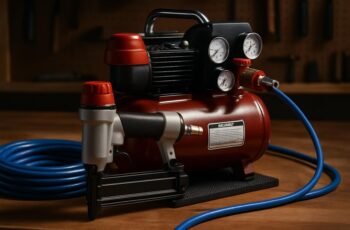
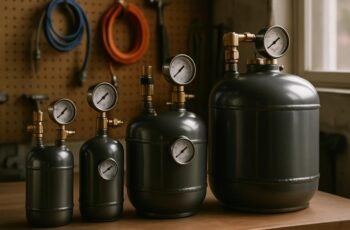
We’re evaluating portable air compressor tanks by balance of run-time, portability, and cost. From handheld units to wheel-ready systems, we’ll weigh oil-free versus oil-lubed options, PSI and CFM targets, refill speed, and durability tests. We’ll consider seals, fittings, and ease of maintenance so you’re not guessing at longevity. The question is where the practical line lies for your needs, and which setup actually keeps you productive when the job changes.
Key Takeaways
- Tanks vary by portability format: wheel-ready units for mobility and handheld tanks for tight spaces and overhead work.
- Consider PSI, CFM, and refill speed to match tool demands and minimize downtime.
- Oil-free tanks reduce maintenance but may handle lower duty cycles; oil-lubed options favor durability under heavier use.
- Sizing balances run-time, refill pauses, and weight; larger tanks boost runtime but add bulk.
- Ensure robust fittings, reliable seals, and easy gauge visibility for consistent performance.
What a Portable Air Compressor Tank Really Does
A portable air compressor tank stores compressed air so your tool can run without staying attached to a fixed compressor. We analyze how a portable tank functions in practice, focusing on reliability, timing, and workflow flexibility. When we deploy a portable tank, we create a buffer that smooths startup demands and reduces cycling on the primary unit, improving efficiency. This is about air storage that supports bursts of power and steadier output during intermittent tasks. We assess materials, seals, and fittings for durability and safety, ensuring quick connections and minimal leakage. The goal is predictable performance rather than novelty. In our view, a portable tank is a strategic extension for shop versatility, enabling consistent tool operation while maintaining compact, transportable air storage.
How to Size a Portable Tank for Your Projects
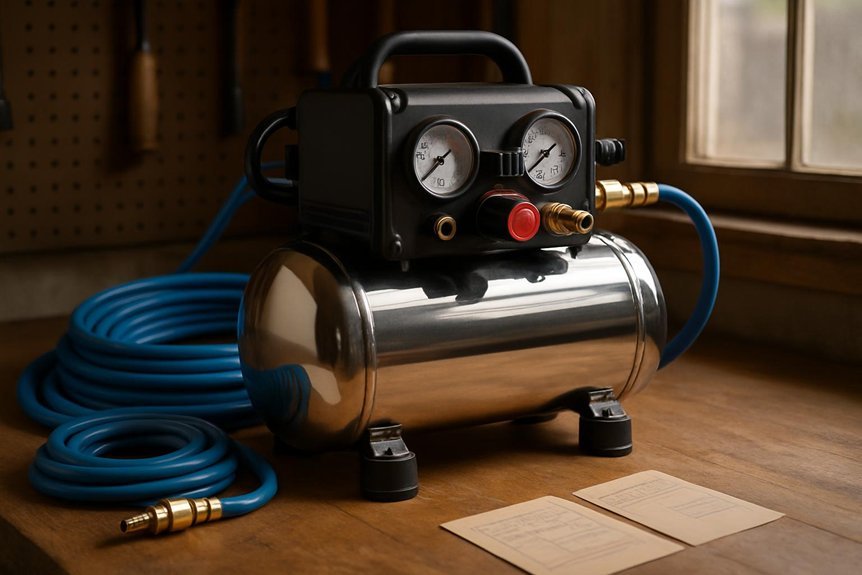
Sizing a portable tank starts with matching air storage to your expected tool bursts and duty cycles. We’ll guide you through practical sizing if you’re balancing runtime, refill pauses, and portability. Our approach favors clear sizing strategies that fit real projects, not theory. Consider average tool demand, peak bursts, and practical duty cycles to decide tank volume and pressure range. Remember that larger tanks boost run-time but add weight and bulk, while smaller tanks maximize portability but require frequent refills. Use the table below to compare options at a glance, then apply a simple rule: align tank capacity with expected cycles per session and acceptable refill interruptions.
| Scenario | Portability | Expected Cycles/Session |
|---|---|---|
| Light DIY | High | 2–4 |
| Medium projects | Moderate | 4–8 |
| Pro occasional | Moderate | 8–12 |
| Heavy intermittent | Lower | 12+ |
PSI, CFM, and Refill Speeds: What It Means for You
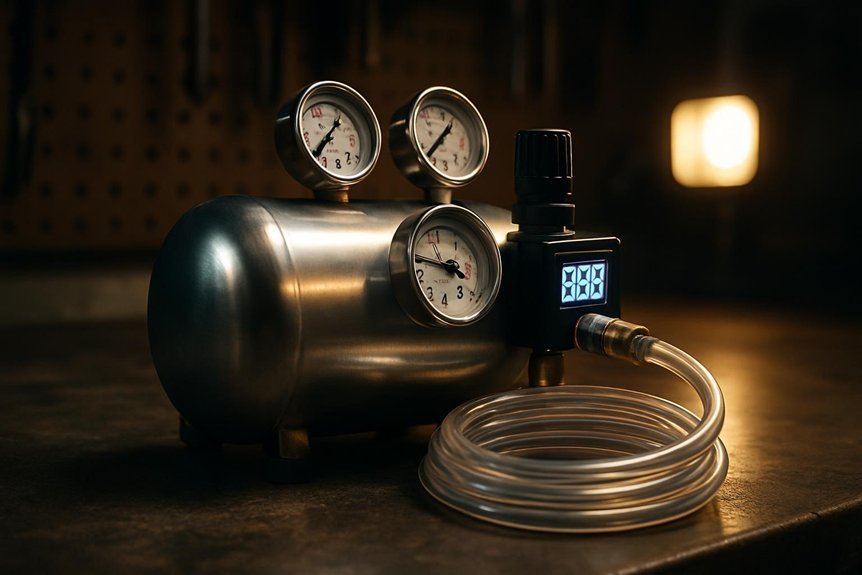
Ever wonder how PSI, CFM, and refill speeds actually affect your workflow? We’ll break down the core impact on performance with precision, practicality, and clear reasoning. PSI governs operating pressure at the hose tip, influencing tool power and heat generation; too high wastes energy and risks leaks, too low stalls workflows. CFM measures air volume available under load, dictating how fast tools recover between cycles—lower CFM slows each task and increases cycle counts. Refill speeds determine how quickly the tank replenishes air, shaping your total productive time without babysitting the unit. For portability, balance PSI and CFM with tank size so travel-ready units deliver consistent performance without frequent top-offs. In short, match PSI, CFM, and refill speeds to your typical tasks for steady, efficient operation.
Oil-Free vs. Oil-Lubed: Pros and Trade-offs for Portable Tanks
When choosing a portable compressor, oil-free and oil-lubed tanks each bring different durability, maintenance, and performance profiles to the table, and these trade-offs matter for how you’ll use the tool on the go. We’ll compare clearly and cut straight to practical implications.
1) durability and heat tolerance
2) maintenance cadence and cost
3) performance under load and longevity
Oil free options minimize mess and routine service, making them ideal for lightweight, on-site tasks. Oil lubed tradeoffs include quieter operation, better lubrication of moving parts, and potentially smoother long-term wear at higher duty cycles. Consider how often you’ll refill, clean filters, and whether you’ll see moisture-related issues. In short, oil free suits casual, mobile use; oil lubed supports demanding work with higher reliability. Choose based on your workflow, environment, and maintenance willingness.
Wheel-Ready vs. Handheld: Choose Your Portable Tank
Which setup fits your workflow better: wheel-ready models that roll into place, or handheld tanks that stay light and nimble? We weigh mobility against setup time, focusing on reliability and throughput. Wheel ready configurations minimize repositioning, reducing fatigue during long sessions and enabling quick access at the shop floor. They excel when your tasks demand steady air output and frequent movement between reels, benches, or carts. Handheld tanks trade weight for control, offering immediate, low-profile deployment in tight spaces and overhead work. If you value constant readiness and less lifting, wheel ready wins. If space constraints or sporadic use govern your day, handheld suits you. Both paths demand robust fittings, consistent pressure, and clear gauges to keep operations precise and productive.
Use-Case Tank Options: Tires, Paving, and Paint
What use-case demands drive your choice of tank options for tires, paving, and paint? We approach this by matching tank features to job needs, not generic specs. Size, pressure range, and duty cycle shape performance for each task.
- Tire-focused: prioritize stable cfm, adjustable psi, and quick-fill accuracy to maintain tire pressure and reduce downtime.
- Paving-focused: emphasize high-volume output and steady pressure for asphalt compaction, with reliable duty cycle under heat.
- Paint-focused: seek clean, dry air and humidity control to prevent-splatter and finish quality.
In short, align tank capacity and regulator range with your target jobs to maximize tire pressure consistency, asphalt compaction efficiency, and overall productivity.
On-the-Road Maintenance: Quick Checks to Keep Your Tank Healthy
On the road, quick checks keep your tank reliable and your productivity high. We start with a visual once-over: hoses intact, fittings tight, and gauge readings within spec. Portable safety means addressing leaks immediately and avoiding exposure to hot surfaces during operation. We routinely verify the regulator and pressure switch are responsive, and that the regulator delivers steady output without cycling erratically. Check the compressor’s intake for obstructions, and ensure the air filter is clean to prevent debris ingress. Maintain maintenance routines by logging service intervals and replacing wear parts on schedule. We confirm the tank’s drain valve functions to remove condensate, preventing rust. These checks minimize downtime and extend life without sacrificing performance.
Budget, Build Quality, and Longevity: What to Expect
How much value should you expect from a portable air compressor? We balance budget focus with real-world performance, so you know what you’re buying. Our assessment targets three core pillars: build quality, longevity, and value maintenance.
1) Budget focus: initial cost versus long-term spend, including parts and service intervals.
2) Build quality: materials, welds, fittings, and safety features that withstand daily use.
3) Longevity: expected service life, common failure points, and upgrade paths that keep you productive.
We prefer units that resist corrosion, simplify repairs, and minimize downtime. A well-made tank isn’t glamorous, but it prevents leaks, reduces energy waste, and sustains pressure consistency. In practice, choose models with robust cabinetry, proven pump quality, and accessible componentry to maximize long-term reliability.
How to Compare Brands and Find the Right Fit
To pick the right portable air compressor, start by comparing brands on core factors: reliability, service availability, and component quality. We’ll weigh brand reliability across models, checking field performance reports and user feedback, not just spec sheets. Next, assess warranty coverage and service options, since out-of-warranty repairs can erase any savings. Look for transparent terms, responsive support, and access to authorized technicians. Then evaluate component quality, focusing on compressors, valves, and seals that influence uptime. Compare resale value and part availability to avoid obsolescence. Consider brand ecosystems and upgrade paths, ensuring compatibility with accessories you already own. Finally, validate performance claims through independent tests or demonstrations. By balancing durability, coverage, and practicality, we find the right fit that minimizes downtime and total cost.
Frequently Asked Questions
What Safety Features Should I Look for in Portable Tanks?
Safety valves, pressure gauges, thermal cutoff, relief valves, automatic drains, overload protection, explosion proof design, fill pressure indicators, rugged casings, durable hoses, hose reels, compartment locks, anti slip feet, shutoff switches, moisture traps, surge protection, overloaded warning.
Can Portable Tanks Be Used With Air Tools Directly?
We’re a bit wary, but yes, portable tanks can power air tools directly when sized correctly. We’ll match pressure and CFM, ensure fittings are secure, and monitor duty cycles for reliability with portable tanks and air tools.
How Do I Store a Portable Air Compressor Tank Safely?
We store portable air compressor tanks safely by securing them upright, ventilating the area, and keeping valves closed. We prioritize safety features, inspect for damage, and follow manufacturer guidelines to ensure reliable, precise performance for all tasks.
Do Portable Tanks Require Regular Pressure Testing?
Yes, portable tanks require regular pressure testing to ensure safety and integrity. We conduct portable testing intervals per manufacturer guidelines, monitor corrosion prevention measures, and document results, correcting any leaks or weaknesses promptly for reliable, practical operation.
What Maintenance Costs Should I Expect Over Time?
We’ll tighten the reins on it, and yes—maintenance costs trend steady. Our maintenance budget covers routine filtration upkeep, occasional seal replacements, and annual inspections, with minor unexpected fixes. We’ll forecast costs and optimize savings together.
Conclusion
We’ve walked every inch of portable tank territory, from squeaky wheels to whisper-quiet oil-free cores, and we’re convinced the right choice isn’t luck but deliberate matching of PSI, CFM, and refill cadence to your real jobs. Pick a tank that breathes with your workflow, not against it—durable seals, smart fittings, and easy maintenance crown the win. In short: durability plus portability equals uptime, which equals money saved and projects finished on time, every time.