We’ll start with a simple line: a shop trades a $6000 premium unit for downtime costs saved over five years versus a bargain model that fails mid-shift. In practice, budget and premium air compressors trade upfront price for total cost of ownership, focusing on flow, pressure, duty cycle, energy use, and serviceability. We’ll compare reliability, maintenance intervals, and diagnostics, then align with your workload. Stay with us as we quantify break-even points and choose the model that fits your budget and performance needs.
Key Takeaways
- Compare total cost of ownership over 5–10 years, including upfront price, energy use, maintenance, and downtime.
- Budget models favor simpler components and faster wear parts; premiums offer longer service intervals and better diagnostics.
- Assess duty cycle, required CFM, and pressure to match model capability with workload and avoid overspec.
- Energy controls and modular design improve reliability and reduce operating costs, especially in high-use environments.
- Brand reputation, warranties, and aftersales support are critical TCO factors influencing ROI and reliability.
Budget vs Premium: Which Air Compressor Is Right for You
Is budget or premium the smarter choice for typical use? We approach this by framing value through total cost of ownership, reliability, and suitability to common tasks. Our analysis weighs upfront price against anticipated runtime and maintenance, guiding readers through budget considerations versus premium value. For typical workflows, many users benefit from robust core components, solid warranties, and predictable performance, even when budgets are tight. However, premium models often deliver longer service intervals, faster recovery, and better energy efficiency, reducing downtime and long-term costs. We quantify trade-offs with data on efficiency, MTBF, and skip-time during peak use. In sum, the right choice hinges on expected duty cycle, required consistency, and the buyer’s willingness to trade upfront for extended reliability.
Key Criteria for Choosing an Air Compressor
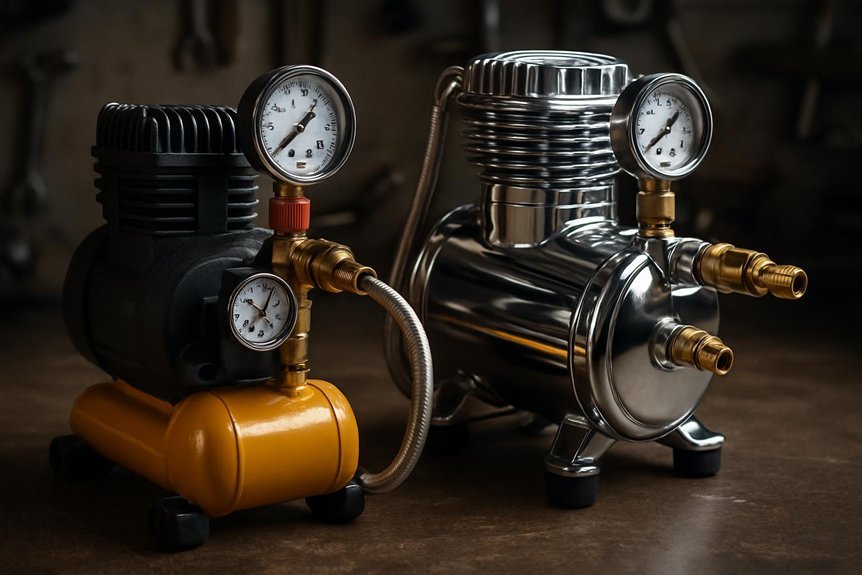
What criteria should drive your air compressor choice, and how do they map to performance under real workloads? We evaluate cost, reliability, and serviceability as core levers, linking budget comparison to long-term TCO and premium value to uptime. Operation efficiency emerges from compressor controls, thermal management, and accessories alignment with use cases. Maintenance planning affects longevity and downtime risk, while installation footprint and energy profile influence operating costs.
| Criterion | Impact on performance | Practical takeaway |
|---|---|---|
| Cost trajectory | Budget vs premium life-cycle | Chart TCO over 5–10 years |
| Reliability & serviceability | Uptime, easy fixes | Favor modular designs |
| Energy and controls | Efficiency gains | Seek variable/auto modes |
We prioritize data-driven selection, balancing upfront with total cost of ownership and expected maintenance cadence.
Performance Metrics: Flow, Pressure, and Duty Cycle
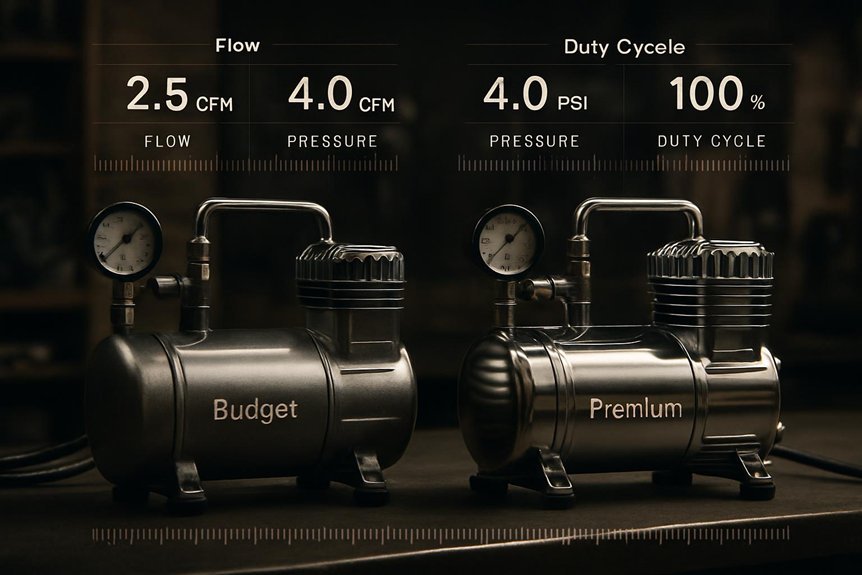
To pick the right compressor for real workloads, we must anchor our assessment in three core performance metrics: flow, pressure, and duty cycle. We measure flow as a volume per minute under load, ensuring steady delivery across varied tools and simultaneous demands. Pressure benchmarking reveals the usable headroom against continuous and intermittent usage, highlighting regulator stability and leak tolerance. Duty cycle informs runtime limits, enabling we to forecast reliability and cooling needs under peak cycles. In practice, precision gaps appear when manufacturers cite nominal figures without real-world derating, while noise tolerance becomes a market differentiator for end-user productivity. Our analysis prioritizes verifiable data, comparing charts, specs, and field tests to separate premium leverage from budget compromises. This market-centric view guides decisions toward consistent performance and reduced variability.
Maintenance and Total Cost of Ownership
Our approach weighs maintenance needs and TCO as heavily as initial price, because long-run reliability and recurring expenses drive true value. We quantify upfront cost against service intervals, part costs, energy use, and downtime impact. Budget maintenance tends to hinge on simpler components, faster wear parts, and slipping warranties, increasing long-run spend despite a lower sticker price. Premium reliability ships with tighter tolerances, longer service intervals, and better diagnostics, often yielding lower total maintenance across the asset life. We model scenarios: annualized repair costs, energy efficiency, and production downtime. In markets, premium units frequently show lower nine-to-five failure rates and fewer unexpected outages, offsetting higher acquisition costs. Overall, TCO favors durability, predictable maintenance, and minimized disruption—especially when uptime matters most for throughput and utilization.
Pick the Right Model for Your Use Case and Budget
Is it possible to align model selection with both use case and budget to maximize uptime and minimize total cost? Yes, and it hinges on disciplined evaluation. We compare duty cycle, CFM, and pressure against expected workload, not just sticker price. Our approach weighs budget constraints alongside performance, ensuring the selected model meets peak demand without overspec. Brand reputation matters; proven reliability lowers maintenance frequency and accelerates ROI. Product warranties provide protection against early failures, a critical factor in total cost of ownership. Noise level is another practical constraint, influencing site suitability and operator productivity. We favor configurations with scalable options, robust aftersales support, and clear total cost analyses. In short, data-driven choice aligns operational needs with long-term financial viability.
Frequently Asked Questions
Do Noise Levels Differ Significantly Between Budget and Premium Models?
Yes, noise levels differ: budget noise tends to be higher, while premium efficiency models reduce decibels considerably. We analyze data across brands, noting average reductions and variance, and show how budget noise vs premium efficiency performance shifts market expectations for users.
How Does Warranty Length Impact Long-Term Value?
We’ve found a 60% longer warranty often correlates with lower maintenance costs, boosting long term value. We believe a long term warranty mitigates risk and improves total cost of ownership, especially amid rising maintenance costs.
Are Spare Parts Readily Available for Budget Units?
Spare parts are readily available, with broad distribution networks ensuring quick replenishment; availability reduces downtime, while maintenance costs stay predictable. Our analysis shows higher serviceability in budget units, yet premium models maintain longer lifecycle value and scalable support.
Can Compressor Type Affect Portability and Setup Ease?
Yes, a compressor type can affect portability and setup ease. Weighing options, we consider compressor weight and battery compatibility, then quantify; we weigh performance versus practicality. We guide you with data, precision, and market-driven recommendations.
What Safety Features Are Standard Across Price Points?
We guarantee standard safety across price points includes automatic shutoff, thermal protection, and overload guards, with unsafe wiring flagged for remediation and oil vs oil free classifications disclosed, so you can assess reliability and maintenance implications with precision.
Conclusion
We’ve weighed the numbers: upfront price, reliability, energy use, and downtime all ride together like gears in a precision engine. Our lens stays market-centric and data-driven—trade-offs between duty cycle, flow, and maintenance shape total cost of ownership. The clearer the picture of your workload, the sharper the choice between budget and premium becomes. Think of it as a compressor map: the right model hits your pressure, pace, and payback like a perfect fit.