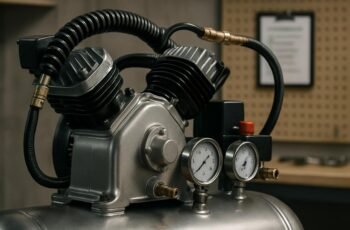
Few issues can cause as much disruption in your workflow as a malfunctioning air compressor regulator, and ignoring these problems can lead to costly damage or safety hazards. We’ve seen how pressure fluctuations, leaks, and inconsistent airflow can stem from seemingly minor component wear or dirt buildup, yet identifying and resolving these issues isn’t always straightforward. Understanding the common causes and troubleshooting methods is essential to keep your system running smoothly—so let’s explore what might be going wrong and how to fix it.
Key Takeaways
- Common causes of regulator issues include mechanical wear, dirt buildup, incorrect adjustments, and damaged seals.
- Signs of problems include fluctuating pressure, leaks, strange noises, and difficulty adjusting settings.
- Pressure fluctuations may indicate leaks, blockages, or calibration errors requiring troubleshooting and maintenance.
- Dirt and debris can clog regulators; regular filter replacement and system cleanliness prevent blockages.
- Proper repair involves system depressurization, component inspection, correct replacement, and possibly professional assistance.
What Are Common Air Compressor Regulator Problems?
Air compressor regulator problems are commonly caused by mechanical wear, dirt buildup, or incorrect adjustments. These issues lead to inconsistent pressure regulation, which can compromise tool performance and safety. Mechanical wear in the regulator’s internal components, such as diaphragms, springs, or valves, causes them to lose precision over time. Dirt accumulation within the adjustment mechanism or pressure sensing elements can hinder proper functioning, resulting in erratic pressure output. Incorrect adjustment settings may also cause either excessive or insufficient pressure, risking damage to tools or reduced efficiency. Additionally, damaged seals or faulty pressure relief valves can contribute to pressure inconsistencies. Recognizing these common problems is essential for troubleshooting and maintaining ideal regulator performance, ensuring reliable operation and extending the lifespan of the compressor system.
How to Identify Pressure Fluctuations and Drops
To effectively troubleshoot regulator issues, we must first be able to recognize when pressure fluctuations or drops occur. These irregularities can indicate underlying problems with the regulator or system. Key symptoms include inconsistent pressure readings, sudden drops during operation, or oscillations in output pressure. Monitoring gauges and logs helps identify these issues. To quantify the fluctuations, consider the following:
| Indicator | Description | Action |
|---|---|---|
| Sudden pressure drops | Rapid decline in pressure readings | Check for leaks or blockage |
| Oscillations | Fluctuating pressure levels | Inspect regulator components |
| Inconsistent readings | Variable pressure over time | Calibrate or replace regulator |
| Extended low pressure | Prolonged insufficient pressure | Examine system for leaks |
| Spikes in pressure | Unexpected pressure increases | Verify pressure source stability |
Recognizing these signs ensures prompt diagnosis and effective resolution.
Signs of Worn-Out or Faulty Regulator Components
Worn-out or faulty regulator components often manifest through specific signs that indicate the need for inspection or replacement. Particularly, inconsistent pressure output is a primary indicator, resulting in fluctuating or unstable air supply. Audible hissing or unusual noises may suggest internal component failure or leaks within the regulator. Additionally, if the pressure gauge displays erratic readings or fails to maintain set pressure levels, it points to possible malfunction. Difficulty in adjusting pressure controls or the regulator remaining stuck at a certain setting also signals wear or damage. Moreover, visible signs such as corrosion, cracks, or debris accumulation on the regulator housing can compromise component integrity. Recognizing these signs early helps prevent further system damage and maintains ideal compressor performance.
Causes of Dirt Buildup and Blockages in Regulators
Dirt buildup and blockages in regulators typically result from the intrusion of contaminants carried by the compressed air or accumulated during operation. These contaminants include dust, oil residues, moisture, and particulate matter that bypass filtration systems or condense within the regulator. Over time, these foreign particles settle in or adhere to internal components, such as the diaphragm, needle valve, or orifices, impeding proper airflow and pressure regulation. Inadequate maintenance of filtration systems, poor-quality compressor oil, or high humidity levels exacerbate contamination. Additionally, frequent condensation within the regulator creates a breeding ground for dirt accumulation, further obstructing airflow pathways. Regular inspection, effective filtration, and moisture removal are crucial to prevent dirt buildup and guarantee the regulator functions at its best.
Troubleshooting Inconsistent Airflow From Your Regulator
To resolve inconsistent airflow, we start by inspecting the regulator for blockages that may restrict pressure stability. Next, we verify and adjust the regulator settings to guarantee proper pressure regulation. Addressing these points systematically helps maintain a consistent and reliable airflow.
Check for Blockages
When experiencing inconsistent airflow from your regulator, it’s essential to check for blockages that may impede proper function. Begin by inspecting the inlet and outlet ports for debris, dirt, or obstructions that can restrict airflow. Remove the regulator from the system if necessary, and disassemble it to examine internal components such as diaphragms, filters, and passages. Use compressed air to clear any accumulated dust or foreign particles from these parts, ensuring unobstructed flow. Pay particular attention to screen filters, which can become clogged over time. Confirm that no corrosion or mineral buildup is present in the passages, as these can cause partial blockages. Regular maintenance and cleaning of these components help maintain a steady, consistent airflow and prevent further regulator issues.
Adjust Regulator Settings
If your air compressor regulator is delivering inconsistent airflow, adjusting the regulator settings can often resolve the issue. First, confirm the compressor is off and depressurize the system. Locate the regulator’s adjustment screw or knob—typically marked for increasing or decreasing pressure. Turn the adjustment clockwise to raise the output pressure or counterclockwise to lower it, in small increments. Use a calibrated pressure gauge to monitor the output, aiming for the desired operating pressure specified for your tools or system. Avoid sudden adjustments to prevent pressure spikes. After making adjustments, turn the compressor back on and observe airflow stability. If fluctuations persist, verify that the regulator is properly seated and that no internal components are worn or damaged, as these can also cause inconsistent airflow.
When and How to Adjust or Reset Your Regulator Settings
Adjusting or resetting your air compressor regulator settings is necessary whenever you notice inconsistent pressure output or performance issues. Accurate adjustments should be made when the regulator’s pressure output deviates from the desired operating range, or if fluctuations cause equipment malfunction. Start by turning off the compressor and releasing residual pressure from the system. Use a calibrated pressure gauge to verify the current setting. To increase pressure, turn the regulator’s adjusting knob clockwise; to decrease, turn it counterclockwise. Resetting involves fully depressurizing the system and then restoring it to the recommended factory or operating pressure. Confirm all connections are secure before testing. Regular calibration checks are essential to maintain precise pressure control, preventing damage or inefficiency caused by incorrect regulator settings.
Replacing or Repairing Damaged Regulator Parts
To effectively replace or repair damaged regulator parts, we must first accurately identify the faulty components using diagnostic tools. We then select the appropriate replacement parts and gather specialized tools to guarantee a precise repair. Finally, following established procedures, we perform the steps necessary to restore proper regulator function.
Identifying Damaged Components
When diagnosing regulator issues, identifying damaged components is essential for effective repair. We start by visually inspecting key parts such as the pressure gauge, relief valve, and diaphragm for signs of wear, corrosion, or cracks. Next, we test the regulator’s response to pressure changes—if it fails to maintain a steady output or fluctuates unpredictably, internal parts like the pilot valve or valve seat may be compromised. We also check for leaks around connections and seals, as these often indicate damaged or degraded O-rings or gaskets. Using a combination of visual examination and pressure testing, we pinpoint malfunctioning components. Accurate identification guarantees precise repairs, preventing unnecessary replacements and restoring the regulator’s proper function efficiently.
Tools for Replacement
Replacing or repairing damaged regulator parts requires specific tools to guarantee accuracy and safety. Precise tools ensure proper fitting and prevent further damage during the process. Essential tools include:
- Adjustable wrenches for secure tightening and loosening of fittings
- Screwdrivers (Phillips and flat-head) for removing cover plates and screws
- Needle-nose pliers for handling small components and connectors
- Pressure gauge or regulator testing kit for verifying adjustments
- Teflon tape or thread sealant for assuring leak-proof connections
Using these tools correctly minimizes risk and ensures a proper repair. It’s critical to have a clean, organized workspace to maintain tool integrity and avoid misplacement. Proper tool selection and handling are fundamental to achieving a safe, effective repair of the regulator system.
Steps for Proper Repair
Before beginning the repair process, it’s essential to thoroughly depressurize the system to prevent accidental release of compressed air, which could cause injury or further damage. First, turn off the compressor and disconnect it from power. Then, open the drain valve or bleed off any remaining pressure from the tank. Once depressurized, carefully remove the regulator assembly, noting the orientation of all parts. Inspect the damaged components, such as the pressure gauge, spring, or valve seat. Replace any defective parts with identical specifications, guaranteeing proper fit. Reassemble the regulator, making sure all connections are tight and correctly aligned. Finally, restore power and slowly repressurize the system, checking for leaks and proper regulation. This method guarantees a safe, precise repair that restores peak function.
Preventative Tips to Avoid Future Regulator Problems
Regular maintenance and careful monitoring are essential to prevent regulator problems before they arise. Consistent inspections help identify early signs of wear or damage, reducing the risk of failure. We recommend regularly cleaning and lubricating the regulator to prevent dirt buildup and corrosion. Monitoring pressure levels ensures the regulator operates within ideal parameters, avoiding stress on internal components. Additionally, using high-quality replacement parts minimizes the chance of incompatibility or premature failure.
Regular maintenance and monitoring prevent regulator failures and extend lifespan.
- Perform routine inspections for leaks, damage, and corrosion
- Keep the regulator clean and free of debris
- Use proper lubricants as recommended by the manufacturer
- Replace filters periodically to prevent blockages
- Maintain consistent pressure settings to avoid overloading
Knowing When to Seek Professional Help for Regulator Issues
Even with diligent maintenance, certain regulator issues can indicate the need for professional intervention. Persistent pressure fluctuations, unpredictable gauge readings, or failure to regulate output within specified ranges often signal underlying mechanical or electronic faults that require expert diagnosis. If troubleshooting steps, such as checking for leaks or recalibrating the regulator, do not resolve these issues, it’s vital to consult a qualified technician. Unresolved problems can compromise safety, reduce compressor efficiency, and cause further damage. Additionally, signs like excessive noise, corrosion, or visible damage suggest that specialized repair or replacement is necessary. Recognizing these indicators early prevents costly downtime and ensures system reliability. When in doubt, professional assessment guarantees accurate diagnosis and appropriate corrective measures.
Frequently Asked Questions
Can Regulator Problems Cause Damage to Other Compressor Components?
Yes, regulator problems can cause damage to other compressor components by causing pressure fluctuations, over-pressurization, or under-pressurization, which stresses valves, seals, and motor parts, potentially leading to premature failure and costly repairs.
How Often Should I Inspect My Air Compressor Regulator?
We recommend inspecting your air compressor regulator weekly for proper operation, leaks, and pressure stability. Regular inspections guarantee ideal performance, prevent potential damage, and extend the lifespan of your compressor system through timely maintenance.
Are There Different Types of Regulators for Various Compressor Models?
Actually, there are indeed various regulator types tailored to specific compressor models, each designed for precise pressure control. We carefully select regulators based on compatibility, ensuring ideal performance and safety, because one size truly doesn’t fit all in compressor technology.
What Are the Safety Risks of Ignoring Regulator Issues?
Ignoring regulator issues can cause sudden pressure surges or drops, risking equipment failure, leaks, or even injury. We emphasize prompt maintenance to prevent hazards, ensuring safe operation and avoiding costly repairs or accidents.
Can I Upgrade My Regulator for Better Performance?
Yes, you can upgrade your regulator for better performance by selecting a model with higher pressure capacity, improved accuracy, and enhanced durability. Guarantee compatibility with your compressor specifications and consult manufacturer guidelines for ideal integration and safety.
Conclusion
Regular maintenance is crucial, as studies show that improper regulation accounts for up to 30% of compressor failures. By understanding common problems and troubleshooting effectively, we can extend the lifespan of our equipment and avoid costly repairs. Addressing issues promptly guarantees safety and peak performance. Staying vigilant and proactive in maintenance minimizes downtime and operational costs, ultimately protecting your investment and ensuring reliable air supply for essential tasks.