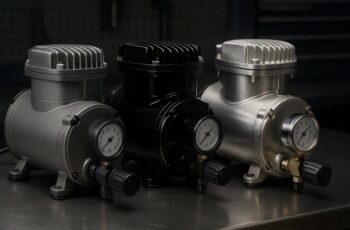
Adjusting an air compressor regulator is a critical task to guarantee your tools operate safely and efficiently. We recognize that proper regulation involves precise steps and safety precautions, but it’s essential to know exactly how to set the pressure accurately without risking damage or injury. To accomplish this, we’ll guide you through the necessary procedures, including safety measures and troubleshooting tips, so you can confidently maintain ideal performance—yet, there are common pitfalls and details that demand close attention before you proceed.
Key Takeaways
- Turn off and unplug the compressor, then release residual pressure before making adjustments.
- Locate the adjustment screw or knob on the regulator.
- Use a pressure gauge to monitor the current pressure level during adjustment.
- Turn the screw clockwise to increase pressure or counterclockwise to decrease it.
- Reconnect power, verify the pressure remains steady, and test your tools for proper operation.
How Does an Air Compressor Regulator Work?
An air compressor regulator functions by controlling the pressure of compressed air delivered to tools or equipment, guaranteeing consistent performance and safety. It achieves this through a valve mechanism that adjusts airflow based on the desired pressure setting. When pressure exceeds the set point, a diaphragm or piston responds by reducing airflow, lowering the output pressure. Conversely, if pressure drops below the target, the mechanism increases airflow to restore the correct level. The regulator typically includes a pressure gauge to display current pressure, allowing precise adjustments. By maintaining a stable output, the regulator prevents tool damage, minimizes energy consumption, and assures user safety. Its design allows for quick, reliable modulation of air pressure, making it an essential component in any compressed air system.
Signs That Your Regulator Needs Adjustment
When your air compressor regulator malfunctions, certain signs indicate it’s time for an adjustment. One key indicator is inconsistent air pressure delivery, where the pressure fluctuates unexpectedly during operation. This fluctuation can cause tools to perform unpredictably or inadequately. Additionally, a rise in the compressor’s cut-in pressure or failure to reach the desired operating pressure suggests the regulator isn’t maintaining proper output. If you notice excessive pressure buildup or the regulator’s pressure relief valve frequently activating, it points to an imbalance requiring correction. Also, unusual noises or hissing sounds near the regulator may indicate internal component issues or leaks. Recognizing these signs early ensures efficient performance and prevents potential damage to your compressor or connected tools.
Tools Needed to Adjust Your Air Compressor Regulator
To properly adjust your air compressor regulator, we need to gather specific tools that allow for precise control and measurement. Accurate adjustments depend on having the right equipment to guarantee safety and functionality. The essential tools include a calibrated pressure gauge, a flat-head screwdriver or adjustment key, and a reliable regulator wrench. The pressure gauge provides real-time readings of system pressure, enabling precise calibration. The screwdriver or adjustment key allows for fine-tuning the regulator’s control knob without damaging components. The wrench ensures secure handling of the regulator fittings and avoids stripping. Using these tools correctly assures accurate pressure settings, reduces wear, and maintains system integrity. Proper tool selection is critical for safe, effective, and lasting regulator adjustments.
Step-by-Step Guide to Safely Adjust the Regulator
Before adjusting the regulator, make certain the compressor is turned off and unplugged to prevent accidental air release or injury. Verify that residual pressure has been safely released by opening the drain valve or disconnecting the tool. Locate the regulator adjustment screw, typically on top of the unit, and ensure you have the appropriate tools ready. Using a calibrated pressure gauge, observe the current pressure setting. Turn the adjustment screw clockwise to increase pressure or counterclockwise to decrease it. Adjust incrementally, checking the gauge after each turn to reach your desired pressure. Once set, tighten the adjustment screw securely. Confirm the compressor is still off, then reconnect power. Always double-check the pressure reading before resuming operation to ensure safety and proper function.
How to Set the Correct Air Pressure for Your Tools
To set the correct air pressure for your tools, we first need to determine their specific pressure requirements, which are typically listed on the tool or in the manufacturer’s manual. Once we have this information, we can carefully adjust the regulator to match those specifications, ensuring ideal performance. Precise regulation prevents damage to tools and maintains safe operating conditions.
Determine Tool Requirements
Have you checked the tool’s specifications to determine the appropriate air pressure? Accurate knowledge of these requirements is essential for ideal tool performance and safety. To identify the correct pressure:
- Consult the manufacturer’s manual or label, which specifies PSI (pounds per square inch) limits.
- Note the recommended operating pressure range, rather than maximum pressure, to prevent damage.
- Record the exact PSI value to ensure precise regulator adjustments.
Understanding these parameters allows us to set the compressor regulator accurately, avoiding under- or over-pressurization. Precise tool requirements are critical for efficient operation, longevity, and safety. Always verify specifications before proceeding, as improper pressure settings can compromise both the tool and operator safety.
Adjust Regulator Properly
Once we’ve identified the correct operating pressure for our tools, setting the regulator accurately is essential to guarantee peak performance and safety. To do this, turn off the compressor and connect your pressure gauge directly to the regulator outlet. Adjust the regulator knob slowly, increasing or decreasing pressure in small increments. Watch the gauge closely to reach the exact PSI required for your application. It’s important to ensure the compressor remains off during adjustment to prevent pressure fluctuations. Once the desired pressure is set, turn the compressor back on and observe the gauge as it stabilizes. Confirm that the pressure remains steady under load conditions. Proper adjustment ensures efficient tool operation, minimizes wear, and enhances safety during use.
Troubleshooting Common Regulator Adjustment Issues
When adjusting your regulator, you may encounter difficulty making precise changes or notice inconsistent pressure readings. These issues often stem from calibration errors or adjustment mechanism malfunctions. Identifying the root cause allows us to correct the calibration and restore proper regulator performance.
Identifying Adjustment Difficulties
Identifying adjustment difficulties with an air compressor regulator requires careful observation of operational symptoms and measurement inconsistencies. Common signs include erratic pressure readings, unstable output, or failure to reach desired pressure levels. These issues often indicate mechanical or calibration problems that hinder precise adjustments.
To diagnose, consider these key indicators:
- Fluctuating pressure despite adjustment attempts
- Inability to maintain set pressure over time
- Physical signs of wear or damage on the regulator components
Recognizing these symptoms early helps prevent further damage and ensures accurate calibration. Precise identification of adjustment difficulties allows for targeted troubleshooting, minimizing downtime and maintaining ideal compressor performance.
Correcting Calibration Errors
Calibration errors in an air compressor regulator can considerably impact system performance, leading to inconsistent pressure output and potential equipment damage. To correct these errors, we first verify the regulator’s pressure reading against a calibrated gauge. If discrepancies exist, we adjust the calibration screw or knob according to the manufacturer’s specifications. Precise adjustments involve gradually turning the calibration screw while monitoring the output pressure until it aligns with the desired setting. We guarantee the compressor is operating at a stable load to prevent fluctuations during calibration. After adjustment, we record the pressure setting and verify consistency over multiple cycles. If calibration persists as inaccurate, we might need to replace or service the internal sensing elements, as prolonged misalignment could indicate component degradation. Proper calibration ensures reliable pressure control and equipment longevity.
Tips for Maintaining Your Air Compressor Regulator
Regularly inspecting your air compressor regulator is essential to guarantee peak performance and safety. Consistent checks prevent leaks, corrosion, and pressure inconsistencies that could compromise system integrity. Make sure the regulator’s pressure gauge functions correctly and that the adjustment knob operates smoothly. Keep the regulator clean; dirt and debris can impair its accuracy and longevity. Additionally, replace worn-out or damaged components promptly to maintain ideal operation.
Regularly inspect and maintain your air compressor regulator for safety, accuracy, and optimal performance.
- Check for leaks around fittings and seals using soapy water; bubbles indicate leaks.
- Clean the regulator with compressed air and a soft cloth to remove dust and debris.
- Verify that the pressure relief valve is functioning properly to prevent over-pressurization.
When to Call a Professional for Regulator Repairs
While routine inspections help maintain your air compressor regulator’s performance, certain issues require the expertise of a professional. If you notice inconsistent pressure output, unexplained drops, or fluctuations that persist despite adjustments, it’s time to seek expert assistance. Additionally, signs of internal component failure—such as abnormal noises, leaks, or regulator valve sticking—indicate complex malfunctions beyond basic troubleshooting. Attempting repairs without proper knowledge can lead to further damage or safety hazards. If calibration tests reveal persistent inaccuracies, or if visual inspections uncover corrosion or worn parts, professional repair is essential. Professionals possess the specialized tools and technical expertise to diagnose and address internal faults precisely, ensuring the regulator functions ideal and safely, preventing costly downtime or damage.
Frequently Asked Questions About Air Compressor Regulators
Have you ever wondered what exactly an air compressor regulator does and why it’s essential for peak operation? It controls the output pressure, ensuring a consistent airflow tailored to specific tools or tasks. Proper regulation prevents equipment damage and optimizes efficiency. Common questions include:
- *How do I know if my regulator is functioning correctly?*
- *What are the signs of a faulty regulator?*
- *Can I adjust the regulator myself, or should I seek professional help?*
Understanding these points helps maintain safe, reliable operation. Regular inspection of the gauge and adjustment knob can identify issues early. If you notice pressure fluctuations or inconsistent airflow, troubleshooting or replacing the regulator is necessary. Precise regulation is vital for achieving excellent performance and safety.
Frequently Asked Questions
Can I Adjust the Regulator While the Compressor Is Running?
Yes, you can adjust the regulator while the compressor runs, but we recommend doing so cautiously to avoid sudden pressure changes or damage. Always verify safety protocols are followed and depressurize if significant adjustments are needed.
How Often Should I Check or Recalibrate My Air Compressor Regulator?
We recommend checking and recalibrating your air compressor regulator monthly or whenever you notice pressure inconsistencies. Regular maintenance guarantees ideal performance, prevents damage, and maintains precise pressure settings, ultimately extending your compressor’s lifespan and efficiency.
Are There Different Types of Regulators for Various Compressor Models?
We find that different compressor models, like piston versus rotary screw, often require specific regulator types, such as pressure-reducing or combination regulators, to optimize performance and safety, as seen in our recent industrial application case study.
What Safety Precautions Should I Take Before Adjusting the Regulator?
We guarantee safety by disconnecting the power, releasing stored pressure from the tank, wearing protective gear, and verifying the regulator’s pressure setting with a gauge before making adjustments, preventing injury and equipment damage during the process.
How Do Temperature and Humidity Affect Regulator Performance?
Imagine a delicate sensor inside the regulator, sensitive to heat and moisture. Temperature and humidity influence its accuracy, causing pressure fluctuations; we must monitor environmental conditions closely, ensuring consistent performance and safe operation of the air compressor.
Conclusion
In summary, proper regulation guarantees ideal compressor performance and safety, with studies indicating that improper pressure settings contribute to over 30% of compressor failures. Regular adjustments, adhering to manufacturer guidelines, and routine maintenance are essential to prevent costly repairs and extend your compressor’s lifespan. By understanding the mechanics and following precise procedures, we can maintain consistent, safe operation—keeping tools functioning efficiently and avoiding potential hazards. Proper regulation is critical for maximizing efficiency and safety.