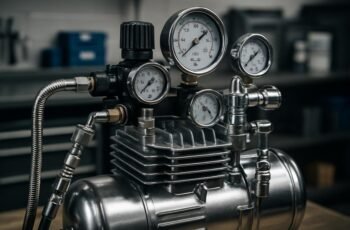
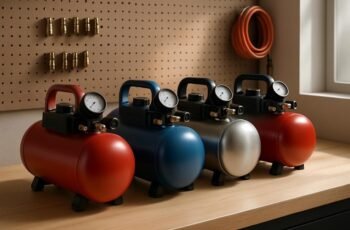
We’ll guide you through choosing a high-pressure air compressor for demanding tools and processes, focusing on the essentials: airflow at target pressure, duty cycle, tank size, and air quality. We’ll cover filtration, moisture control, noise and footprint, and maintenance needs, so you can balance upfront costs with long-term reliability. As you weigh options, consider how each factor fits your workflow—and what trade-offs are acceptable for the work ahead. The next step reveals the specifics that matter most.
Key Takeaways
- Match CFM, PSI, and duty cycle to your tasks: higher CFM for continuous use, higher PSI for demanding work, and a duty cycle that fits runtime gaps.
- Choose tank size based on workflow and runtime to balance fill rate, pressure stability, and space requirements.
- Consider noise, vibration, and footprint: use anti-vibration mounts, compact layouts, and enclosure strategies for quiet operation.
- Focus on air quality and filtration: include prefilters, coalescing filters, and drying to keep tools clean and dry.
- Emphasize reliability and maintenance: plan for routine lubrication, seal inspection, filter changes, and comprehensive documentation.
What a High-Pressure Air Compressor Does and When You’ll Need One
A high-pressure air compressor stores and delivers compressed air at higher-than-standard pressures, enabling tools and processes that require more force or longer run times. We’ll explain what it does and when you’ll need one. Essentially, it converts electrical energy into stored potential energy in pressurized air, then releases it as needed to power pistons, impact wrenches, and specialized spray or cleaning tasks. You’ll consider this when your projects demand sustained or intense air output, tight tolerances, or portable power without frequent refills. We’re mindful of ideas beyond basic uses, including maintenance and compatibility concerns. The decision isn’t about novelty but necessity. We’ll help you assess your applications, excluding unrelated topics, so you can determine if a high-pressure unit fits your workflow.
CFM, PSI, and Duty Cycle Explained for High-Pressure Use
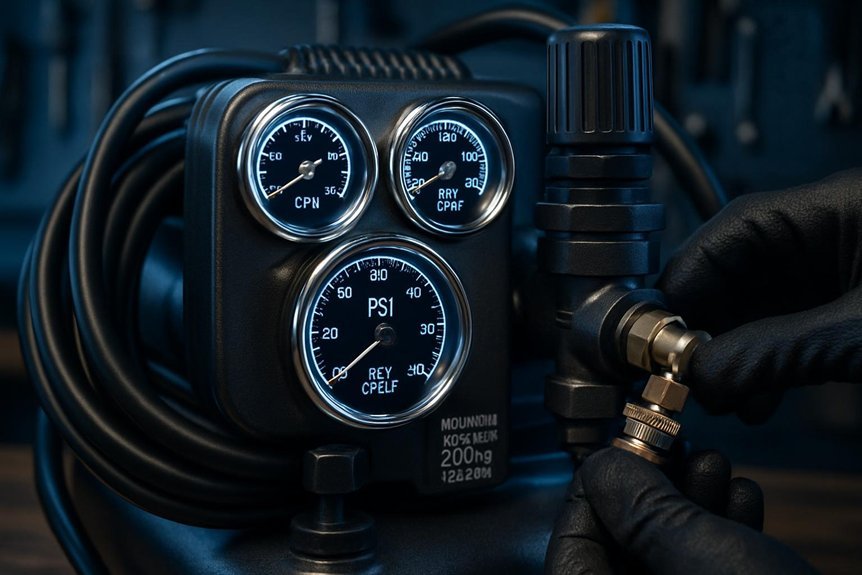
How do CFM, PSI, and duty cycle shape your high-pressure setup? We’ll break them down clearly. CFM measures air flow at a given pressure and sets how quickly you can complete tasks; higher CFM helps with continuous use but can raise temperature rise if the system isn’t optimized. PSI defines pressure capacity; higher PSI enables tougher work but increases component stress and heat. Duty cycle tells you how long the compressor can run before needing a rest; a longer duty cycle reduces interruptions. Together, these factors determine runtime, tool performance, and heat management. Keep in mind two word ideas: temperature rise and lubricant viscosity. Efficient cooling and proper lubrication prevent premature wear, ensuring reliability under demanding, high-pressure use.
Choosing Tank Size to Fit Your Workflow and Runtime
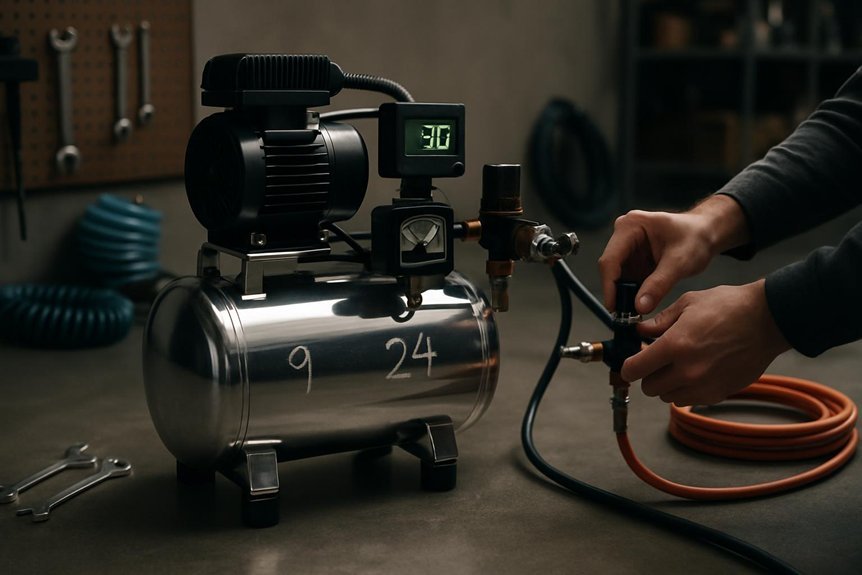
Choosing the right tank size starts with your workflow and runtime needs. We assess the tools you use, the amount of air each requires, and how quickly you want to recover between cycles. A larger tank boosts runtime planning by smoothing short bursts and reducing compressor starts, improving system scalability over time. Conversely, a smaller tank saves space and cost when your workflow is intermittent or uses low-volume tools. We consider duty cycle, peak draw, and storage headroom to prevent pressure drop during heavy use. This analysis guides selecting a tank size that matches your demand curve, balancing fill rate, pressure stability, and space constraints. In short, align tank size with workflow efficiency and anticipated growth.
Air Quality and Filtration: How Clean, Dry Air Gets to Your Tools
We’ll start with dry air standards, because consistent pressure and humidity control protect your tools. Next, we look at filtration power paths to ensure efficient removal of oil, water, and particulates. Finally, we outline contaminant removal steps so you know exactly how air gets cleaned before it reaches your equipment.
Dry Air Standards
Dry air is essential for tool longevity and performance, and getting it to your compressor and outlets clean and dry starts with understanding the standards you should meet. We center on dry air quality and how to verify it before use. Our aim is consistency and reliability, so you’ll know when to upgrade components or adjust setups. Filtration standards define acceptable particulate, oil, and moisture levels that protect seals and valves from wear. We recommend tracking dew point and noticing rust or staining in lines as practical indicators of dryness. Choose filtration elements with appropriate micron ratings and proven collapse resistance under high pressure. Regular checks ensure filters, purge drains, and condensate traps perform. Align your system with recognized guidelines, and your tools will run smoother, longer.
Filtration Power Path
Filtration power is what delivers clean, dry air from the compressor to your tools, and it starts the moment air enters the system. We design a path that preserves filtration efficiency while minimizing pressure drops, so performance isn’t sacrificed for purity. Air travels through prefilters, coalescing stages, and final filters before reaching pressure vessels, where reliable storage meets steady delivery. Each stage targets moisture, oil aerosols, and particulates, enabling consistent tool operation and reduced wear. We emphasize material compatibility, easy maintenance, and clear indicators so you know when to service. Our approach balances filtration, airflow, and safety, ensuring enterprise-grade results in a compact footprint. Trust a validated filtration power path to keep tools clean, dry, and ready to perform.
- Prefilter, coalescing, final filter sequence
- Low-pressure drop, high filtration efficiency
- Pressure vessels integrated storage
- Simple maintenance indicators
Contaminant Removal Steps
How do contaminants impact your tools, and how do we remove them step by step to assure clean, dry air? We start with pre-drying and filtration, removing condensate and large particles. Next, we deploy coalescing filters to capture moisture and oil aerosols, reducing corrosion risk. Then we use desiccant or refrigerated dryers to achieve target dew points suitable for your tool needs. A downstream particulate filter catches residual dust that could abrade components. We monitor pressure and flow to ensure stable performance, and periodically drain condensate from receiver tanks and separators. We replace filters on a schedule aligned with usage, not an unrelated topic or extraneous factor, to prevent bypass or leakage. Finally, we verify air quality with a test or sight, confirming truly dry, clean air reaches every tool.
How to Minimize Noise, Vibration, and Footprint in Tight Spaces
We’ll outline practical noise reduction tactics, effective vibration mitigation methods, and compact footprint solutions for tight spaces. We’ll compare approaches that minimize sound, dampen movement, and shrink the equipment’s footprint without sacrificing performance. Let’s start with clear criteria and practical steps you can apply right away.
Noise Reduction Tactics
Are you looking to cut noise, vibration, and footprint from a high-pressure air compressor in tight spaces? We share practical noise considerations to guide choice and setup, focusing on design and placement first. We then optimize installations with proven strategies that respect space constraints and maintenance access. Our approach balances performance with quiet operation, using targeted tactics rather than generic claims.
- Select enclosure options that dampen sound without overheating
- Position the unit on a vibration-isolating base to reduce transmitted energy
- Route intake and exhaust to minimize reverberation and echo
- Choose components with low intrinsic noise and sturdy mounting
These steps align with our emphasis on noise considerations and vibration isolation, delivering steadier operation in compact environments.
Vibration Mitigation Methods
Before we dive in, consider how a few targeted changes can dramatically reduce vibration and its noise footprint in tight spaces. We minimize resonant frequencies by selecting mounts with appropriate stiffness and isolators to dampen energy transfer. We also combine mounting isolates with strategic placement to decouple the compressor from surrounding structures, lowering transmitted vibration.
| Benefit | Implementation |
|---|---|
| Noise reduction | Use anti-vibration mounts tuned to the unit’s mass |
| Structural load | Isolate base to prevent framing resonance |
| Footprint comfort | Short, deliberate mounting paths minimize coupling |
| Maintenance | Accessibility remains a priority for quick checks |
| Diagnostics | Monitor vibration spectra to tweak isolation |
Compact Footprint Solutions
Compact footprint solutions start with optimizing layout and components for space efficiency without sacrificing performance. We balance size with function by selecting compact cylinders, integrated moisture control, and modular fittings that streamline airflow. Our approach reduces clutter, cuts noise pathways, and lowers vibration transmission through deliberate mounting and isolation strategies. By prioritizing compact footprint and noise control, we fit essential capabilities into tight rooms without compromising reliability. We also consider remote compressors with short connect runs and shared lubrication to minimize inline equipment. Finally, we evaluate service access to avoid sporadic downtime and ensure easy maintenance.
- Layout optimization for tight spaces
- Integrated moisture control and modular fittings
- Vibration isolation and quiet mounting
- Easy access for maintenance and service
Reliability and Maintenance: Designing for Longer Life
We design air compressors to last, so reliability and proactive maintenance must be built in from the start. Our approach pairs robust component selection with predictable service needs, reducing unplanned downtime. We measure success with reliability metrics that track mean time between failures, temperature profiles, and vibration signatures. Early-life checks catch wear before it affects performance, while material choice and coating resist corrosion under demanding duty. For longevity, we implement maintenance scheduling that aligns with usage, duty cycle, and operating environment, not just factory intervals. Regular lubrication, seal inspections, and filter changes prevent efficiency losses and overheating. Clear documentation and operator training empower consistent care. In short, a design that anticipates maintenance minimizes risk and extends life, delivering stable output and lower total cost of ownership.
Safety and Code Considerations for High-Pressure Setups
Safety and code compliance are non-negotiable in high-pressure setups, so we start with a clear assessment of applicable standards, permits, and inspection regimes. We outline responsibilities, verify jurisdictional requirements, and validate ongoing conformance through documentation and audits. Our focus is on safety certifications and regulatory compliance to ensure robust protection for personnel and equipment.
- Identify applicable standards and authorities having jurisdiction (AHJ)
- Confirm required safety certifications and periodic inspections
- Document pressure relief, interlocks, and emergency shutdown procedures
- Track maintenance, calibration, and record-keeping for audits
We stress training, access control, and proper labeling to minimize risk. By planning for compliance from the start, we reduce liability, improve predictability, and support safe, reliable operation.
Budget and Total Cost of Ownership: Upfront vs. Ongoing Costs
How do upfront costs compare to long-term expenses when selecting a high-pressure air compressor, and what total cost of ownership should we expect? We balance initial price with ongoing costs, including energy use, maintenance, parts, and repair labor. Upfront pricing sets expectations, but long-term savings often hinge on efficiency and reliability. We compare unit efficiency, duty cycle, and expected service intervals to estimate running costs over years. Consider warranty coverage and what it actually covers, since gaps can shift costs post-purchase. We guard against pricing confusion by requesting itemized quotes that separate base price, ancillary components, and installation. Informed choices align durability with affordability, reducing surprises during operation. A sound TCO view supports decisions that minimize total expenditure while delivering consistent performance.
A Practical Decision Framework to Compare High-Pressure Compressors
Choosing a practical framework to compare high-pressure compressors helps you move from cost talk to clear, apples-to-apples decisions. We present a repeatable approach that combines capability, reliability, and lifecycle insight. Our goal is to surface two word discussion ideas and avoid muddled logistics so you can act with confidence.
- Define target pressure, flow, and duty cycle to bound options
- Assess build quality, service network, and warranty support
- Compare energy use, heat management, and maintenance cadence
- Map total cost of ownership across purchase, operation, and downtime
With this framework, you’ll prioritize needs over price alone, compare apples to apples, and reduce decision fatigue. We stay practical, precise, and grounded in real-world tradeoffs, so you can select the compressor that matches your workflow now and for years to come.
Frequently Asked Questions
How Does High-Pressure Air Affect Tool Warranty Terms?
High-pressure air can affect warranties if misuse or improper maintenance occurs. We’ll review terms carefully. We emphasize high pressure warranties and tool compatibility, ensuring you match pressure specs, use approved accessories, and follow manufacturers’ maintenance schedules for coverage.
Can HPACS Run Continuously Without Cooling Downtime?
We can’t run HPACs continuously without cooling downtime; continuous cooling is essential. We’ll schedule maintenance intervals and monitor temps, ensuring reliable operation while minimizing downtime. We’ll implement control strategies and regular service to protect performance.
What Are Common Failure Modes for High-Pressure Systems?
We’d tell you this: common mode failures and pneumatic lubrication issues trap us in uncertainty, then we pinpoint failures before they strike, keeping you safe. We’ll monitor temps, seals, and oil levels to prevent surprises. Trust our vigilant approach.
How to Size HPACS for Intermittent Peak Loads?
We size HPACs for intermittent peak loads by analyzing sizing peaks and energy storage, ensuring the unit can meet brief demand surges. We compare duty cycles, store compressed air, and select modular capacity to minimize cycling.
Are There税 or Regulatory Rebates for Industrial HPACS?
Yes—we see tax rebates and regulatory incentives for industrial HPACs, though details vary. We’ll outline eligible programs, compare amounts, and guide you through credits, rebates, and compliance steps, while balancing costs, timelines, and practical installation considerations.
Conclusion
We balance power with practicality, like a rugged toolbox and a delicate filter. On one side, the relentless PSI and CFM push us forward; on the other, tidy filtration, quiet operation, and compact footprints keep us centered. Together, we weigh upfront costs against long-term reliability, choosing a setup that fits our workflow without overkill. In short, strong performance, smart design, and predictable maintenance—paired—make high-pressure air a trusted ally, not a costly burden.