In a recent factory audit, a line halted for 90 minutes because a neglected dryer pressure drop went unnoticed until it triggered a surge event. We recognize preventive maintenance matters, and we’ll outline a disciplined plan—daily checks, weekly and monthly tasks, and clear ownership with fixed due dates aligned to production cycles. This approach helps catch leaks, filter clogs, and regulator drift early, but you’ll see the real value only if we act on deviations promptly and document every step.
Key Takeaways
- Establish a formal preventive maintenance program with daily, weekly, monthly, and quarterly tasks aligned to manufacturer data and site conditions.
- Conduct quick daily checks for readiness, leaks, temperature anomalies, and log all observations for trend analysis.
- Regularly inspect and adjust core components: regulator settings, belts, oil levels, electrical connections, filters, and drains.
- Diagnose issues methodically by tracking symptoms (pressure drops, overheating, abnormal noises) and verifying root causes before fixes.
- Document maintenance activities, assign owners, and schedule tasks to minimize downtime and ensure auditable, continuous improvement.
Air Compressor Preventive Maintenance: What It Is and Why It Matters
Air compressor preventive maintenance is the systematic care and inspection of all components to keep the system reliable, efficient, and available when needed. We define this program as a structured, evidence-based approach to sustain performance, reduce downtime, and extend service life. By aligning procedures with manufacturer data and site conditions, we establish objective criteria for inspection, testing, and replacement intervals. Key elements include monitoring air lubrication performance to minimize bearing wear and ensure steady rotation, and maintaining system filtration to prevent contaminant ingress that can cause corrosion and accelerated seal damage. We document findings, track trends, and implement corrective actions promptly. This proactive framework enables us to forecast needs, optimize energy use, and uphold consistent air quality and pressure throughout production.
Daily Air Compressor Preventive Maintenance Checks
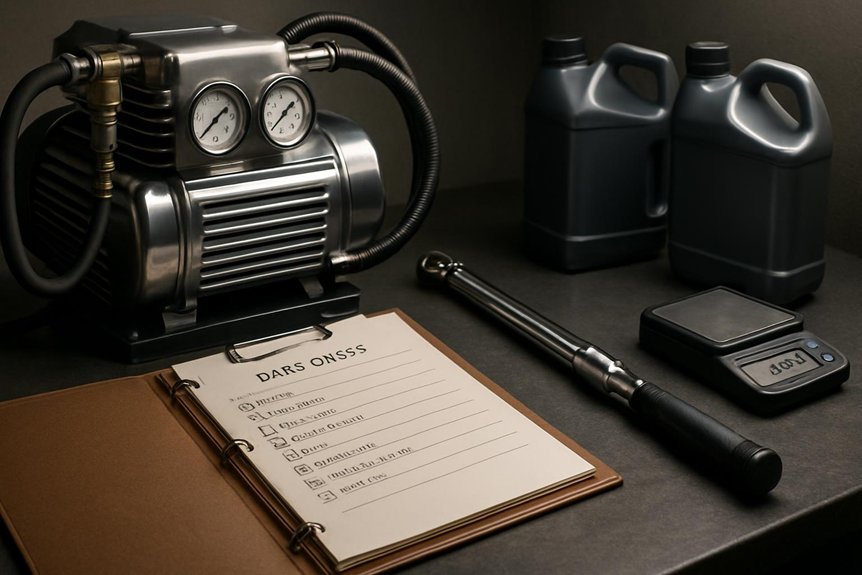
Daily maintenance checks for our air compressors focus on rapid, structured inspections that prevent minor issues from escalating. We perform daily checks to confirm system readiness and capture early indicators of wear, leaks, or temperature anomalies. Our approach emphasizes disciplined maintenance logging to track trends and confirm corrective actions are completed. By documenting observations, we maintain continuity across shifts and uphold reliability targets.
Daily maintenance checks ensure readiness, track wear trends, and sustain reliable compressor performance across shifts.
- Verify inlet filters, hoses, and seals for signs of wear or damage
- Check refrigerant or oil levels and monitor for unusual temps or pressures
- Listen for abnormal noises and inspect belt tension or coupling alignment
- Note any deviations in pressure, flow, or runtime in the maintenance log
This routine supports proactive planning, reduces downtime, and ensures consistent performance.
Weekly and Monthly Air Compressor Preventive Tasks
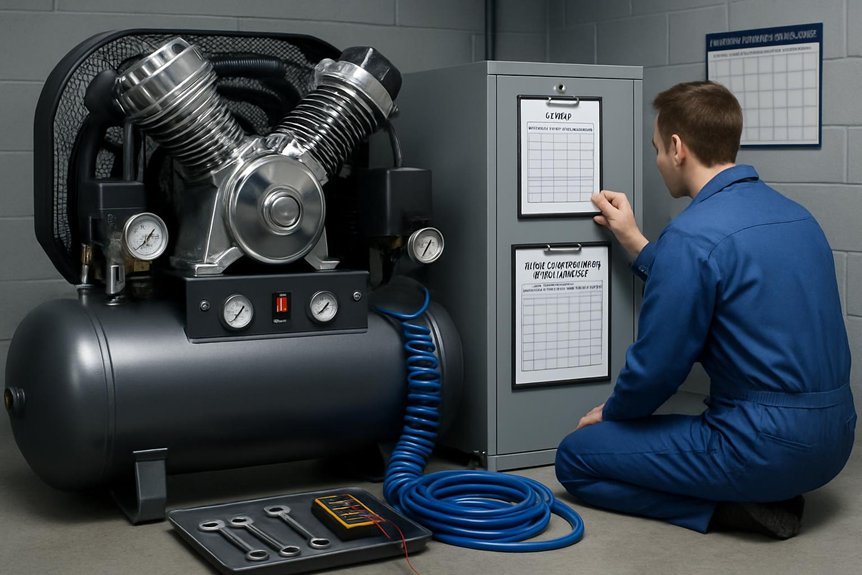
Building on our daily checks, we shift to weekly and monthly preventive tasks that broaden the scope of oversight and reliability. We, as a team, perform a weekly inspection of core components, confirming regulator settings, oil levels, belt tension, and electrical connections are stable and within spec. We log any deviations and adjust procedures to prevent recurrence. Monthly filter changes are scheduled with manufacturer recommendations, ensuring intake air remains clean and system efficiency stays high. We verify purge and drain operations, inspect hoses for wear, and confirm vibration levels are within tolerance. We document findings, update maintenance calendars, and reinforce proper torque and safety practices. This cadence reduces surprises, extends equipment life, and sustains peak performance through disciplined, proactive care.
Diagnosing Common Air Compressor Issues (Symptoms, Causes, Fixes)
What are the telltale signs we should expect when an air compressor underperforms, and what do those symptoms reveal about underlying causes? We approach diagnosing symptoms and diagnosing causes with a methodical mindset. We document pressure drops, excessive cycling, overheating, and abnormal noises, then trace to root sources like valves, seals, or intake restrictions. Our aim is precise fault isolation, not guesswork, so we test systematically, verify constraints, and correlate operating data with component wear. Early, accurate identification reduces downtime and extends life. When symptoms persist, we target fixes that restore efficiency and safety, from seal replacement to venting adjustments or compressor efficiency tuning.
- Consistent low pressure with normal flow
- Frequent short cycling and motor heat
- Audible leaks or hissing at valves
- Elevated discharge temperature and reduced capacity
Build a Simple Air Compressor Preventive Maintenance Schedule
So, how do we structure a simple, effective preventive maintenance schedule for an air compressor? We outline a weekly, monthly, and quarterly cadence that minimizes downtime and maximizes life. Weekly checks focus on oil level, air filters, gauges, and drain valves; we log readings and note anomalies. Monthly tasks include filter replacement, belt tension, lubrication, and leak inspection, plus recording run hours for trend analysis. Quarterly actions cover tank inspections, safety valve tests, desiccant or dryer performance, and tightening connections. We assign owners, set fixed due dates, and align tasks with production cycles to avoid bottlenecks. This two word discussion idea, another two word discussion idea, keeps the plan actionable, auditable, and continuously improvable.
Frequently Asked Questions
How Do I Choose the Right Maintenance Interval for My Compressor?
We determine interval by weighing operating hours and monitoring performance trends; we set replacement thresholds based on runtime, load factor, and manufacturer guidelines, adjusting for duty cycle, ambient conditions, and observed wear to balance reliability with cost.
Are There Safety Certifications for Maintenance Technicians?
Yes—there are safety certifications for maintenance technicians. We require safety certifications and trained maintenance technicians to ensure precise, proactive work; we hold steady, image-rich standards, like a bright gauge on a calm, ready workflow, guiding every critical decision.
What Tools Are Essential for On-Site Maintenance?
We carry essential on-site toolkits: torque wrenches, multimeters, calibration gauges, leak detectors, pneumatic wrenches, and diagnostic kits, plus portable inspection lights. We align maintenance scheduling with systematic checklists, ensuring swift troubleshooting and minimal downtime for compressors.
How Do Leaks Affect Efficiency and Running Costs?
Leaking pipes siphon our efficiency, like stubborn fog dimming a lighthouse beam; leaks reduce airflow, raise running costs, and waste energy. We advise quick seals to preserve leaks and efficiency, substantially lowering leaks and cost impact.
What Is the Expected Lifespan of Common Wear Parts?
We expect wear parts to last 1–3 years depending on use; we monitor wear, schedule replacements, and maintain safety certifications, using precise maintenance tools to sustain energy efficiency and minimize downtime through proactive replacement scheduling.
Conclusion
We’ve seen that proactive preventive maintenance keeps air compressors reliable, efficient, and safe. When we log readings and act on anomalies early, downtime drops and energy use improves. Consider this: waiting for a failure is like ignoring a dashboard warning until the engine stalls—you’ll pay more later. In our teams, a disciplined schedule with owners and fixed due dates translates to smoother production cycles, fewer leaks, and longer equipment life. Let’s stay ahead with disciplined, precise PM practices.