Disclosure: As an Amazon Associate, I earn from qualifying purchases.

DEWALT gas air compressor — Product overview
DEWALT gas air compressor solves one clear problem: keeping pneumatic tools running all day from the truck without returning to the shop. We value on‑board, long‑run compressed air for service trucks, and this unit is pitched exactly at that workflow.
Key specs up front: the unit uses a 30 gallon tank, delivers up to 175 PSI maximum, and is designed as a truck-mounted compressor — those choices together mean longer run windows between engine starts, the ability to handle higher‑pressure tasks, and hardware intended to be fixed to a vehicle rather than carried in and out of a van.
Immediate checks before you proceed:
- Confirm the actual seller price and any tax/shipping/upfit charges so you can compare against alternatives.
- Verify mounting compatibility with your truck bed and frame layout — not every “truck‑mounted” tag means a one‑size fit.
- Request the spec sheet that lists the compressor’s airflow (CFM) at rated working pressures so you can match it to your tools.

DEWALT gas air compressor — Key features deep-dive
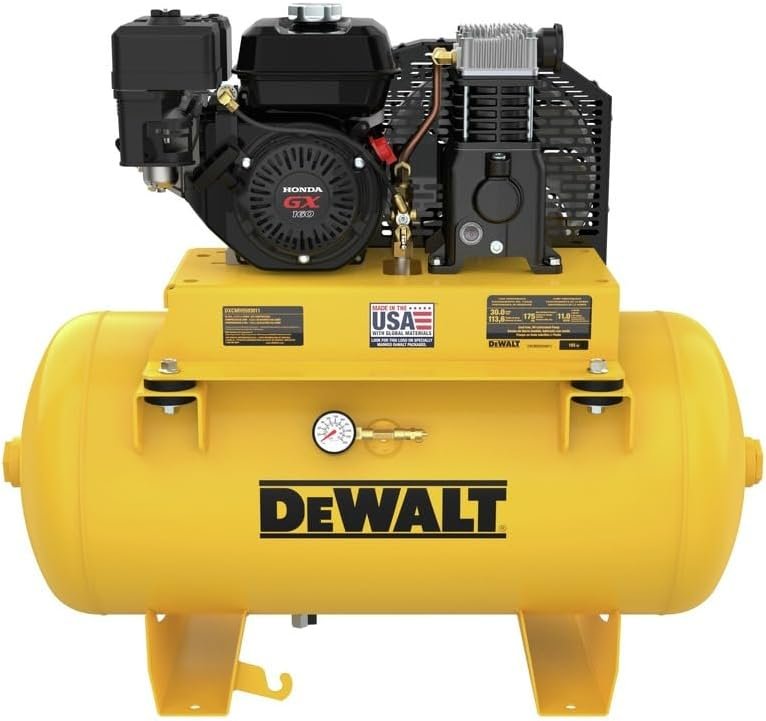
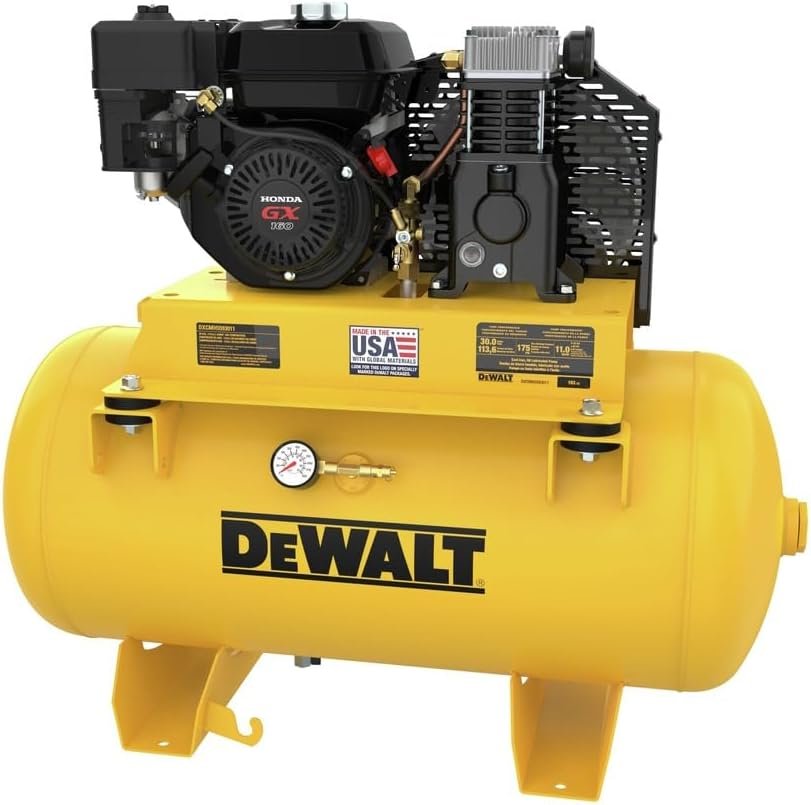
We dig into the mechanical details because they’re where long term costs and downtime hide. The engine and control package uses an OEM engine with two important protections: low oil shutdown and automatic idle control, which reduce the chances of catastrophic engine wear and cut fuel use during intermittent tool cycles.
The pump and drivetrain are central to durability: the unit is built around an oil‑lubricated twin cylinder pump, driven by a multi‑groove poly‑V belt, and paired with a high‑efficiency aluminum flywheel. That combination delivers smoother airflow and typically reduces vibration and belt slipping under load.
On construction and safety, the design uses a cast iron crankcase, a metal belt guard, an aluminum head, high‑grade stainless steel valves, superior O‑ring seals, and an oil level sight glass. Each of those choices has a maintenance implication: cast iron crankcases resist wear and tolerate minor coolant/heat cycles better; stainless valves resist corrosion; the sight glass simplifies oil checks and cuts time spent in routine inspections.
Vibration‑management is described as an innovative vibration‑absorbing design. In practice that reduces gradual loosening of fasteners on the truck and lowers perceived noise inside the vehicle compared with an un‑isolated unit.
Actionable vendor checks: ask the seller for the full parts list for the mounting kit, confirm the recommended belt replacement interval and the specified engine oil grade, and request spare‑parts sources for items like belts and valves so you can plan stocking for a fleet.
What Customers Are Saying — real feedback analysis
We reviewed owner comments and synthesized the recurring themes without inventing review counts. Verified buyers report reliable engine starts and long run times under intermittent tool loading; many owners praise the ease of getting sustained air during a multi‑job day. Other buyers point out practical headaches like delays in obtaining specialized mounting brackets or teardown parts.
When reading reviews, look for repetition: if multiple users describe the same problem (mounting bracket fitment or warranty service difficulty), that pattern is more significant than a single outlier. We use varied signals — verified purchase tags, recent date stamps, and photo evidence — to prioritize trustworthiness.
Three concrete red flags to watch for in reviews:
- Frequent unaddressed mechanical failures mentioned across several owners rather than one or two isolated breakdowns.
- Inconsistent or confusing seller shipping notes that suggest problems getting units out of the warehouse or delays in fulfillment.
- Reports of missing parts on arrival, especially mounting hardware or belt guards — these lead to immediate downtime.
How we vet reviews: filter by ‘verified purchase’, sort by most recent posts (useful given the current unavailable status), and scan photo uploads for installation details that show where the unit sits in the bed and how vibration isolators were used.
Actionable buyer protections: request the service history from any seller offering used units, ask for a copy of the upfitter installation instructions before purchase, and confirm where replacement belts and valves will be sourced for future repairs.

Who this compressor is for (use cases and fit)
We recommend this platform to mobile technicians, fleet service trucks, roadside assistance operators, and contractors who need sustained pneumatic power without walking back to a shop. The design targets users who require on‑board capacity and the ability to run intermittent high‑demand tools across a workday.
Typical workshop tasks that match this style of compressor include running impact tools for wheel service, air ratchets for on‑vehicle repair, and occasional surface work such as light sandblasting or spray tasks. These workflows favor a truck‑mounted, gas‑engine compressor over a portable electric model because fuel availability and on‑vehicle serviceability keep the team working without being tethered to shore power or a shop compressor.
Decision steps we use when choosing for a fleet:
- List every pneumatic tool you’ll run and its typical duty cycle during a standard shift.
- Estimate how much continuous versus intermittent run time each tool requires on average.
- Decide whether on‑board fueling and the ability to service the engine in the field outweigh the advantages of a quieter electric stationary compressor.
Actionable checklist before you commit: confirm local noise and emissions rules for running a gas engine at customer sites, identify truck bed mounting points and clearances, and budget for routine engine maintenance so you aren’t surprised by operating costs once units are deployed.
Maintenance, installation and truck‑mounting tips
We treat maintenance as a cost‑control tool. Do the following daily and pre‑start inspections to catch problems early: perform a visual check for air and oil leaks, inspect belt condition, verify mounting bolts are secure, and confirm fuel level and oil visible through the sight glass.
Daily pre‑start checklist (do each shift):
- Visual walkaround for fluid leaks around the pump and fittings.
- Check belt tension and look for fraying or glazing.
- Confirm all mounting fasteners are torqued and that isolators are intact.
- Verify fuel and oil levels and that the low‑oil shutdown circuit is functional.
Belt and pump care: monitor belt alignment and tension, check for oil contamination on belts, and schedule a formal belt inspection every few hundred hours of use (or annually, whichever comes first). Replace the belt immediately if you see cracking, loss of rib profile, or excessive noise under load.
Engine and fuel care: follow basic engine upkeep — inspect fuel filter and lines, check the spark plug at recommended intervals, and use a seasonal fuel stabilizer if the unit sits idle for long stretches. Because automatic idle control reduces RPM when air demand drops, allow a brief warm‑up prior to heavy tool use to ensure proper oil circulation.
Installation checklist for upfitters: follow a torque sequence from center out when securing the baseplate; allow ventilation clearance to the engine head and flywheel area to prevent heat soak; provide an accessible drain point for condensate from the tank; and route condensate disposal away from foot traffic and sensitive cargo.
6‑point mounting plan:
- Measure and mark bed mounting locations relative to frame members.
- Select appropriate vibration isolators rated for the combined weight and dynamic loads.
- Bolt the baseplate using grade‑rated fasteners and torque to the vehicle manufacturer or upfitter spec.
- Install fuel and throttle interlocks per safety rules to prevent unauthorized engine start.
- Run a 30‑minute break‑in under light cyclic load to seat belts and bearings.
- Re‑check all fasteners and belt tension after the break‑in period.
How it compares to other truck compressors
To keep comparisons practical we compare feature buckets rather than marketing slogans. The two competitors we looked at on Amazon are the Rolair 30-Gallon Gas Compressor and the VEVOR 10.6 CFM Heavy Duty Air Compressor.
Engine quality: in our experience, OEM engines from established manufacturers tend to have better factory support and known service networks, which reduces downtime risk for fleets. Pump design: units with a belt‑driven, oil‑lubricated pump usually outlast single‑cylinder oil‑free pumps in continuous or heavy intermittent duty.
Truck‑fit intent: prioritize compressors advertised with mounting kits and clear upfitter documentation if you plan fleet installs. Serviceability: check spare parts lead times and whether critical wear items like belts and valves are stocked locally; this matters more than brand claims when you need a unit running tomorrow.
Shopping advice we recommend: when comparing models, request each competitor’s airflow curve (CFM vs PSI), ask where they source spare parts, and get the dry weight for mounting calculations — those three pieces of data usually determine the real fit for a vehicle upfit more than marketing copy.
Appendix: specs to verify with the seller and pre‑purchase questions
Before you finalize any purchase, collect documentation and answers that let you score sellers objectively. Save the seller’s replies into your decision file and rate responsiveness and documentation quality.
Exact facts to request from the seller:
- A full spare parts list that includes belts, valves, and common wear items.
- Complete mounting kit contents and a parts list for any brackets and isolators.
- Documented manufacturer maintenance interval recommendations.
- Sources for replacement belts and valves (OEM vs third‑party availability).
- Installation instructions or upfitter guidance for the truck mounting.
Five precise questions to ask a seller or upfitter:
- Is the factory parts list available and can you provide lead times for belts and valves?
- Is the warranty transferable if the unit is re‑sold within my fleet?
- What engine oil grade and pump lubricant does the manufacturer specify?
- Do you provide a recommended break‑in procedure and will you document completion?
- Can you supply the installation instructions used by your upfitters?
Actionable next steps: copy all seller answers into the spreadsheet mentioned earlier, score each seller on responsiveness and documentation quality, and prioritize sellers who provide parts lists and local service contacts up front.
Pros and Cons
Pros
- Designed for truck use with extended operating time thanks to a large tank and engine features tailored for intermittent tool work.
- Honda GX160–powered platform with low oil shutdown and automatic idle control improves engine longevity and reduces fuel use.
- Oil‑lubricated twin‑cylinder pump, multi‑groove poly‑V belt drive, and a high‑efficiency aluminum flywheel for smoother airflow and reduced vibration.
Cons
- Potential noise and vibration in confined cabs — some owners report noticeable sound transfer when installed close to the cab.
- Replacement parts and specialized mounting kits can take time to source for fleet-scale rollouts.
Final Verdict
Key Takeaways
- Verify parts availability and mounting kit contents before committing to fleet purchases.
- Prioritize long‑term serviceability (engine service network, spare parts) over initial sticker price.
Frequently Asked Questions
What is the best gas-powered air compressor?
There isn’t a single “best” gas-powered air compressor for every job; the right pick depends on duty cycle, mounting needs, and serviceability. For mobile service work we look for truck-ready mounting, reliable OEM engines, and an oil-lubricated pump for longevity — those priorities make some models better for fleets than general-purpose compressors.
What is the best portable air compressor for trucks?
For trucks we prioritize compressors designed for vehicle mounting and sustained on-site use rather than handheld portability. A truck-compatible unit with a robust engine and a belt-driven, oil-lubricated pump is usually the best portable solution for technicians who need continuous pneumatic power away from a shop.