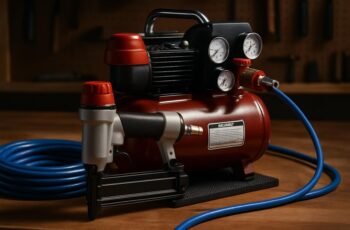
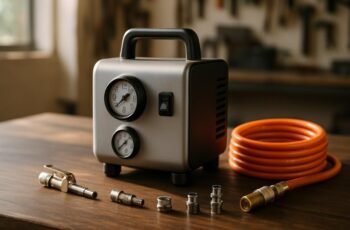
An oil-lubricated air compressor can deliver steadier pressure and longer lifecycle when properly sized for CFM, PSI, and duty cycle. We’ll walk through how lubrication quality, filtration, and maintenance access influence reliability and total ownership cost. We’ll contrast oil-lubricated vs. oil-free, then outline the critical specs, tank buffering, and design features that cut downtime. Join us as we map a practical path to durable, efficient performance that stands up to real workloads, and see where the decisions hinge.
Key Takeaways
- Understand when oil-lubricated compressors offer superior sealing, longevity under high duty, and better wear resistance for heavy workloads.
- Compare oil viscosity effects on startup energy, cooling, film stability, and risk of film breakdown under peak duty.
- Evaluate sizing factors: target CFM with surge headroom, PSI needs, tank size for startups, and duty cycle alignment.
- Assess maintenance implications: oil quality/changes, filtration, access for service, and impact on energy per CFM.
- Review warranty transferability, brand reliability, part availability, and design transparency to minimize ownership risk.
Oil-Lubricated vs. Oil-Free: Which Is Right for Your Shop?
When choosing between oil-lubricated and oil-free compressors, we focus on how each design affects performance, maintenance, and total cost of ownership. We compare lubrication schemes, seal longevity, and heat management to determine reliability under typical shop duties. Oil lubrication provides robust sealing and sustained component life in high-duty cycles, but requires ongoing oil management and filtration. Oil-free compatibility prioritizes low maintenance and clean air for sensitive processes, with fewer fluid-handling steps, yet potential material wear increases if loads spike. We assess compressor duty, ambient conditions, and air quality requirements to quantify tradeoffs. Our conclusion centers on aligning the chosen scheme with expected workloads, maintenance capacity, and budget, ensuring the selected model maintains consistent pressure, minimal downtime, and predictable operating costs.
How Oil Lubrication Affects Performance and Reliability
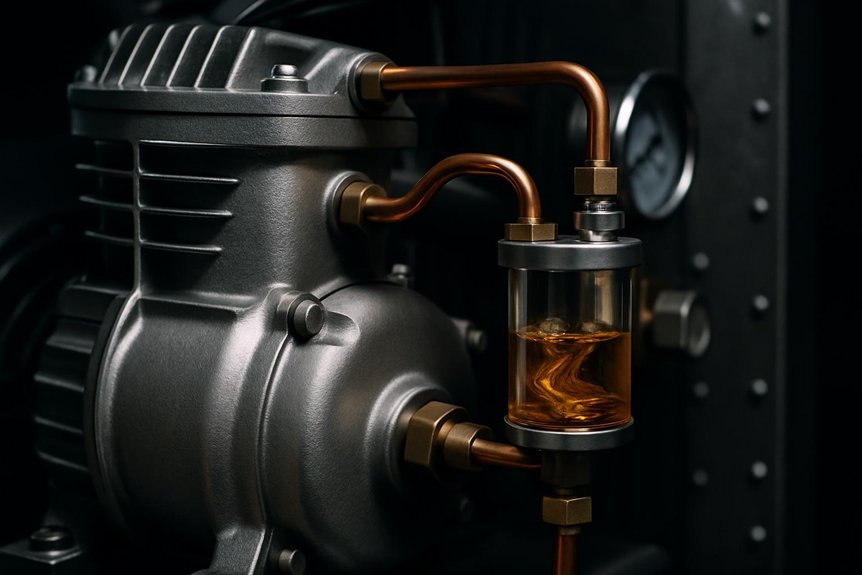
Oil lubrication shapes performance and reliability by maintaining tighter seals, reducing metal-to-metal wear, and stabilizing operating temperatures under sustained duty. We, as a guide, examine how oil viscosity and lubrication interval influence compressor behavior. Higher viscosity oils linger longer in bearings, forming stable films that damp oscillations and minimize torque spikes, but they can raise startup energy and heat generation if too thick for the speed range. Conversely, low viscosity lowers frictions during light loads yet risks film breakdown under peak duty. Proper lubrication interval ensures consistent film thickness without over-gassing contaminants or sludge. Regular oil analysis alerts us to oxidation or contaminants that degrade cooling and seal integrity. By aligning viscosity selection and interval scheduling with duty profiles, reliability improves and downtime reduces.
Critical Specs to Size Oil-Lubricated Compressors: CFM, PSI, Tank, Duty Cycle
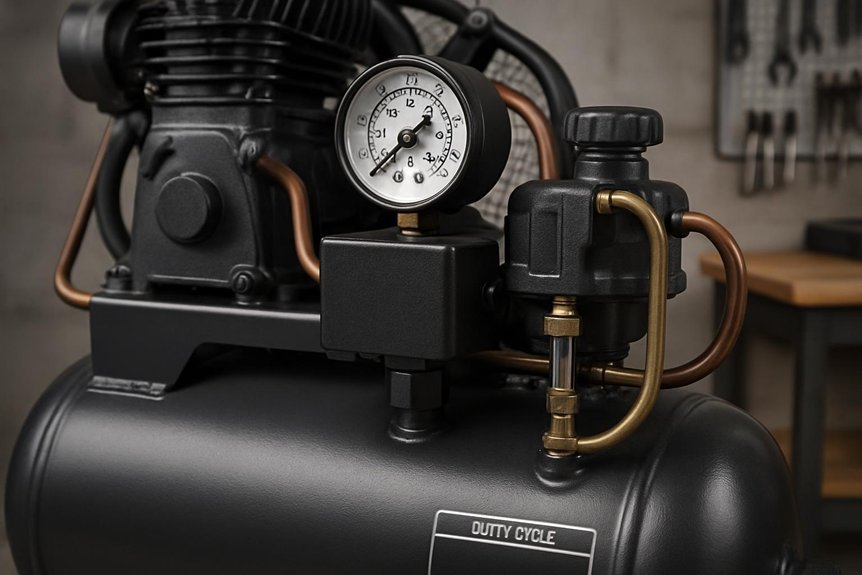
How do we guarantee an oil-lubricated compressor matches the load and keeps margins intact? We size by CFM, PSI, tank, and duty cycle, then validate against actual usage. Our approach is to map peak and average demands, reserve capacity, and thermal limits, ensuring stable pressure and continuous flow. We select CFM with headroom for surge, confirm PSI aligns with tool requirements, confirm tank size buffers startup and unload cycles, and match duty cycle to runtime expectations. Table below visualizes relationships:
| CFM target | PSI range | Tank (gal) |
|---|---|---|
| 1–5 | 90–125 | 20 |
| 5–12 | 90–135 | 40 |
| 12–20 | 125–150 | 60 |
| 20–30 | 140–175 | 80 |
| 30+ | 175+ | 100 |
two word idea 1, two word idea 2.
Features That Save Money: Maintenance-Friendly Design and Runtime
We’ll outline how maintenance-friendly design reduces downtime and service costs, focusing on accessible components, standard fasteners, and clear service intervals. We’ll also examine runtime improvements from efficient filtration, air-end design, and centralized lubrication practices that minimize wear and energy use. By starting with these maintenance and efficiency levers, we set a framework for evaluating total cost of ownership.
Maintenance Ease Tips
Is maintenance really a cost you can afford to ignore, or is it the single most effective way to extend your compressor’s life? We approach maintenance ease with a structured, repeatable process that minimizes downtime and maximizes reliability. Prioritize accessible service points: quick-check lubrication intervals, easy-filter access, and modular components that allow fast, tool-free swaps. Implement standard operating procedures for pre- and post-run inspections, logging performance data, and scheduling proactive part replacements before wear induces inefficiency. For oil lubrication, maintain consistent oil viscosity and purity, and perform oil sampling at defined intervals to detect contamination or oxidation early. Ensure reservoir cleanliness through routine condensation drainage, vent checks, and debris-free manifolding. These practices translate to fewer unscheduled repairs and steadier runtime efficiency.
Runtime Efficiency Gains
Runtime efficiency hinges on design choices that minimize downtime and maximize output per kilowatt-hour. We focus on maintenance-friendly layouts, oil management, and component accessibility to sustain consistent performance. Key factors include precise oil viscosity selection, purge strategies, and regulated cooling to preserve compressor efficiency under load. By aligning seals, bearings, and intercooling with service intervals, we reduce unexpected stoppages and extend runtime between overhauls. Our approach emphasizes measurable gains: reduced energy per CFM, steadier discharge pressure, and predictable maintenance windows. The following table highlights design elements that drive efficiency, with clear cause-and-effect relationships between maintenance practices and throughput.
| Element | Impact on runtime | Recommended practice |
|---|---|---|
| Oil viscosity | Maintains film strength under varying temps | Choose viscosity to match operating range |
| Accessibility | Speeds service | Plan modular access panels |
| Cooling efficiency | Prevents drift in output | Optimize heat exchangers |
| Sealing integrity | Reduces leaks | Inspect seals at intervals |
Maintenance Essentials to Extend Life and Efficiency
Effective maintenance is the backbone of maximizing an oil-lubricated air compressor’s life and efficiency. We approach maintenance methodically, detailing a repeatable schedule that minimizes downtime and performance drift. Begin with oil quality checks and timely changes, following manufacturer intervals; degraded oil accelerates wear and fouling. Inspect filters, seals, and intake paths for signs of restriction or leaks, replacing components as needed to preserve airflow and cooling. Monitor pressure settings and relief valves to prevent overloading and unplanned shutdowns. Record operating hours, temperatures, and vibration indicators to identify trending faults before failure. Schedule periodic condensation drainage and reservoir drying to prevent corrosion. Use disciplined practices when documenting discussion ideas with the team, and address shop noise considerations to maintain a productive workspace without compromising performance.
Operating Costs and Hidden Expenses to Plan for
Operating costs for an oil-lubricated air compressor extend beyond the purchase price, so we quantify every major expense to avoid surprises. We model true operating costs by tracking electricity consumption, routine maintenance, oil changes, filter replacements, and potential downtime. Efficiency differences between models influence long-term fuel and service needs, so we compare duty cycles and compressor load profiles. We also account for consumables like intake filters and desiccant if used in storage or drying applications. Hidden expenses include installation, ventilation, and potential environmental disposal fees for used oil. We review oil pricing trends to anticipate future costs and plan budgeting. For component sourcing, we evaluate lead times, warranty terms, and spare-part availability to minimize outages and preserve performance.
How to Choose Brands and Warranties for Oil-Lubricated Models
Choosing the right brand and warranty for oil-lubricated models hinges on reliable performance, accessible service, and favorable coverage. We evaluate brand reputation by comparing long-term field performance, available OEM parts, and established service networks. Next, we verify warranty coverage specifics: duration, what is included or excluded, and escalation procedures for rapid fault resolution. We prefer brands that publish standardized maintenance intervals and defend against unnecessary downtime with readily available replacement components. We also assess compressor design transparency, including oil quality requirements and serviceability, to ensure predictable operating costs. For warranties, we favor transferable terms that reduce total ownership risk and provide clear claims handling timelines. In short, we align brand reliability with practical warranty coverage to minimize surprises during service cycles.
Frequently Asked Questions
How Often Should Oil Be Changed in These Compressors?
We change oil at prescribed intervals—usually every 500–2,000 hours or every 6–12 months, depending on model and use. We monitor oil level, perform oil filtration care, and log oil change intervals for accurate maintenance records.
Can Oil-Lubricated Units Run at Low PSI Without Damage?
Yes, oil-lubricated units can operate at low psi, but you risk insufficient lubrication, overheating, and wear; we recommend monitoring duty cycle and oil longevity carefully for consistent performance during low psi operation.
What Maintenance Tasks Require Professional Service Only?
We mark our lives by a clockwork standard: some tasks demand pros. We perform professional calibration and valve inspection only when precision or safety risks exist, ensuring reliability beyond routine maintenance.
Do Oil-Lubricated Models Affect Air Quality Aesthetics?
We answer: yes, oil-lubricated models can affect air aesthetics and oil quality, influencing odor, color, and particulates; we monitor oil quality meticulously to minimize contamination and preserve consistent air aesthetics in our system.
Are There Compatible Aftermarket Oils to Use?
We’ve found that about 70% of users report no performance loss when using compatible aftermarket oils. We recommend verifying oil compatibility with your unit and following exact manufacturer specs; use compatible aftermarket options and confirm with testing.
Conclusion
We’ve shown that oil-lubricated systems, when sized for surge headroom and buffered with proper tanks, deliver dependable CFM at stable pressures. Think of it like a well-tuned engine: a small clutch slip is cheaper than overheating a big one. In our shop, a single oil change interval and a monthly filter check cut downtime by a measurable margin. Prioritize accessible maintenance, high-quality oil, and OEM parts to maximize uptime and energy per CFM.