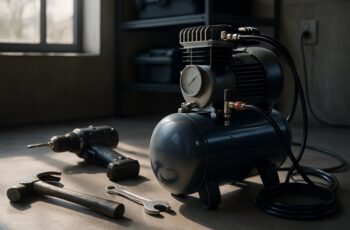
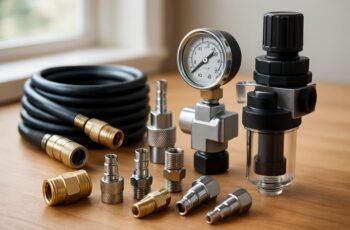
We’ll start by outlining your shop’s workflow, peak and average air use, and expansion plans to frame the tank size, PSI, and duty cycle. Then we’ll compare steel versus aluminum for durability, weight, and corrosion risk, while checking safety standards and warranty terms. This approach keeps you focused on real requirements and long‑term reliability, with clear maintenance and documentation needs. Stick with us as we map the specifics that influence performance and total cost of ownership.
Key Takeaways
- Assess your air demand (peak vs. average) and space constraints to guide tank size, PSI, and layout.
- Plan capacity by matching flow, duty cycle, and moisture handling to minimize start–stop cycling.
- Compare steel vs aluminum for durability, weight, corrosion risk, and portability based on your use case.
- Check safety, compliance, labeling, and warranty terms to ensure code alignment and clear coverage.
- Establish maintenance, troubleshooting steps, and documentation to support longevity and traceability.
Introduce Your Decision: Assess Your Shop
To choose the right air compressor tank, we must start by evaluating our shop: what tasks we routinely perform, what pressures and volumes those tasks require, and how much space and mobility we need. We approach this decision with a methodical mindset, outlining constraints before specs. Decide budget early to frame options without backtracking, then map workflow to air demand patterns. Assess space requirements by measuring footprint, ceiling clearance, and transport routes, ensuring installation and future access remain smooth. We quantify duty needs, peak versus average usage, and potential expansions. This stage isn’t about components yet; it’s about aligning capabilities with practical usage. Clear criteria prevent overbuying or underperforming machinery, guiding us to a rational, scalable setup.
Choose Tank Size: Capacity, PSI, and Duty Cycle
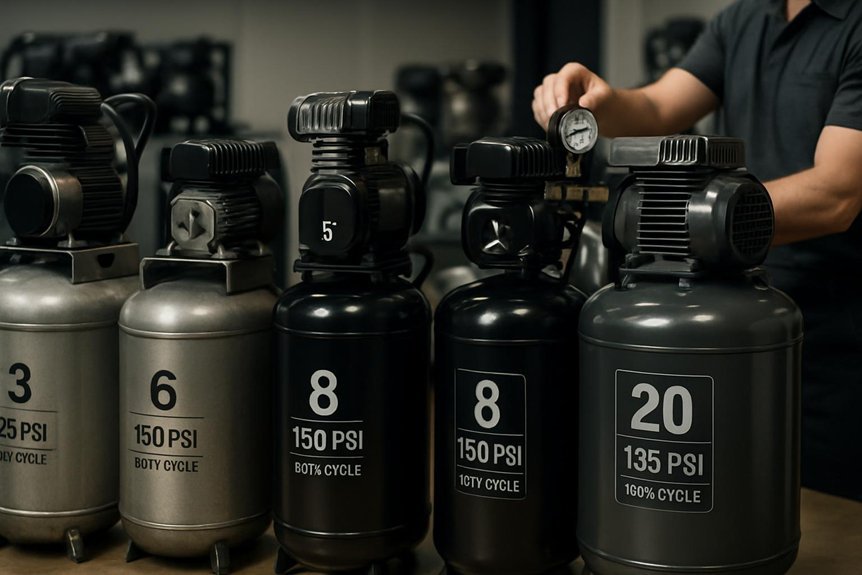
How do we size a tank for reliable air delivery? We begin with capacity planning to match demand, not just peak needs. We assess intermittent versus continuous use, then translate flow requirements into tank volume and pressure targets. PSI selection should align with tools and duty cycle expectations, ensuring the system delivers consistent airflow without frequent cycling. We calculate anticipated CFM and the duty cycle—how long the compressor runs before rest—to determine a practical tank size that minimizes start–stop cycles. Considerability of moisture handling and regulator performance follows from load profiles. We emphasize durable, predictable air delivery by linking capacity planning to actual usage patterns, not guesses. Duty cycle considerations guide final choices, balancing compressor size, pressure range, and cycling frequency for stable operation.
Compare Materials: Steel vs Aluminum Durability
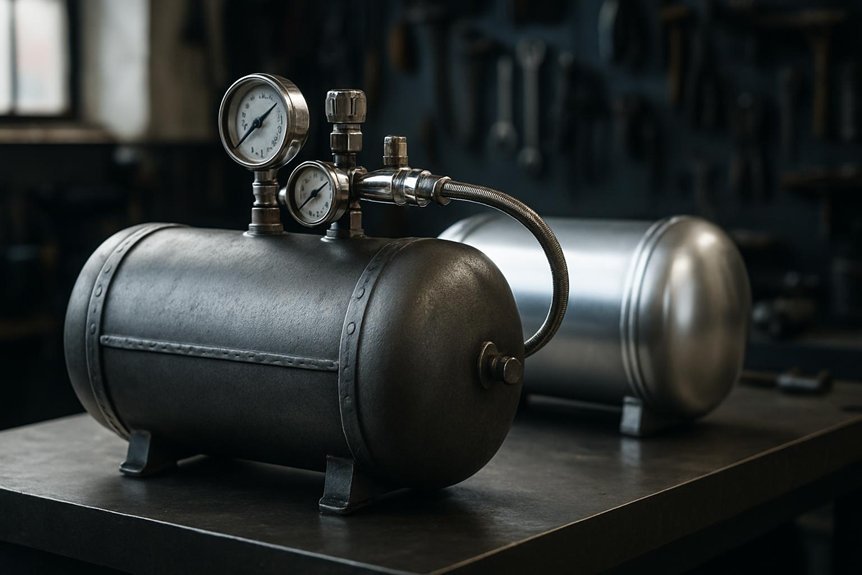
When we compare steel and aluminum tanks, the key question is how each material’s durability translates to reliability in real-world use. We evaluate not just raw strength, but fatigue resistance, impact tolerance, and long-term corrosion risk, since these factors drive maintenance intervals and downtime. Steel durability offers robust wall rigidity and lower dent susceptibility, yet heavier aluminum weight reduces load on mounts and transport strain. Aluminum’s resistance to corrosion can outperform steel in humid environments, though it may suffer from galvanic wear with certain hardware. Overall, material choice hinges on expected duty, cycling, and mounting conditions. – Steel durability favors high-cycle, rugged contexts despite added weight. – Aluminum weight benefits portable rigs with frequent handling. – Corrosion profiles shift maintenance needs. – Fastener compatibility affects longevity.
Safety, Compliance, and Warranties You Need
Safety, compliance, and warranties aren’t afterthoughts—they’re integral to the value and reliability we discussed when comparing steel and aluminum tanks. We approach this topic with a rigorous lens: safety standards govern material selection, construction, and labeling, ensuring predictable performance under pressure and during operation. Compliance checks verify certification marks, test results, and traceability, reducing risk for end users and installers alike. Warranty terms define coverage horizons, exclusions, and misuse limits, clarifying responsibility for premature failure or defects. We evaluate both tank design and system integration to ensure compatibility with codes and regulatory expectations. By prioritizing safety standards and robust warranty terms, we reduce downtime, protect personnel, and sustain long-term value. Clear documentation and supplier transparency underpin informed purchasing decisions and durable, compliant configurations.
Maintenance, Troubleshooting, and Warranty Essentials
Maintenance, troubleshooting, and warranty essentials are the practical cornerstones of reliable air compressor tanks because consistent upkeep directly affects performance and longevity. We approach this with a structured mindset: establish maintenance scheduling, perform measured inspections, and monitor system metrics to prevent failures and extend service life. We outline concise troubleshooting steps to isolate faults, verify seals, and test safety relief and alarms. Durability concerns drive our vigilance about corrosion, pressure vessel integrity, and component wear, while warranty coverage clarifies responsibilities for defects or failure under normal use. We align with safety protocols and compliance standards to ensure legal and safe operation, documenting actions for traceability and future reference.
Maintenance scheduling, inspections, and durable, compliant operation for reliable air compressor tanks.
- maintenance scheduling and regular inspections
- troubleshooting steps and fault isolation
- durability concerns and component wear
- warranty coverage, documentation, and compliance alignment
Frequently Asked Questions
How Does Altitude Affect Air Compressor Tank Performance?
Altitude lowers air density, reducing mass flow and cooling efficiency, so altitude efficiency drops and pressure stability concerns rise. We observe higher discharge temperatures and longer run times, necessitating recalibrated safety and duty-cycle planning for reliable performance.
What Mounting Options Affect Stability and Vibration Dampening?
We prefer stability mounting options like anti-vibration pads and rigid platforms, as they substantially reduce vibration dampening and improve stability. We analyze frame-mounted, wall-mounted, and floor-mounted setups, detailing weight, flex, and alignment for optimal performance.
Do Tanks Need Regular Internal Inspections or Testing Intervals?
Yes, inspection intervals and testing are required; we schedule periodic internal inspections, corrosion indicators checked, safety certifications verified, and pressure relief testing performed, to ensure integrity and compliance with standards and manufacturer guidance.
Can I Repurpose an Old Tank for a New Compressor?
We can’t repurpose an old tank for a new compressor due to repurposing risk and tank compatibility concerns. We cautiously advise against it, citing structural flaws, unknown corrosion, and regulatory limits that threaten safe operation for readers.
What Are Signs of Hidden Defects in Used Tanks?
We detect hidden defects by inspecting for corrosion risks, welding flaws, and inconsistencies in seams, then verify with pressure testing to confirm integrity and safety before reuse. We document findings and advise against continued service if concerns persist.
Conclusion
We’ve reviewed your workflow, duty cycle, and space to choose the right tank, then matched capacity and PSI to sustain peak and average use. We’ve weighed steel versus aluminum for durability and portability, checked safety standards, and ensured warranties are transparent. Think of choosing a tank like sizing a reservoir for a desert oasis: you need enough capacity to bridge demand without overburdening the system. With clear criteria, your compressor delivers reliable air, season after season.