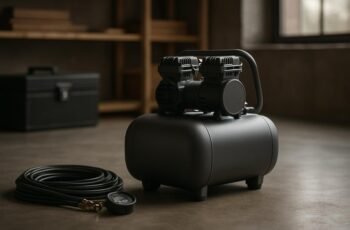
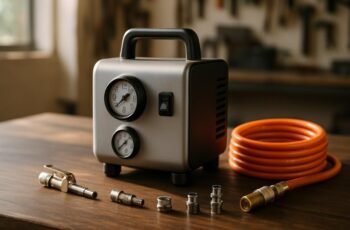
We’ll start by matching PSI and CFM to each tool’s needs, then size the tank and duty cycle for steady performance. We’ll separate hobby and pro use, weigh maintenance and warranty, and compare final contenders with a simple checklist. This method keeps us focused on real-world duty, energy use, and total cost—creating a clear path to the right compressor, even as variables change and new tasks arise.
Key Takeaways
- Determine your tools’ total CFM at the target PSI to establish a single operating range and peak-demand design point.
- Choose tank size and duty cycle to smooth performance, extend runtime, and reduce cycling for real-world projects.
- Define use case: hobby vs. pro, mapping tasks to air demands and balancing cost, maintenance, and lifecycle.
- Evaluate longevity and maintenance: materials, cooling, filter/oil life, serviceability, warranty, and support.
- Use a simple buy checklist: CFM at load, duty cycle, power, compatibility, noise, efficiency, and warranty coverage.
Determine PSI and CFM You Need for Your Air Compressor
Determining the correct PSI and CFM is essential to avoid underpowered tools or wasted capacity. We’ll guide you through a precise method to determine psi and cfm for your needs, avoiding guesswork. First, list every tool and its required cfm at a given psi, noting the highest demands. Then, translate those requirements into a single operating range: pick a target psi that satisfies the peak cfm without excessive pressure. For example, if one tool needs 4 cfm at 90 psi and another needs 6 cfm at 100 psi, design around 6–7 cfm at 100 psi to cover both. Consider tank size and duty cycle as system constants that influence response and recovery, ensuring the compressor can sustain brief, full-load periods without excessive cycling.
Assess Tank Size and Duty Cycle for Real-World Use
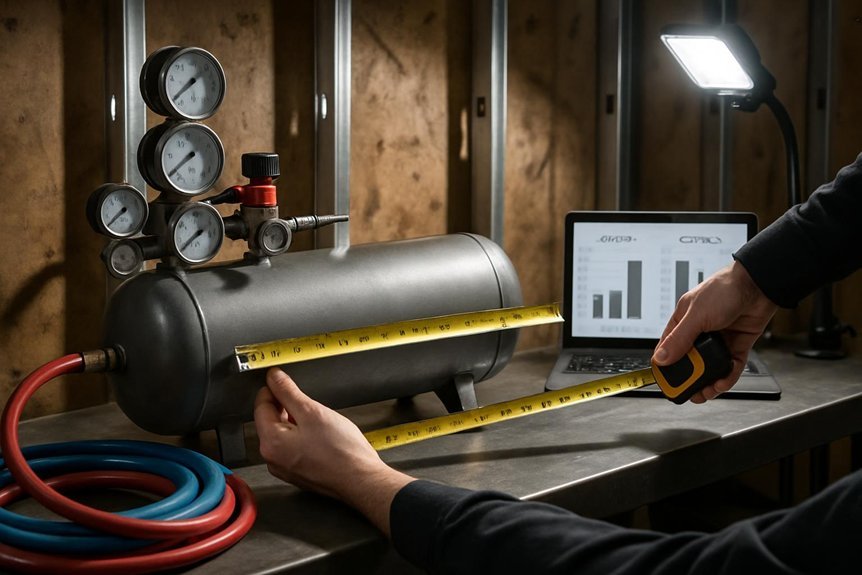
How do tank size and duty cycle translate to practical performance? We assess real-world impact by linking tank size to sustained air delivery and duty cycle to runtime. A larger tank provides more stored volume, smoothing psi fluctuations and reducing short bursts of compressor cycling. This matters for continuous or multi-tool projects, where steady cfm matters more than peak psi. Duty cycle, expressed as a percentage of runtime at rated pressure, governs how long the unit can run before overheating or needing a cooldown. In practice, balance budget, features, and maintenance requirements with expected projects. Larger tanks cost more and demand space, yet offer smoother performance; smaller tanks save money but require more frequent cycling and attentive maintenance.
Define Your Projects and Budget: Hobby vs. Pro
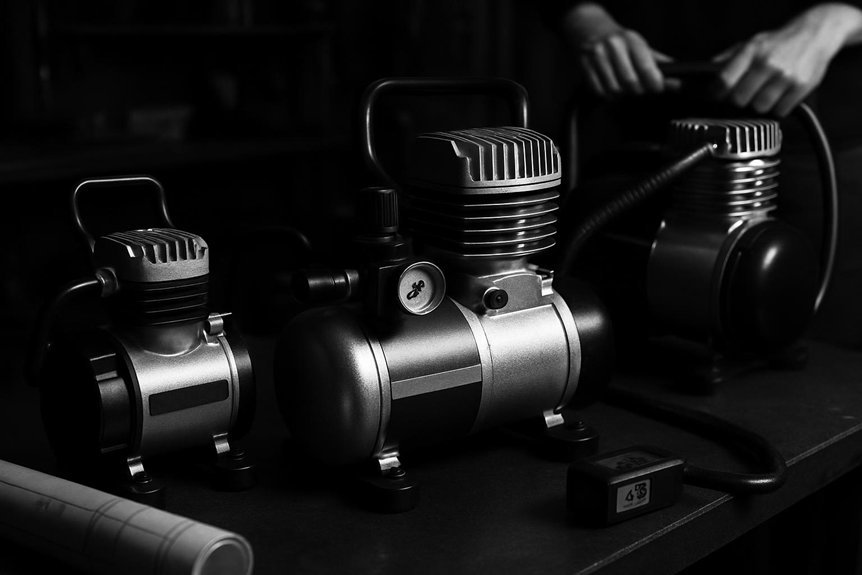
Are you sure you’re selecting the right air compressor for your projects by defining scope and budget up front? We begin by framing requirements: hobby vs. professional use dictates duty cycle, flow, and reliability targets. For hobby work, prioritize portability, simplicity, and cost containment, with modest runtime and fewer accessories. For pro budgets, stress continuous duty, higher CFM at operating pressure, quicker recovery, and serviceability. We map tasks to air demands, preventing overkill or imbalance between capability and expense. Budget clarity prevents feature creep and aligns procurement with expected utilization, maintenance costs, and lifecycle. We acknowledge that initial price isn’t the sole concern; total cost of ownership matters. By defining projects and budget early, we create a scalable path that avoids underspecification and underspending.
Evaluate Features, Longevity, and Maintenance
Which specs truly matter for long-term performance, reliability, and cost of ownership? We approach evaluation by examining features that influence duty cycles, maintenance intervals, and part availability. First, assess longevity through materials, heat management, and bearing design, since these determine wear rates and service intervals. Next, evaluate efficiency by considering CFM at load, motor power, and compressor type, which drive energy costs over time. We also scrutinize maintenance demands: filter life, oil changes, and access to replacements. Finally, assess reliability via warranty depth, manufacturer support, and field-verified failure data. We prioritize components with proven cycles and robust construction. In short, rigorous evaluation of efficiency, longevity, and maintenance planning yields actionable insight for dependable ownership.
Compare Finalists With a Simple Buy Checklist
From here, we apply the earlier findings on features, longevity, and maintenance to a straightforward buy checklist that we can use across finalists. We present a concise, criteria-driven comparison to minimize bias and misinterpretation. Start with basic specs: CFM at target load, duty cycle, and power requirements, then verify compatibility with existing systems. Next, assess build quality, component sourcing, and serviceability to estimate long-term reliability. Evaluate noise levels, energy efficiency, and cooling design for sustained use. Check warranty coverage and update intervals to prevent hidden costs, noting any warranty gaps. Identify trade-offs between upfront cost and lifetime value, avoiding superficial features that don’t translate to real performance. Conclude with a ranked shortlist highlighting strongest all-around performers and the most trustworthy warranty stance.
Frequently Asked Questions
What Safety Features Matter Most for Beginners?
We prioritize safety features like proper safety gear and clear compressor placement, because beginners must prevent injuries, accidental startup, and heat buildup; we advise guarding the belt, pressure relief, and automatic shutoff for reliable, monitored operation.
How Loud Is the Compressor in Decibels?
We deliver quiet operation around 60–70 decibels for standard models, with variations by duty cycle; consider decibel levels, tool compatibility, safety features, maintenance schedule, and warranty coverage when assessing overall compressor performance.
Can It Run Multiple Tools Simultaneously?
We can run multiple tools, but it depends on CFM and pressure; we assess running tools compatibility and use multi tool load management to prevent drops in performance and ensure stable duty cycles for each connected tool.
Is a Warranty Worth Upgrading to Extended Coverage?
We believe it’s worth upgrading; warranty coverage offers extended protection, reduces risk, and stabilizes costs. We weigh reliability, service options, and claims speed, and we conclude that extended protection merits consideration for long-term investment and total ownership confidence.
What Maintenance Schedule Prevents Most Breakdowns?
We should schedule maintenance frequency to minimize failures, and prioritize timely part replacement; we’ll inspect seals, filters, and lubricants, replace worn components, and track performance metrics so your system stays reliable with predictable downtime.
Conclusion
We’ve walked the lines from CFM and PSI to tank size and duty cycle, matching tools to the numbers that actually matter. Coincidentally, the right compressor often reveals itself where our real uses collide—our peak needs occur just as our budget tightens, and a larger tank quietly smooths the workflow we thought we’d tolerate. If our finalists meet the targets, tick the buy checklist, and trust the maintenance path we mapped—it’s the moment we can rely on, consistently.