Like a compass needle pointing to reliability, we assemble the facts you’ll need to choose a pancake air compressor. We’ll weigh tank size, CFM, PSI, and duty cycle, balancing portability with enough airflow for intermittent tasks. We’ll compare oil-free versus oil-lubed options, noise, and maintenance, while considering practical features that cut downtime. Our aim is to help you avoid overestimating needs and underestimating upkeep, but the next step reveals how those choices play out in real projects.
Key Takeaways
- Choose tank size based on task duration and peak bursts to minimize downtime and recharging.
- Match CFM and PSI to your tools’ demands, considering duty cycle for consistent performance.
- Decide between oil-free and oil-lubricated models based on maintenance tolerance and load; weigh heat vs longevity.
- Prioritize portability and noise, evaluating weight, dimensions, dB at typical working distance, and vibration handling.
- Budget wisely by comparing practical CFM at PSI, warranty/parts availability, and maintenance costs over the tool’s life.
What a Pancake Compressor Is and When to Use It
A pancake compressor is a small, horizontal air tank with a compact pump that stores compressed air for quick use. We’re examining what it is and when it fits your workflow. In practice, pancake design prioritizes portability, quick recovery, and minimal footprint, making it ideal for light-duty tasks and intermittent bursts. We assess use cases where low CFM is sufficient, such as brad nailing, inflation, and small spray touch-ups, against the need for brief rest periods between cycles. We compare oil free vs oil lubricated configurations, noting that oil-free models reduce maintenance but may run hotter and wear faster under heavy load. For most hobbyists, the choice hinges on noise, maintenance tolerance, and expected duty cycle rather than raw pressure alone.
Choosing the Right Tank Size for Your Projects
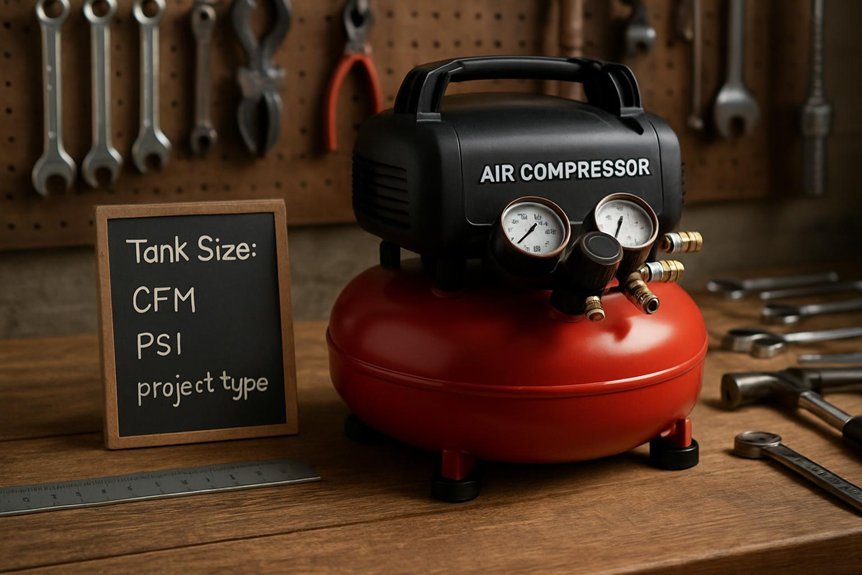
How big should your pancake’s tank be for the work you actually do? We weigh tank size against typical usage patterns to minimize downtime. For short, intermittent tasks, a small tank generally suffices, since brief cycles match low air demand and quick recoveries. For longer project duration, a larger tank reduces cycling, sustains stable pressure, and cuts tool start-stop wear. We consider the volume needed to cover peak bursts without frequent recharging, then factor in duty cycle expectations and compressor recovery rate. If you frequently pause between tasks, a modest increase in tank size can improve efficiency without inflating upfront costs. Ultimately, select a size that aligns with your project duration, balancing buffer air, tool demands, and overall runtime expectations.
Understanding CFM, PSI, and Duty Cycle
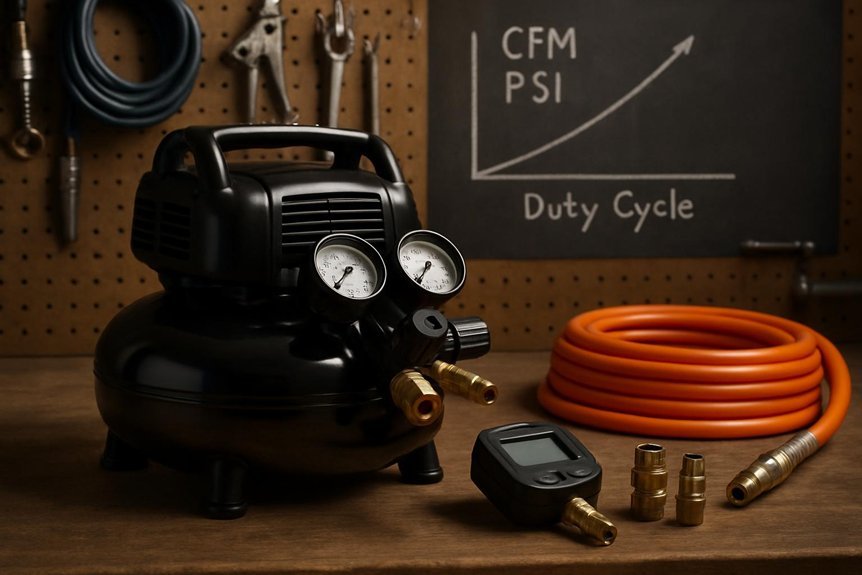
What do CFM, PSI, and duty cycle really mean for a pancake air compressor, and how do they relate to your finished work? We break down performance metrics to align tool capabilities with task requirements. CFM measures sustained airflow at a given pressure, revealing how many tools or continuous tasks you can run. PSI indicates maximum working pressure, setting the force behind each burst. Duty cycle describes how long the compressor can run before needing a rest, influencing heat buildup and cycling frequency. Understanding cfm, psi, and duty cycle helps us select models that match our workflow without overpaying for unused headroom. Common myths about pancake compressors often inflate expectations; we favor practical specs and real‑world use, avoiding overestimation or underutilization in your shop.
Portability, Noise, and Maintenance: Practical Tips
If you’re chasing a balance of portability, low noise, and easy upkeep, start by weighing the form factor against daily tasks. We assess handle design, weight distribution, and storage footprint to determine practicality for job sites or workshops. Next, we quantify noise impact with dB measurements at typical operating distances, linking chamber size and muffler efficiency to real-world tolerance. For maintenance strategies, we outline accessible service intervals, filter and oil checks, and obvious wear points that affect reliability. We prioritize quick-access panels and standardized parts to minimize downtime. In practice, portability tips emerge from a cohesive system: cabinet construction, vibration isolation, and cord management. Finally, we link routine upkeep to extended life and consistent performance, reducing total cost of ownership.
Pancake Compressor Myths and Real-World Budget Tips
Pancake compressors aren’t as simple as their compact shape suggests; there are common myths that can mislead buyers and inflate costs. We debunk these by focusing on performance metrics, duty cycle, and real-world use cases. First, pancake myths often confuse tank size with sustained airflow; utilization matters more than capacity alone. Second, price isn’t a perfect proxy for reliability—brand warranties, parts availability, and service networks influence long-term costs. We emphasize real-world budgeting: compare CFM at your expected PSI, estimate runtime with duty cycles, and factor maintenance intervals into total ownership. Budget hacks include prioritizing robust housings, accessible filters, and clear spare-part paths, plus avoiding unnecessary extras. With precise specs and honest budgeting, you’ll select a pancake model that matches workload without overspending.
Frequently Asked Questions
What Warranty Coverage Comes With Most Pancake Compressors?
Warranty specifics vary by model, but most pancake compressors include a limited, one-year coverage terms for defects and material failures, with optional extended plans. We provide concise analysis, noting coverage terms, exclusions, and tradeoffs for informed decisions.
Can Pancake Compressors Power Air Tools Used Daily?
We can power daily-use air tools with pancake durability and motor efficiency, but performance varies; we manage temps and duty cycles to prevent overheating. We, readers, stay analytical, concise, and treat each tool as a measured investment.
How Long Does It Take to Recharge a Tank?
We can recharge a tank in about 1–3 minutes for small models, but longer for larger tanks; note long recharge times can cause noisy operation. We’ll optimize duty cycle and use gauges to monitor pressure closely.
Are There Safety Features Unique to Pancake Models?
“Safety first.” Yes, there are safety features unique to pancake models: rugged shrouds, thermal overload protection, and diaphragms for relief valves. We seek safety certifications and prioritize noise reduction while analyzing vents, gauges, and trip limits with precision.
Do These Compressors Require Special Outlets or Circuits?
Yes, these compressors often need special outlets and dedicated circuits. We recommend and wire dedicated 15–20 amp outlets, evaluate circuit load, and use GFCI where required to prevent nuisance trips and ensure safe, stable performance.
Conclusion
We’ve laid out how a pancake compressor fits small, intermittent tasks, how to size tanks, and how to weigh CFM, PSI, and duty cycle against portability and noise. With practical checks on maintenance, parts, and warranty, you’ll forecast downtime and reliability rather than surprises. In short, pick the right tank, verify airflow needs, and favor accessible design features. Think of it as choosing the right tool for precise bursts—like a scalpel in a toolbox, not a hammer.