You may not know how much real-world efficiency hinges on load variability and startup surges, not just peak CFM or nameplate PSI. We’ll cut through the hype with a disciplined framework that translates duty cycles, leakage, and line losses into true energy use and lifecycle costs. Each step ties operating conditions to measurable metrics, so you can compare models with confidence and avoid common misassumptions. Let’s build a practical, decision-ready approach that reveals where efficiency actually lives.
Key Takeaways
- Compare efficiency using real-world metrics: CFM at target PSI, corresponding power draw, and specific power (kW per 100 CFM).
- Include handling of real-world load variability: startup surges, duty cycle, unloading losses, and control strategies.
- Evaluate operating conditions: temperature, lubrication, filtration, cooling, and their impact on energy consumption and efficiency.
- Use TCO and lifecycle costs: upfront price, maintenance, energy use, warranty, and service networks.
- Favor systems with scalable storage, low unload losses, effective condensate management, and validated performance data.
How to Judge Compressor Efficiency: the Essential Metrics (Cfm, PSI, Power Draw)
Understanding compressor efficiency begins with the core metrics that drive performance: CFM (cubic feet per minute) for output, PSI (pounds per square inch) for pressure, and the power draw required to sustain that combination. We, as technicians, judge efficiency by how these figures align under load, not in isolation. Efficient metrics emerge when CFM meets demand at target PSI with minimal electric input, revealing true performance, not just capacity. Real world conditions—air leakage, line size, and duty cycle—shape results, so comparisons must normalize for these factors. We track steady-state CFM at operating PSI and monitor power draw to compute specific energy consumption. This disciplined approach yields objective, actionable insights, allowing us to select compressors that deliver consistent output with optimal electrical efficiency.
How Setup and Operating Conditions Change Efficiency in the Real World
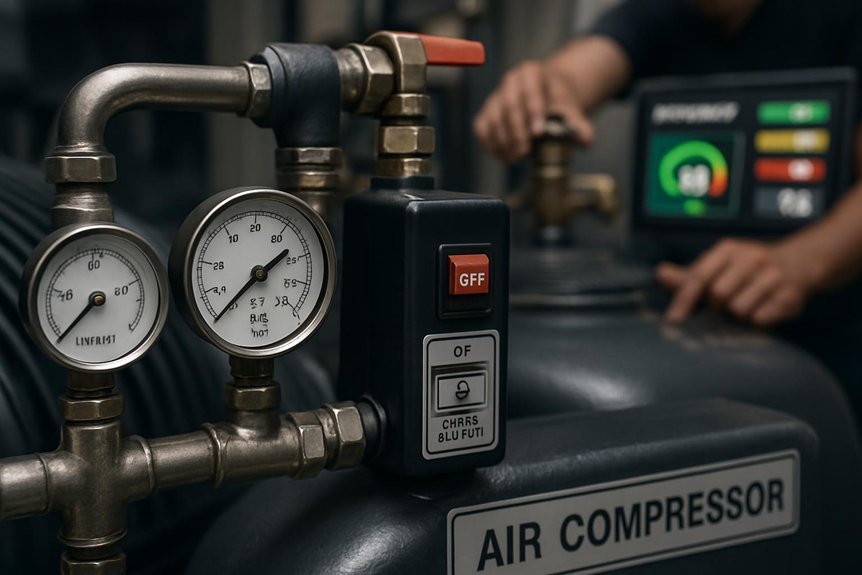
We’ll examine how Real-World Load Variability and Operating Condition Impacts affect efficiency, emphasizing how non-ideal demand shapes performance. In practice, fluctuating load and environmental or system settings alter compressor stage loading, heat rejection, and power draw, changing overall efficiency curves. By linking setup choices to observed efficiency shifts, we establish a framework for predicting real-world outcomes and guiding optimization.
Real-World Load Variability
What concrete factors in real operation most influence efficiency when an air compressor transitions between load states? We observe load variability from demand fluctuations, startup surges, and unloading events, all altering parasitic losses, thermodynamics, and control actions. Our analysis targets impulse responses in duty cycles, pressure differentials, and motor torque during transitions, not steady states. Frictional and volumetric losses rise with rapid velocity changes, while cooling efficiency and lubricity become critical as discharge temperatures spike. Control strategy—cycling algorithms, pressure band width, and soft-start behavior—directly affects real world energy use by smoothing transitions and reducing needless unloading. System inertia, line losses, and heat recovery potential constrain achievable efficiency. Informed tuning of setpoints and sequencing yields measurable gains in real world performance.
Operating Condition Impacts
How do setup choices and operating conditions swing real-world efficiency in air compression? We examine how machine configuration and load profiles alter thermodynamic, mechanical, and control performance. Variations in operating temperature influence compressor efficiency: higher temperatures reduce air density gains, accelerate friction, and shift volumetric efficiency, increasing power draw for the same output. Similarly, lubrication standards govern component wear, heat transfer, and contamination risk; improper lubrication raises parasitic losses and shortens life, lowering overall efficiency. We assess speed settings, inlet filtration, and cooling strategy as key levers, quantifying their impact on specific energy consumption and part-load behavior. Our approach combines empirical data with thermodynamic underscoring, ensuring consistent interpretation across models. In practice, optimizing setup and maintaining appropriate lubrication standards yields meaningful, repeatable efficiency gains under real-world operating conditions.
Debunking Myths: Common Myths About Efficiency That Mislead Buyers
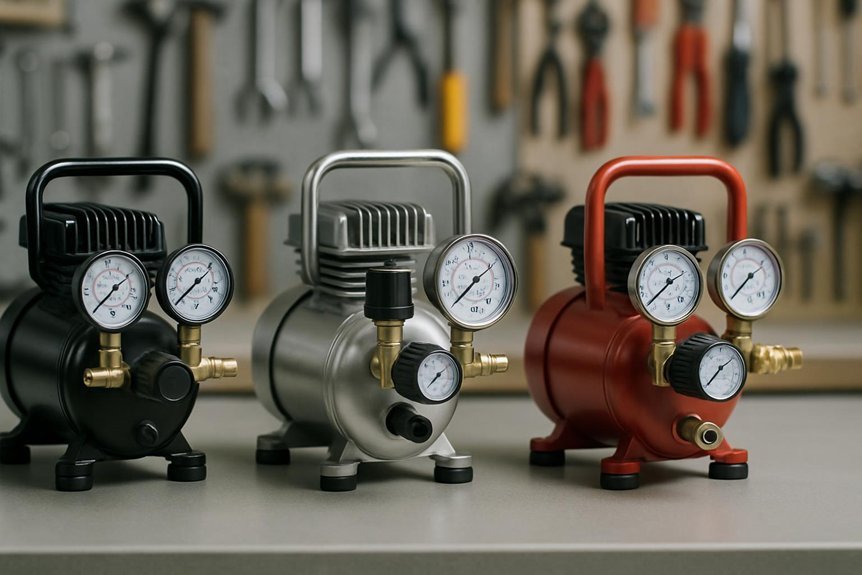
Efficiency myths persist because surface metrics can be misleading. We, as engineers, examine the underlying signals and separate myth from fact, focusing on actual performance drivers and measurement integrity. When buyers chase simple numbers, they miss dynamic behavior, part-load efficiency, and system interactions that define usable output. We treat energy myths with disciplined scrutiny, distinguishing label claims from verifiable results. Our approach emphasizes transparent metrics, repeatable tests, and meaningful comparisons. Below, a concise table contrasts common beliefs with evidence-backed reality.
| Myth | Fact |
|---|---|
| Higher rpm equals better efficiency | Efficiency depends on load profile and system design |
| Bigger compressors always save energy | Sizing and controls determine real gains |
| More stages always lower energy use | Staging benefits hinge on demand matching |
| Energy labels guarantee performance | Real-world testing and maintenance matter |
| Myth vs fact is resolved by data | Rigorous measurement resolves energy myths |
We invite readers to test assumptions against configured, real data, avoiding broad generalizations and focusing on verifiable outcomes.
A Practical Framework: Calculating Total Cost of Ownership (Upfront vs. Energy Savings)
To determine the total cost of ownership, we balance upfront capital with the stream of energy-related expenses over the compressor’s life, explicitly modeling purchase price, installation, maintenance, and expected duty cycles. We structure TCO by identifying an efficient upfront investment that reduces long‑term energy consumption, then quantify payback through energy savings. Our framework separates capital outlays from operational costs, enabling apples-to-apples comparisons across models. We calculate annual energy use from duty cycle, pressure targets, and efficiency curves, converting this into annual energy costs with project-specific electricity rates. Sensitivity analyses reveal how small efficiency gains translate into meaningful savings, guiding procurement decisions. This disciplined approach supports transparent ROI assessments while avoiding overpromising performance, ensuring readers grasp the tradeoffs between initial affordability and long‑term energy savings.
Matching Models to Use Case: Prosumer Picks for DIY and Small Shops
We compare prosumer AC options by aligning performance, duty cycles, and flow requirements with common DIY and small-shop use cases. Our aim is to map typical tasks—toning down runtimes, intermittent heavy pulls, and tool-based demands—to models that balance efficiency and startup behavior. This discussion sets the framework for selecting matches that minimize energy waste while meeting reliability and serviceability in real-world workloads.
Prosumer AC Matchups
Prosumer AC matchups matter because choose-the-right-model hinges on your specific workflow, budget, and space constraints. We evaluate units by duty cycle, CFM at pressure, and start-up current to avoid under- or over-sizing. In practice, two word discussion ideas—compatibility and predictability—guide our comparisons, focusing on how each model scales with intermittent use versus continuous runs. We prioritize efficiency metrics that align with DIY and small shop needs: unloaded power, full-load power, and effective compressor head temperature. We debunk efficiency myths by separating nominal horsepower from real-world performance, and we emphasize control strategies, such as load/unload regulation and variable-speed options where applicable. Our aim is to match duty profiles to capability, ensuring reliable performance without excessive energy draw or noise intrusion.
Best Small-Shop Picks
What small shops need most is a clear match between workload and compressor capability, so we’ve pinpointed prosumer picks that reliably balance duty cycle, CFM at pressure, and startup current for DIY projects and light industrial tasks. Our selections emphasize repeatable performance, compact footprint, and accessible control schemes, ensuring predictable operation under typical shop cycles. We compare two word discussion idea1, two word discussion idea2 across rated duty cycles, motor protection, and heat dissipation, then highlight startup behavior at ambient temperatures common to garages and barns. We favor models with scalable storage, low unload losses, and efficient condensate management. Each pick is rated for continuous use within defined CFM ranges, with clear guidance on suitable tool mixes, charging intervals, and maintenance intervals to sustain efficiency.
Quick-Start Guide: a User-Friendly Checklist to Pick an Efficient Compressor Today
A quick-start checklist helps you identify an efficient air compressor without wading through unnecessary specs. We present a practical, reader-focused protocol: define your duty cycle and pressure range, then verify compressor type and motor efficiency versus duty cycle. We prioritize quantifiable metrics: specific power (kW per cfm), intake air quality, and leakage risk. Next, inspect cooling, lubrication, and accessibility for maintenance cadence, ensuring reliable long-term performance. Evaluate system integration, including air dryers, filters, and storage to minimize pressure drop and unload losses. Favor machines with high efficiency ratings, robust warranties, and service networks. During selection, confirm installation space, vibration isolation, and electrical requirements for an efficient installation. Finally, document a maintenance plan and performance baselines to sustain energy savings over time.
Frequently Asked Questions
How Often Should You Recalibrate Compressor Efficiency Measurements?
We recalibrate every 6 to 12 months to maintain calibration frequency and measurement accuracy, adapting to usage, load profiles, and environmental factors; we also reinspect after major system changes to preserve data integrity and confidence in results.
Do Compressors Lose Efficiency With Age and Wear?
Yes, yes—wear related efficiency declines as aging components accumulate wear, reducing sealing, lubrication, and airflow. We caution readers: aging components degrade performance, so monitor wear-related efficiency and schedule proactive maintenance to preserve optimal compressor efficiency.
Can Noise Level Indicate Efficiency Performance?
Yes, noise level alone isn’t a reliable efficiency indicator; we assess it with multiple efficiency indicators, calibration frequency, and maintenance impact to ensure accurate readings and meaningful trends, rather than assuming audible changes reflect performance declines.
How Do Ambient Temperature and Humidity Affect Efficiency?
Ambient temperature and humidity affect efficiency variance; higher temps raise intake density loss, while humidity can cause condensation and corrosion, altering seal performance. We monitor ambient pressure shifts and humidity effects to quantify efficiency variance, maintaining precise, analytical control.
What’s the Impact of Routine Maintenance on Overall Efficiency?
Routine maintenance impact is substantial; we see sustained efficiency metrics calibration, reduced variability, and fewer unplanned outages. We quantify gains in reliability, while contaminants and wear are mitigated, improving overall efficiency and predictable performance for steady operation.
Conclusion
We’ve shown how to parse CFM, PSI, and power draw through real-world adjustments, so you can match duty cycles to actual use. One striking stat: well-tuned systems with smart unloading reduce peak power by up to 30% and cut leakage-driven losses by half. With that, a practical framework—TCO, efficiency curves, and maintenance cadence—lets you select models that meet true load profiles, not just nominal specs. This disciplined approach yields measurable energy and cost savings.