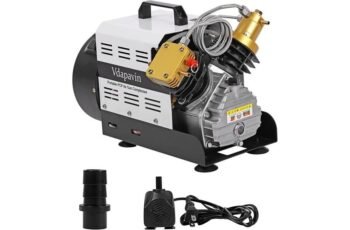
We find the 2026 ENW portable PCP air compressor offers flexible 110V AC or 12V DC power in an 11-pound package, with a 4,500 PSI maximum and built-in filtration. It supports compatible PCP rifles, paintball markers, and diving cylinders through an 8 mm quick-connect hose. However, it requires manual shutoff, and actual fill times can vary; a cooling fan and routine filter maintenance also matter. We’ll examine its features, trade-offs, and buying considerations below.
Key Takeaways
- The ENW portable PCP compressor supports 110V AC and 12V DC power and weighs 11 pounds with a carrying handle.
- Its 4,500 PSI maximum pressure and 0.5 L capacity suit compatible PCP rifles, paintball markers, and diving cylinders.
- The manufacturer estimates eight minutes to fill a 500 cc tank from 200 to 300 bar, or about 20 minutes from empty.
- Built-in oil-water separation, activated carbon filtration, and a cooling fan support cleaner air and heat management.
- It requires manual shutoff, reaches 70 dB, and needs compatible 8 mm fittings; long-term reliability and warranty details remain uncertain.
Dual 110V/12V Power
The ENW compressor supports both 110V AC and 12V DC power, so we can use a standard household outlet or connect the included 12V power clip. This dual power source gives us options at home and when a suitable 12V supply is available elsewhere.
Its voltage flexibility can make setup more convenient, but each connection still needs to match the intended input. The built-in power supply lets us plug directly into a standard 110V outlet without an external adapter. For 12V operation, we can use the supplied clip.
At 11 pounds, the unit is portable enough to move between locations as needed.
Detailed features
Beyond its dual-power setup, the ENW offers a 4,500 PSI maximum pressure and a 0.5 L capacity for filling compatible PCP equipment. We can use its 8 mm quick-connect hose with PCP rifles, paintball markers, or diving cylinders.
The manufacturer estimates eight minutes to raise a 500 cc tank from 200 to 300 bar, though filling from empty takes about 20 minutes. Built in filtration combines an oil-water separator with activated carbon to deliver dry, clean air.
A cooling fan helps dissipate heat during operation. We’ll need to monitor the gauge and switch off manually at our target pressure; noise reaches 70 dB.
Pros and Cons
We’ll weigh the compressor’s dual power options, portability, and built-in filtration against its manual shut-off and 70 dB noise level.
These trade-offs matter when you’re choosing a unit for home or field use. Let’s examine its main pros and cons.
Pros
Although it requires manual shut-off, the ENW compressor offers practical advantages: it runs on either 110 V AC or 12 V DC, reaches up to 4,500 PSI, and fills a 500 cc tank from 200 to 300 bar in about eight minutes.
We can use its built-in power supply with a standard outlet or connect the included 12 V clip for flexible operation. At 11 pounds, its handle and compact dimensions support lightweight portability between locations.
The oil-free, water-free system combines an oil-water separator with an activated carbon filter to deliver clean, dry air. A cooling fan helps manage heat during operation, while the gauge supports pressure monitoring.
Cons
The ENW compressor has a few practical limitations to take into account. We need to monitor the built-in gauge and switch the unit off manually at our target pressure; it doesn’t provide automatic shutoff. This pressure monitoring requires attention throughout a fill, particularly when we’re working near the 300-bar limit.
Filling also takes time: a 500 cc tank needs about 20 minutes to go from empty to 300 bar. At 11 pounds, the unit’s portable but not especially light. Its 70 dB operating noise may bother nearby users, and we should account for routine Maintenance needs, including keeping the filter and cooling system in good condition.
Concluding thoughts
For PCP shooters who need a compact compressor with both AC and 12 V DC power, the ENW offers useful flexibility and a stated maximum pressure of 4,500 PSI. We also get oil-free, water-free operation, built-in filtration, and a cooling fan in an 11-pound metal unit.
Its manual shut-off means we must watch the gauge and stop filling at the target pressure. The stated fill times provide a useful guide, though actual results may vary.
Before buying, we should consider power access, compatible 8 mm fittings, and warranty details. Long term reliability and user satisfaction remain uncertain without broader performance evidence.
Frequently Asked Questions
How Often Should the Air Filter Be Cleaned or Replaced?
We don’t have a specified Filter Cleaning Frequency or Filter Replacement Schedule for this compressor. Inspect the oil-water separator and activated carbon filter regularly; clean or replace them when dirty, saturated, damaged, or airflow declines, following manufacturer guidance.
Can This Compressor Run Continuously, or Does It Need Cooling Breaks?
We shouldn’t assume Continuous Duty: the specifications list a cooling fan but don’t state a continuous runtime or required Cooling Intervals. We’d monitor temperature and pressure, stop if it overheats, and follow the manufacturer’s guidance.
What Maintenance Is Required After Filling a Cylinder?
After filling, we should inspect the fill hose and connections for damage or leaks, then drain accumulated moisture from the compressor’s separator. We should also switch off the unit and let it cool before storage.
Is the Compressor Suitable for Filling Scuba Tanks for Underwater Breathing?
No—we shouldn’t trust this compressor to fill scuba tanks for breathing. Though it reaches 4,500 PSI, its filtration doesn’t certify Scuba air quality standards; underwater breathing safety requires verified breathing-air purity and professional servicing.
What Warranty Coverage Does the Manufacturer Provide?
Warranty coverage isn’t specified beyond a manufacturer warranty description listed as “2,” whose meaning and duration remain unclear. We recommend confirming terms directly with the seller; we can’t verify repair support or covered parts from available information.
Conclusion
The ENW’s 4,500 PSI rating is the headline, but its dual 110V and 12V power options make it more versatile than a compressor tied to a wall outlet. We’d weigh that flexibility against its manual shut-off process and the need to monitor fills. At 11 pounds, it’s portable enough for home or field use, while oil-free, water-free operation simplifies setup. If your needs match its supported tanks and fill times, it’s a practical option worth considering.